How to Propagate Houseplants: A Beginner's Guide
Turn one plant into many. Here is how to get started.
Propagation is how you turn one plant into two (or ten). And it is far less complicated than it sounds. If you have ever put a cutting in water and watched roots grow, you have already propagated a plant. Most common houseplants can be propagated at home with nothing more than scissors, water, and a little patience.
Here is a beginner-friendly guide to the three most common methods.
Why propagate?
- It is free. New plants from your existing collection, no trip to the nursery required.
- It makes great gifts. A hand-propagated plant cutting is one of the most thoughtful things you can give another plant lover.
- It saves leggy plants. If your plant is getting tall and bare at the bottom, you can cut it back and propagate the cuttings to fill things out.
- It is satisfying. Watching roots grow from a cutting is genuinely exciting. It never gets old.
Method 1: Water propagation
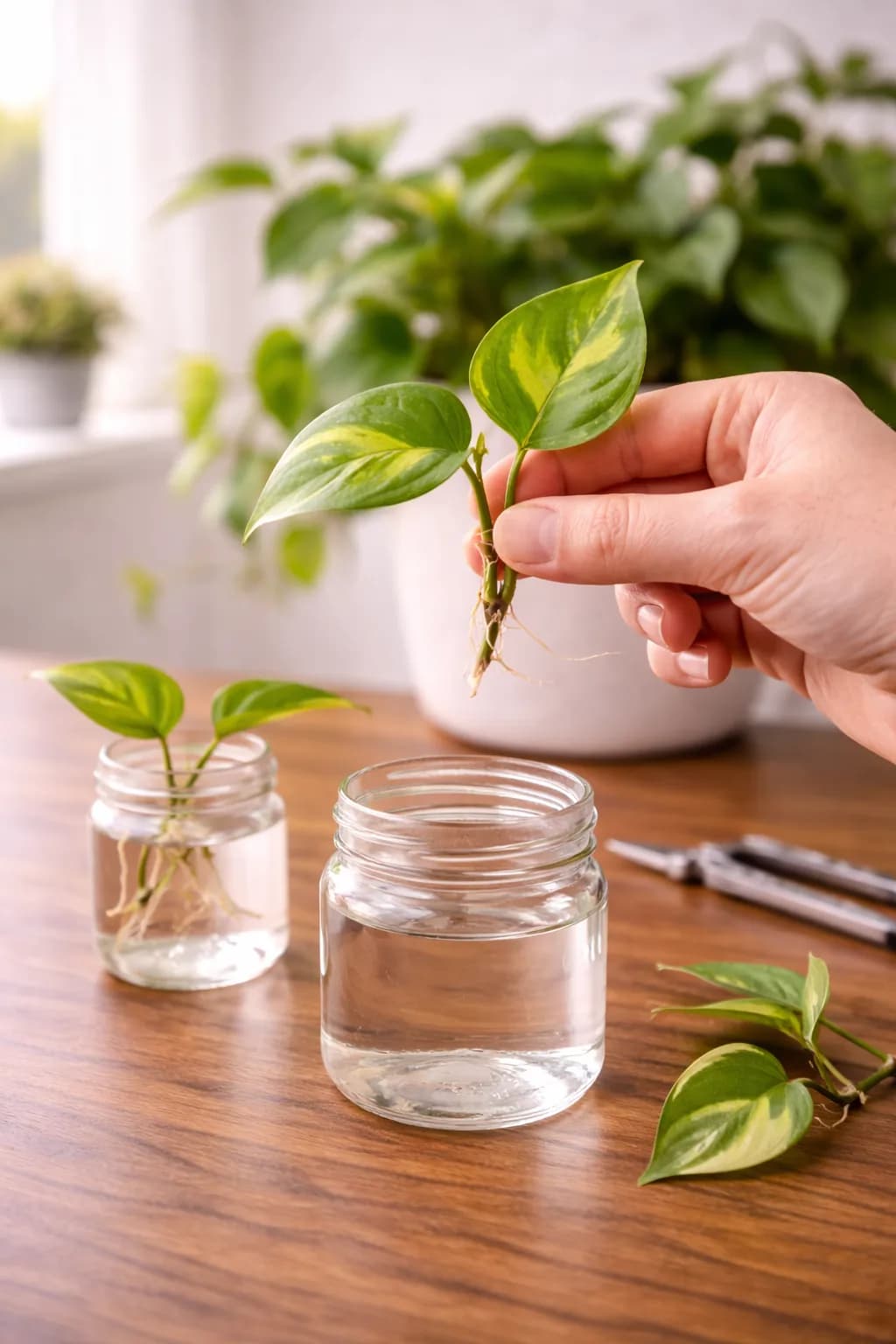
This is the most popular method for beginners because you can watch the roots develop in real time.
Best for: Pothos, philodendron, tradescantia, monstera, begonia, and most vining or soft-stemmed plants.
Step by step:
-
Choose a healthy stem. Look for a section with at least 2-3 leaves and a visible node. The node is the small bump or joint on the stem where leaves grow from - this is where new roots will emerge.
-
Make the cut. Using clean, sharp scissors or pruning shears, cut about 1cm below a node. Clean cuts heal faster.
-
Remove lower leaves. Strip any leaves that would sit below the waterline. Leaves submerged in water will rot and make the water murky.
-
Place in water. Use a clean glass jar or vase. The node should be submerged, but the remaining leaves should stay above water. A narrow-necked jar or bottle works well to keep the cutting upright.
-
Find the right spot. Bright, indirect light. Not direct sunlight - the water heats up and can cook the new roots.
-
Change the water. Every 3-5 days, swap out the water for fresh. This prevents bacteria buildup and keeps oxygen levels up.
-
Wait for roots. Most cuttings will show roots in 1-3 weeks. Wait until roots are at least 3-5cm long before potting up.
-
Pot it up. Plant in moist potting soil, water well, and keep the soil slightly moist for the first week or two while the roots adjust to soil.
Tips for success:
- Room temperature water is best - cold water can shock the cutting
- Clear glass lets you monitor root growth (and it looks lovely on a windowsill)
- Spring and summer are the best times to propagate - plants root faster during the growing season
- If the water starts looking cloudy, change it right away
Method 2: Soil propagation
Some plants root better when placed directly into soil. This skips the transition from water to soil, which can be stressful for some cuttings.
Best for: Succulents, snake plants (leaf cuttings), rubber plants, fiddle leaf figs, and plants with thicker stems.
Step by step:
-
Take your cutting the same way as water propagation - below a node, with 2-3 leaves.
-
Let it callus (for succulents only). If you are propagating a succulent leaf or stem, leave the cut end exposed to air for 1-2 days until it dries and forms a thin callus. This prevents rot. Skip this step for tropical plants.
-
Prepare a small pot with moist (not wet) potting soil. For most cuttings, a standard potting mix with added perlite works well.
-
Dip in rooting hormone (optional). Rooting hormone powder or gel is not essential, but it speeds things up. Dip the cut end lightly before planting.
-
Plant the cutting. Make a small hole in the soil with a pencil or your finger, insert the cutting so the node is buried, and gently press the soil around it.
-
Keep it humid. Cover the pot loosely with a clear plastic bag or a cut plastic bottle to create a mini greenhouse. This keeps humidity high around the cutting.
-
Wait and check. Keep the soil lightly moist but not soggy. After 3-4 weeks, give the cutting a very gentle tug. If you feel resistance, roots have formed.
Tips for success:
- Do not overwater. The cutting has no roots yet to absorb water - too much moisture causes rot
- Remove the humidity cover for a few minutes each day to prevent mould
- Once rooted, gradually expose the cutting to normal air over a few days before removing the cover entirely
Method 3: Division
Division is the fastest way to propagate - you split one plant into two or more separate plants, each with its own root system. No waiting for roots to grow.
Best for: Snake plants, spider plants (mature clumps), peace lilies, ZZ plants, ferns, calatheas, and any plant that grows in clumps with multiple stems emerging from the soil.
Step by step:
-
Water the plant the day before to reduce stress and make the soil easier to work with.
-
Remove from the pot. Gently tip the plant out and shake off excess soil so you can see the root system.
-
Find the natural divisions. Most clump-forming plants have distinct sections with their own stems and roots. Look for a place where you can separate them without cutting through major roots.
-
Separate gently. Use your hands to tease apart the sections. If roots are tangled, that is fine - gently untangle them. For very dense root balls (like snake plants), you may need to cut through with a clean knife.
-
Pot each section in its own pot with fresh soil. Choose pots appropriate for the size of each division.
-
Water well and place in the same conditions the parent plant was in.
Tips for success:
- Each division needs at least a few healthy roots AND a few stems or leaves to survive
- Spring is the best time for division, when plants are actively growing
- Divided plants may look a little sad for a week or two. This is normal - they perk up once they settle in
Easiest plants to propagate
If you are trying propagation for the first time, start with one of these. They root quickly and forgive mistakes:
| Plant | Best method | Root time | Difficulty |
|---|---|---|---|
| Pothos | Water | 1-2 weeks | Very forgiving |
| Spider plant babies | Water or soil | 1-2 weeks | Very forgiving |
| Tradescantia | Water | 1 week | Very forgiving |
| Snake plant | Division or leaf cutting | 2-8 weeks | Patient |
| Philodendron | Water | 1-3 weeks | Very forgiving |
| Monstera | Water | 2-4 weeks | Moderate |
| Succulents (leaf) | Soil | 2-6 weeks | Patient |
| ZZ plant | Division | Instant | Moderate |
Common propagation mistakes
- Cutting below the node is missed. No node = no roots. Always make sure at least one node is included in your cutting.
- Leaves rotting in water. Remove any leaves that would sit below the waterline.
- Too much direct sun. Cuttings are delicate. Bright indirect light is best.
- Planting water-rooted cuttings in dry soil. Keep the soil moist for the first week or two to help roots transition.
- Giving up too soon. Some plants (snake plants, ZZ plants) can take weeks or even months. Patience pays off.
When to propagate
Best time: Spring and early summer, when plants are in active growth mode. Cuttings root faster, and the parent plant recovers more quickly.
Okay time: Late summer and early autumn. Things will just take a bit longer.
Avoid: Late autumn and winter. Most plants are dormant and cuttings will struggle to root. The parent plant will also take longer to recover from the trim.
Growing your collection does not have to mean buying new plants. With LeafLovers, you can track each new cutting as its own plant - watching it grow from a tiny root nub to a full, thriving plant is one of the most rewarding parts of the hobby.
Related guides
Spotted something that needs correcting? Send a message.