Dracaena Care Guide: Brown Tips, Water and Light
Work through the pot, water and room before choosing a fix.
Quick questions
Why are my Dracaena leaf tips brown?
Water quality, fertiliser salts, dry air and root stress can all contribute. Check the pot and recent care before changing one factor at a time.
How often should I water Dracaena?
Check the mix and pot weight rather than following a fixed number of days. Water when the upper part has dried, then let the pot drain.
Should I trim brown tips?
You can trim the dry brown portion with sharp, clean scissors for appearance. It will not correct the underlying cause, so watch new leaves too.
Will a brown tip turn green again?
The damaged tip will not turn green again. Watch whether healthy new leaves develop after you correct a likely cause.
Where should I put Dracaena?
Many cane-like Dracaena grow well in bright to moderate filtered light. Protect leaves from harsh sun and cold draughts.
Is Dracaena safe for cats and dogs?
No. NC State Extension lists Dracaena as toxic to cats and dogs if ingested. Keep it away from pets that chew plants.
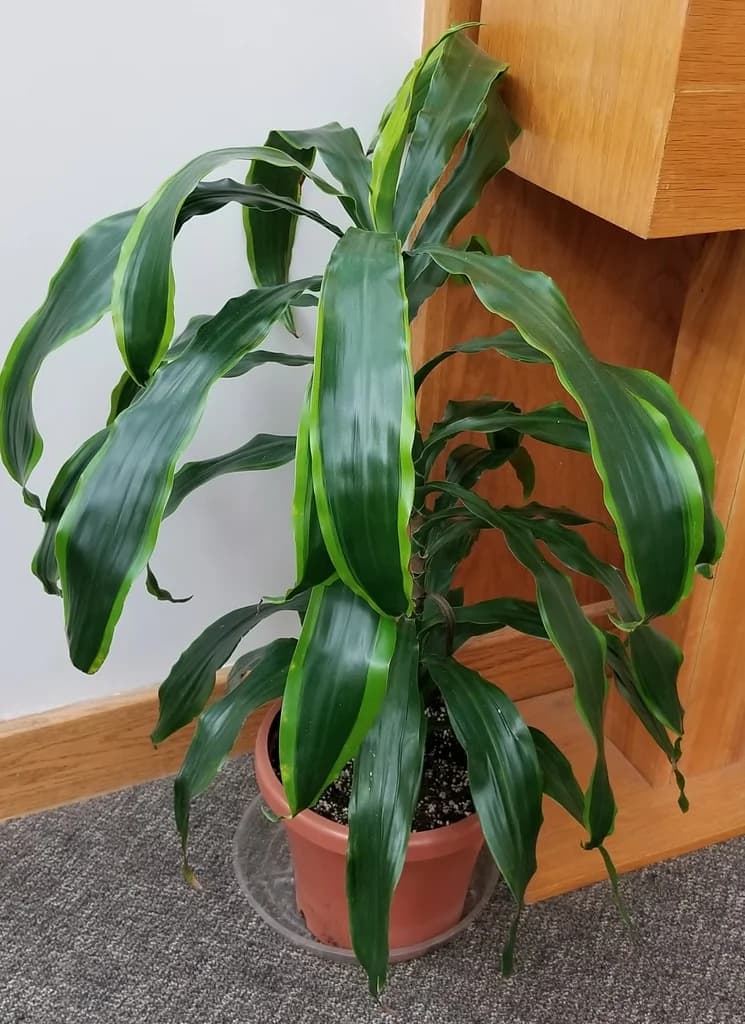
Brown tips are common on Dracaena, but they do not point to one automatic fix. Start with the plant you have and the conditions around it. This guide covers the cane-like houseplants often sold as Dracaena, including corn plant (Dracaena fragrans). Different species can have different needs.
Check the brown tips before changing water
Look at the pattern. A few old brown tips may reflect earlier stress. If new leaves keep browning, check the potting mix and roots, your water source, fertiliser use and the air around the plant.
Tap water containing fluoride or salts can contribute to tip browning in Dracaena. Fertiliser salts can also build up in the mix, while dry indoor air can affect Dracaena fragrans. A brown tip alone cannot tell you which factor is responsible.
If your tap water is a likely factor, try suitable filtered or rain water and watch new growth. If fertiliser has built up, review how much you use and whether water drains freely from the pot. Do not keep adding water to a mix that is already wet.
Give it light without scorching the leaves
Bright to moderate filtered light suits many cane-like Dracaena. Strong direct sun can scorch foliage, while a very dim position may slow growth. Check the light that reaches the leaves through the day instead of relying only on the window direction.
Use the pot to decide when to water
There is no dependable 12-day or 16-day watering rule for every Dracaena. Check below the surface and note the pot's weight. Water when the upper part of the mix has dried, then let excess water leave through the drainage holes. Recheck more often in warmer, brighter conditions and less often when growth slows.
Yellowing or a soft stem deserves a closer look at the roots and mix before more water is added. A dry, light pot calls for a different response from a heavy pot that stays damp.
Trim a dry tip if you want to
Use sharp, clean scissors to remove only the dry brown portion for appearance. Trimming does not fix the cause. If new tips keep browning, return to the pot, water, fertiliser and room checks above.
Keep the roots comfortable
Use a pot with drainage and a mix that does not stay sodden. Repot when roots have clearly outgrown the pot or the mix has broken down, rather than on a fixed calendar. Keep the plant away from cold draughts and heating vents.
Dracaena is toxic to cats and dogs if eaten. Identify the plant before relying on a safety label, and keep it away from pets that chew leaves.
Use LeafLovers to remember when you last checked or watered your plant. The reminder is a prompt to inspect the mix, not an instruction to pour water on a fixed date.
Spotted something that needs correcting? Send a message.