Polka Dot Plant Care: Colour, Water and Pinching
Keep Hypoestes compact and its speckled leaves colourful.
Quick questions
Why is my polka dot plant leggy?
Check light first, then pinch healthy tips to encourage branching. Deep shade can make new growth stretch.
Can it take direct sun?
A little gentle sun may be tolerated, but bright filtered light is a safer starting point.
How often should I water?
Keep the mix lightly moist, watering after the surface begins to dry and draining the pot.
Should I remove the flowers?
You may pinch off flower spikes if you prefer compact foliage growth.
Is it the same as Polka Dot Begonia?
No. Hypoestes phyllostachya and spotted cane begonias are different plants.
Why are the spots fading?
Check the light available to new leaves, while allowing for differences among cultivars.
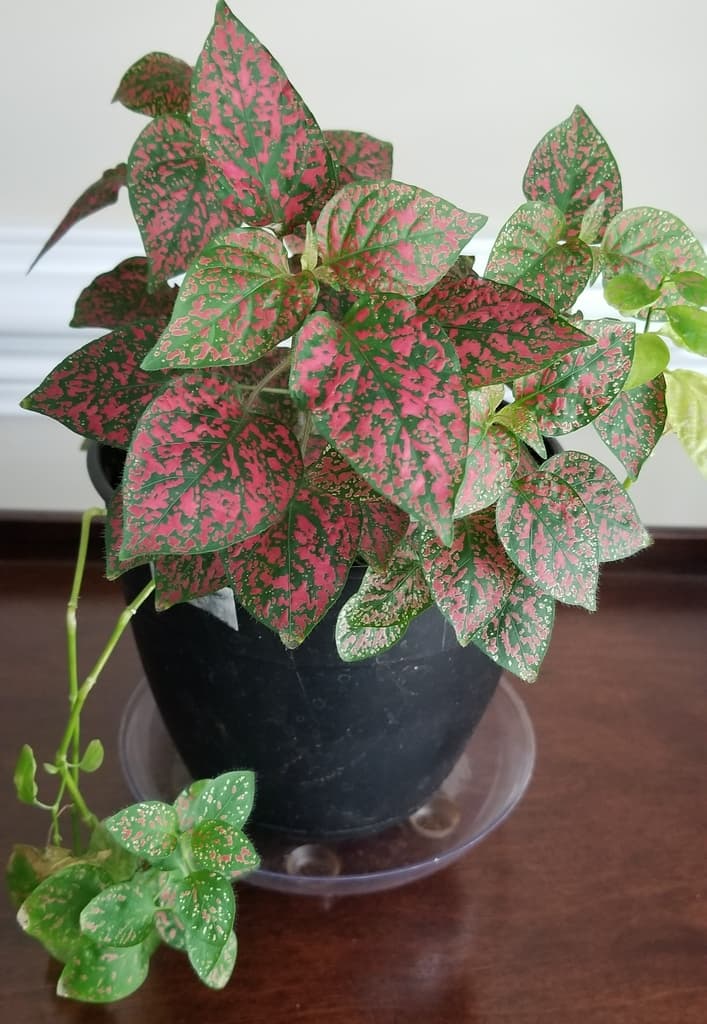
Polka dot plant (Hypoestes phyllostachya) is a small foliage plant with pink, white or red splashes. It is not Polka Dot Begonia, which has larger cane-like growth and silver spots. The photo shows a pink-speckled Hypoestes cultivar.
Light and position
Give bright filtered light. Too little light can make stems stretch and colour fade; harsh direct sun can curl or damage leaves. Adjust the position gradually and judge the new growth.
Water by checking the pot
Keep the mix lightly moist, letting the surface begin to dry before watering thoroughly. Drain the saucer. Small nursery pots dry quickly, but a larger decorative container may retain moisture much longer; use the pot condition rather than a daily schedule.
Potting and growth
Choose a draining pot and a mix that holds some moisture without becoming soggy. Pinch the tip of a healthy stem above a leaf pair to encourage branching. Root suitable stem cuttings if you want a fuller pot.
Work through common problems
The small lilac flowers are not the main feature. Pinching flower spikes can direct growth toward foliage. A leggy plant may need better light as well as pruning; cutting alone will not correct deep shade. Check for pests before treating pale or marked leaves.
Safety and your next check
If a pet chews foliage, verify the exact botanical name against a veterinary list and ask a veterinarian if symptoms appear. New speckled leaves, not old faded ones, show how well the changed position suits it.
Related LeafLovers guides
Sources for this guide
2 sources
Spotted something that needs correcting? Send a message.