Air Plants Care: Water, Drying and Light
Give Tillandsia the water and airflow it needs without leaving the centre wet.
Quick questions
How often should I water an air plant?
There is no universal interval. Species, heat, humidity and airflow change how fast it dries. Water thoroughly, allow the centre to dry, and adjust after observing the plant.
Should I dry an air plant upside down?
After watering, shake out excess water and dry it upside down or angled with airflow. Return it to a display only when the centre is dry.
Can I grow Tillandsia in soil?
Common epiphytic Tillandsia such as T. ionantha should not be planted in potting soil. Their roots mainly anchor them to a mount.
Is misting enough for air plants?
Misting can supplement care in warm conditions, but may not wet the plant thoroughly. RHS recommends immersion and complete drying between waterings.
Why are my air plant tips brown?
Drying out is one possibility, but strong sun, heat or past damage can contribute. Check the whole plant and your routine before changing watering.
Do air plants produce baby plants?
Many Tillandsia form offsets after flowering. Let the young plants grow before separating them from the parent.
Air plants need more than air. Tillandsia takes up water through scales on its leaves, while its roots mainly anchor it to a surface. This guide covers common Tillandsia kept indoors; watering needs differ by species, room and display.
Water the leaves, then let the plant dry
Take your air plant out of a closed display before watering. Immerse it in suitable water or wet it thoroughly, then gently shake water from the leaves. Set it upside down or at an angle with airflow until the centre has dried before returning it to its display. A wet crown left inside a glass globe can rot.
There is no single weekly soak that fits every Tillandsia. RHS advises more frequent immersion during active growth than a typical once-a-week rule, while Oregon State gives a weekly soak as an option for terrarium plants. Start with the guidance for your species and watch how quickly it dries in your home. Warm, dry rooms may need more frequent watering; cool, humid rooms may need less. Misting alone may not wet a dry plant thoroughly.
Rainwater is useful where tap water is hard. Let the plant dry between waterings and keep water out of a closed base. Avoid leaving it submerged for long periods.
Give it bright light and moving air
Bright, diffused light suits many Tillandsia indoors. A bright window with protection from strong midday sun is a good start. Move a plant gradually if it has been in shade. Airflow matters just as much as the display: a sealed globe or damp shelf can hold moisture around the crown.
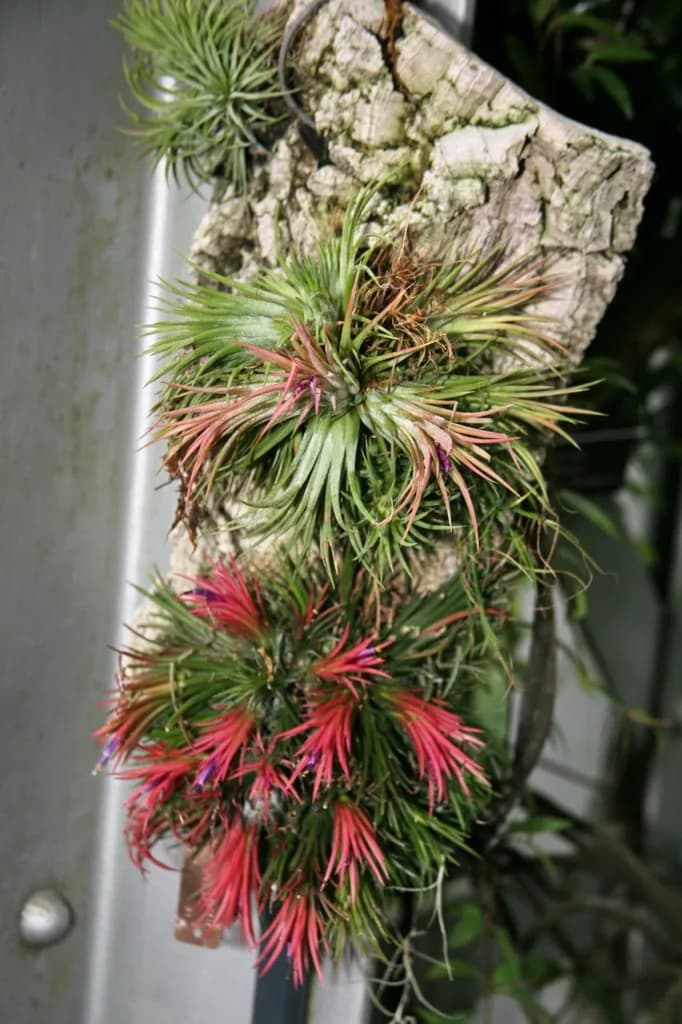
Tillandsia grows without potting soil. Mount it on bark, wood or a holder, or rest it in an open container that lets you remove it for watering. The photo shows Tillandsia ionantha; other air plants can look and behave differently.
Read the plant before changing the routine
Dry, curling leaves or brown tips can signal too little water, but check light, heat and how you water before soaking more often. A dark, soft centre after prolonged wetness calls for an immediate check for rot. Old damage will not turn green; watch new growth after making one change.
Many Tillandsia flower once and then form offsets. Leave young offsets attached until they have developed enough to handle safely. Use LeafLovers to record watering and drying observations, rather than treating a reminder as an automatic soak order.
Sources for this guide
3 sources
Spotted something that needs correcting? Send a message.