Pothos Care Guide: Watering, Light and Propagation
A practical routine for healthy roots, leafy vines and your next cutting.
Quick questions
Is pothos a good first houseplant?
It can be: it tolerates a range of indoor conditions and is readily propagated. It is not unkillable, though. Good drainage and checking the mix before watering are the most useful habits.
How often should I water pothos?
Use the pot rather than a fixed weekly schedule. Wait until the upper layer dries and the mix beneath approaches dryness; check pot weight too. Water thoroughly and drain the excess.
Can pothos live in a dark room?
It tolerates lower light but still needs light to grow. A windowless room needs suitable artificial plant lighting. Bright, indirect light is a better starting point.
Does pothos need high humidity?
Usually not. Pothos can grow in ordinary indoor conditions. Keep it away from direct heat and cold draughts; brown tips alone do not prove that humidity is the problem.
Is pothos safe for cats, dogs and children?
Keep it out of reach: chewing it can cause painful mouth irritation, and its sap may irritate skin. Contact a veterinarian for suspected pet ingestion, or a poison advice service for a child. Wear gloves when pruning.
Does pothos like being rootbound?
It can stay in the same pot for a while, but tightly crowded roots eventually need attention. Check the root ball and drainage rather than deliberately keeping it cramped or repotting on a fixed schedule.
A pothos can settle into many homes, but it still needs light, air around its roots and a watering routine that responds to the pot. Start with those basics; you do not need a complicated care kit.
This guide covers Epipremnum aureum, including Golden, Jade, Marble Queen and Neon pothos. Satin pothos is a different plant: see the Scindapsus pictus guide.
Find a bright spot
Choose bright, indirect light. Pothos tolerates dimmer conditions, but growth may slow and variegated leaves can lose some of their pattern. Keep it away from harsh direct sun that scorches the leaves.
A window direction alone is not a guarantee: nearby buildings, curtains and distance from the glass change how much light reaches the plant. Check the actual spot. Dusty leaves can be wiped gently with a damp cloth.
Water according to the pot
Check the upper few centimetres of mix with your finger. Let that layer dry and the mix beneath approach dryness before watering. A lighter pot is another useful clue. If it is still damp and heavy, wait and check again.
Water evenly until excess runs through the drainage holes, then empty the saucer or outer pot. A reminder is a prompt to check, not an instruction to water regardless.
Small pots can dry sooner; a large pot of dense mix may stay wet longer. Light, warmth and active growth also change demand. After repotting or moving the plant, learn the new drying pattern instead of keeping the old interval.
Drooping can happen with wet, damaged roots as well as dry ones. Check the mix before reaching for the watering can.
Soil, pots and repotting
Use a houseplant potting mix that holds some moisture but drains freely, in a pot with drainage holes. If you use a decorative pot without holes, keep the plant in a removable draining inner pot.
Check the root ball when growth slows or watering becomes difficult. Densely circling roots are a better reason to repot than a date on the calendar. Move up only one pot size when more room is needed; excess wet compost around a small root system raises the risk of rot.
Refreshing compacted or poorly draining mix can help without requiring a much bigger pot. Do not add gravel beneath the mix as a substitute for drainage holes.
Feeding and keeping growth manageable
Use a general houseplant fertilizer according to its label while the plant is actively growing. Reduce or pause feeding when growth slows. More fertilizer will not compensate for inadequate light or damaged roots.
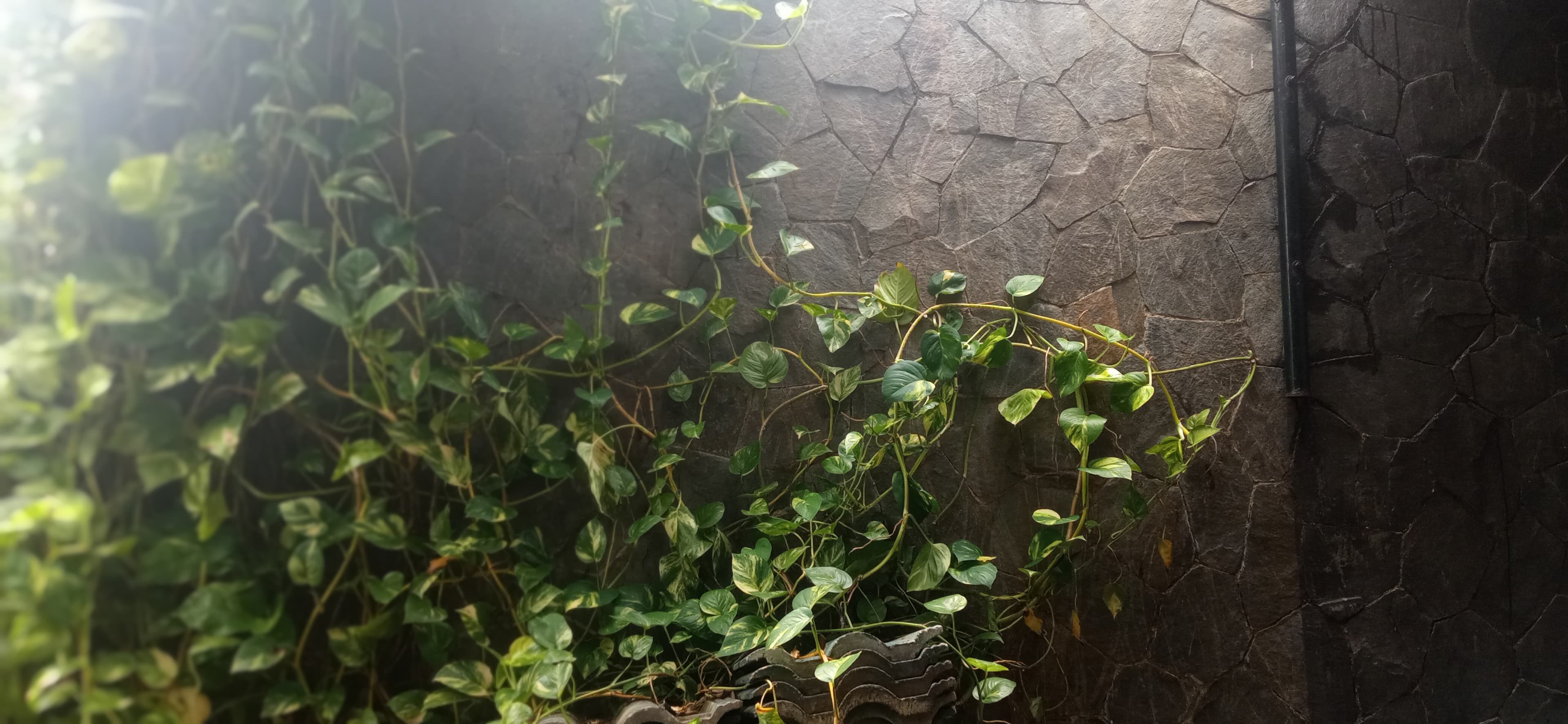
Let vines trail, or provide support for climbing. To shorten a long vine, cut just above a leaf joint with clean tools. Pruning can encourage branching. Wear gloves when handling the cut stems.
Propagation: include a node
The node is the joint where a leaf meets the stem. Include a piece of stem with a node; a detached leaf alone is not the cutting you need.
- Choose a healthy vine and cut below a node with clean scissors. Wear gloves.
- Remove any leaf that would sit below the water. Put the node in water and keep the remaining leaves above it.
- Stand the cutting in bright, indirect light. Keep the node covered and refresh the water regularly.
- Once roots have developed, pot into a small container of suitable mix. Check moisture closely as it establishes.
Rooting speed varies with conditions. Look for roots rather than relying on a fixed number of days. Several rooted cuttings can share a pot for a fuller plant.
When something changes
For yellow leaves, first compare the colour with the variety's normal markings and check soil moisture. The yellow-leaf troubleshooting guide walks through wet roots, dry roots, light, cold and feeding clues.
Check leaf undersides and stem joints for pests while you water. Avoid treating every brown tip as a humidity problem or every drooping vine as thirst.
Spotted something that needs correcting? Send a message.