Spider Plant Care Guide: Watering, Brown Tips and Plantlets
Check the pot, light and leaf tips before changing your routine.
Quick questions
How often should I water a spider plant?
Check below the surface and water when the upper mix has begun to dry. Pot size, light and season change the timing; drain excess water after watering.
Why does my spider plant have brown tips?
Check for a dry root ball, dry air and heavy feeding first. If new tips keep browning, water quality may be another factor; NC State notes sensitivity to chlorine and fluoride.
Will brown tips turn green again?
No. You can trim dry tissue for appearance, but judge a care change by the new leaves.
Does a spider plant need direct sun?
No. Bright indirect light suits it, and strong direct sun can damage the leaves. It can tolerate shade with slower growth.
How do I root a spider plant baby?
Set a plantlet with visible root nubs onto moist mix, ideally while it remains attached to its parent. Cut the stem once the plantlet has rooted.
Is spider plant safe for cats and dogs?
ASPCA lists Chlorophytum comosum as non-toxic to cats and dogs. Check the plant identity and discourage chewing because plant material may still upset a pet.
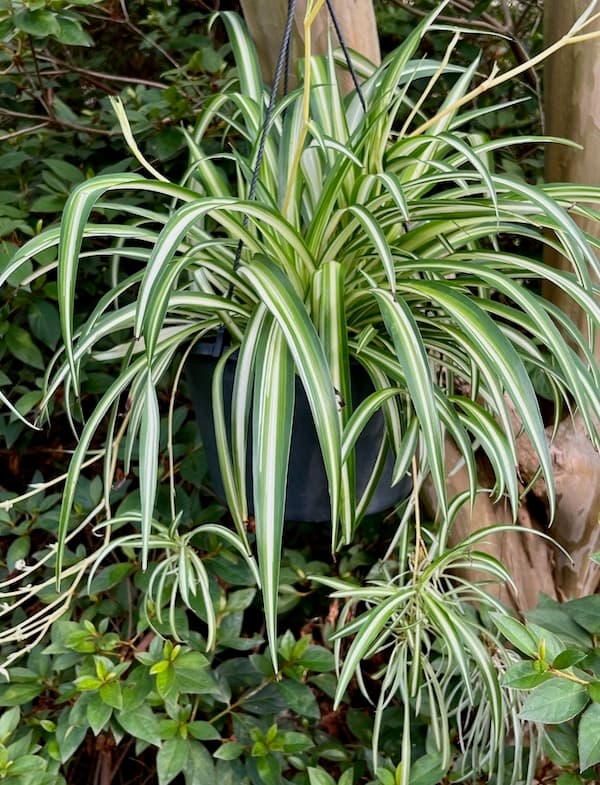
Spider plant (Chlorophytum comosum) makes arching leaves and, on mature plants, long stems with small plantlets. It tolerates some missed checks, but a draining pot and enough light make care easier.
Start with the light
Choose bright, indirect light for steady growth. Spider plant also tolerates shade, although growth may slow. Shield the leaves from strong direct sun, especially through a hot window. If the plant leans or grows slowly, try a brighter indirect position and watch the new growth.
Check the mix before watering
Feel below the surface instead of following a seven-day rule. Water when the upper mix has begun to dry, then wet the mix thoroughly and let the pot drain. Do not leave the pot in a full saucer. Check less often during cooler, darker months when the plant uses water more slowly.
Yellowing or soft growth alongside a persistently wet mix calls for a drainage and root check. A very dry pot and limp leaves call for a thorough watering. The leaf alone cannot tell you which problem you have.
Work through brown tips
Brown tips can follow dry air, an irregularly dry root ball, excess fertilizer or sensitivity to minerals in water. NC State Extension notes that chlorine and fluoride in tap water can burn spider plant tips. Check moisture and feeding first; if new tips continue to brown, try rainwater or suitable filtered water and compare the next leaves. Leaving water out overnight does not reliably remove fluoride. Old brown tissue will not turn green; trim only the dry part if you prefer.
Potting, feeding and plantlets
Use a pot with drainage and a mix that wets evenly without staying soggy. Spider plants have thick, fleshy roots. Repot when roots crowd the pot or watering has become difficult, rather than by a calendar. Feed lightly while it is actively growing; excess fertilizer can contribute to tip damage and may reduce plantlet formation.
A plantlet with small roots can be set onto moist potting mix while still attached to the parent stem. Once rooted, cut the connecting stem. You can also separate a mature clump when repotting. A plant without babies may simply be young or receiving different light conditions; it is not automatically unhealthy.
Pet safety and the next check
ASPCA lists Chlorophytum comosum as non-toxic to cats and dogs. Confirm the botanical name before relying on that listing. Chewing any plant material can still upset a pet's stomach, so place it where persistent nibblers cannot reach it and contact your vet if your pet seems unwell.
Use LeafLovers to note when you checked the mix, watered and changed the plant's position. Compare new leaves over time rather than judging a fix by an old damaged tip.
Related guides
Sources for this guide
3 sources
Spotted something that needs correcting? Send a message.