ZZ Plant Care: The Quiet One Has Boundaries
Glossy, calm and easy to misread. Check the pot before you fuss over a yellow leaf.
At a glance
Pets & children
Toxic if chewed
Keep leaves away from pets and young children; ZZ contains calcium oxalate.
Light
Bright, indirect is best
It tolerates lower light but grows more slowly. Avoid strong direct sun.
Water
Let the mix dry through
Check below the surface, then water thoroughly and drain.
Pot & roots
No wet feet
Use a draining pot. Repot when crowded rather than moving it into a much larger pot.
Quick questions
Why are my ZZ plant leaves yellow?
Yellowing can follow wet roots, prolonged dryness or normal ageing of an older leaf. Check moisture below the surface, drainage and whether more leaves are declining.
What if my ZZ plant has a soft stem or rhizome?
Inspect the roots promptly. Remove soft, decayed material with clean tools and repot only healthy sections in fresh, draining mix.
How often should I water my ZZ plant?
Let the mix dry through, then water thoroughly and drain. Light, pot size, temperature and season change the interval.
Can a ZZ plant live without a window?
Only with suitable artificial light. Lower-light tolerance does not mean the plant can grow without light.
Why is my ZZ plant not growing?
ZZ plants grow slowly, especially in lower light. Check the plant is firm and healthy and consider a brighter indirect spot before adding water or feed.
Is a ZZ plant safe for cats and dogs?
No. Keep it out of reach because chewing it can cause irritation. Contact a veterinarian if a pet has eaten it.
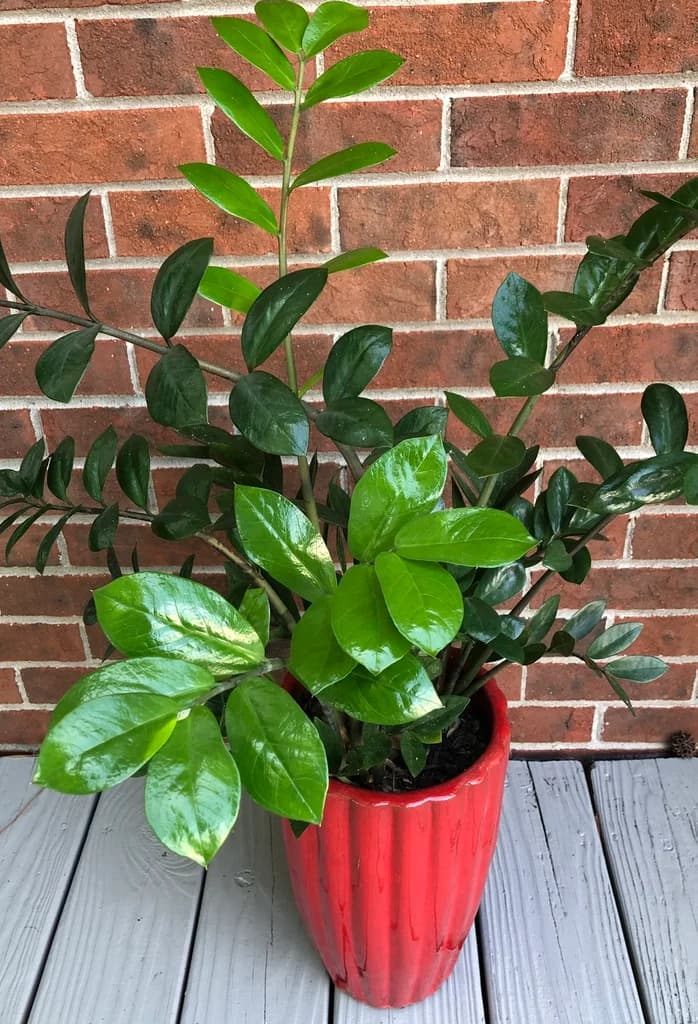
The ZZ plant is the quiet roommate of the plant world. It stores water in thick underground rhizomes, keeps its glossy leaves tidy and rarely asks for a fuss. But silence is not a health report. Zamioculcas zamiifolia can sit with wet roots while its leaves still look calm.
Give it a low-drama routine
Bright, indirect light supports growth. ZZ can tolerate lower light, but a windowless room needs suitable artificial light. Keep it out of strong direct sun, which can scorch leaves. Use a draining pot and loose mix. Let the mix dry through before watering thoroughly, then empty the saucer. Feel below the surface or compare the pot's weight; a calendar alone cannot tell you when this pot is ready.
What is your ZZ saying?
- Yellow leaves? Look for persistent wetness, a very dry pot and the pattern of affected leaves.
- Drooping or leaning shoots? Check moisture, the shoot base and light before you move or water it.
- Brown or bleached patches? Check whether direct sun hits that side of the plant.
- No new growth? Check light and the season; a firm, healthy ZZ grows slowly.
- Mushy shoot base or rhizome? Act promptly on the roots rather than waiting for a reminder.
The symptom alone does not pick the fix. Here is how to sort the common cases.
If leaves turn yellow
Check below the surface. If the pot stays wet, stop adding water, empty any standing water and check that the drainage holes work. If yellowing spreads or a shoot softens, lift the plant and inspect the roots and rhizomes. Healthy tissue is firm; remove soft, decayed material with clean tools and repot healthy sections in fresh, draining mix. If the pot is instead very dry and light, water it thoroughly and let it drain. One older yellow leaf on an otherwise firm plant can be normal ageing.
If shoots droop or leaves scorch
Your quiet roommate is not automatically asking for a drink when a shoot droops. A drooping shoot with a dry, light pot may need water. A drooping shoot with wet mix or a soft base needs a root check, because damaged roots can leave a plant looking thirsty. If brown or pale patches appeared on the window-facing side after a move, shift the plant out of harsh direct sun. Damaged patches will not turn green again; watch the next leaves.
If nothing new is growing
First check whether the plant is otherwise firm and green. ZZ grows slowly, especially in lower light. Move it gradually to brighter indirect light if the spot is dim. Extra water or fertiliser will not make a healthy plant hurry. Feed lightly only during active growth, following the product directions.
Know when to look closer
Spreading yellowing, soft rhizomes and collapse deserve a prompt root inspection. If the evidence is mixed, record light, moisture checks and recent care changes so you can see a pattern. Premium Plant Doctor can use your saved care history and a photo or details you choose to share to suggest possible causes and next checks; it cannot promise a diagnosis.
ZZ contains calcium oxalate crystals and should stay away from pets or children who may chew it. Contact a veterinarian after pet ingestion. For the dark cultivar, see our Raven ZZ care guide.
Spotted something that needs correcting? Send a message.