Brown Tips on Houseplants: 6 Causes and How to Fix Them
That crispy brown edge is telling you something. Here's what it means.
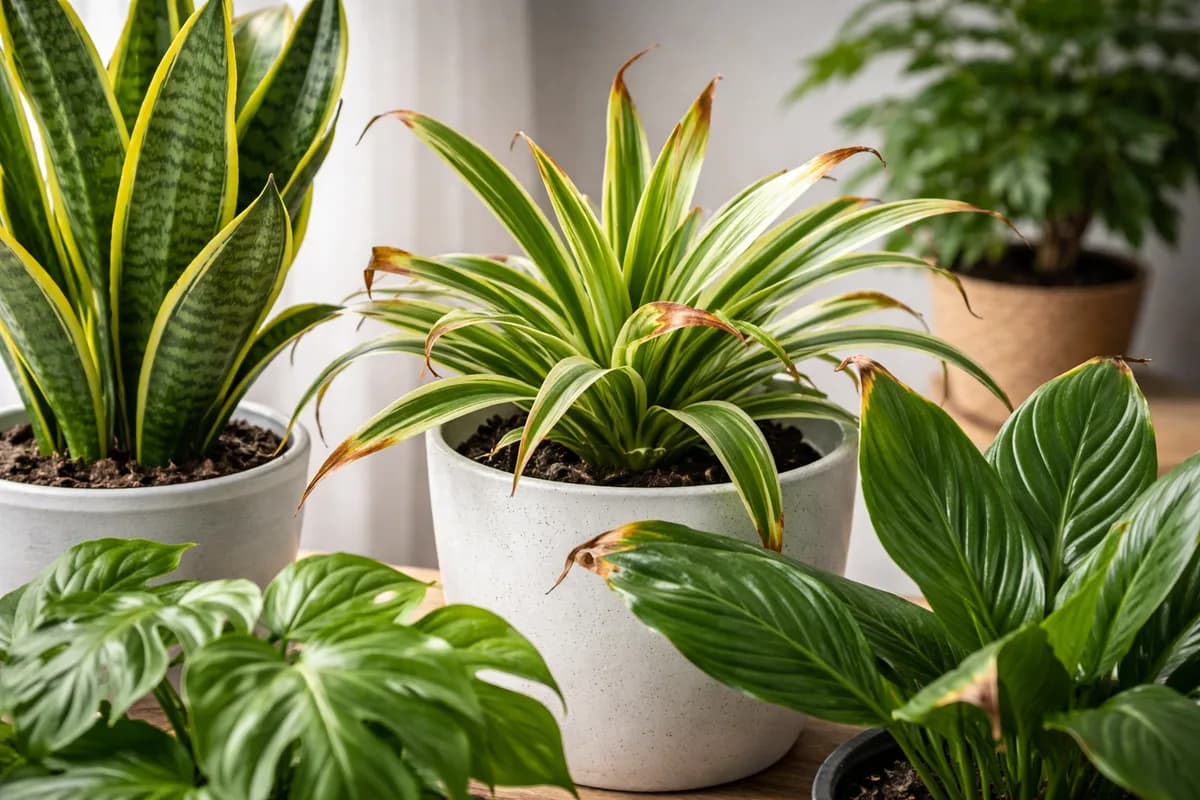
Brown tips on houseplants are almost always caused by low humidity, chemicals in tap water, or overfeeding. The frustrating news: you cannot fix the brown part (it won't turn green again). The good news: you can stop it from spreading and prevent it on new growth.
Almost every houseplant species can develop brown tips. It's the single most common cosmetic problem in indoor gardening. Here are the 6 causes, how to identify yours, and exactly what to do.
1. Low humidity
This is the number one cause of brown tips, especially in winter when central heating dries out the air.
How to tell: The tips are dry and crispy, not soft. Multiple plants are affected. It's winter or you live in a dry climate. The brown is limited to the very tips, not spreading inward.
Plants most affected: Spider plants, calatheas, peace lilies, ferns, dracaenas.
The fix:
- Group plants together to create a humidity microclimate
- Use a pebble tray filled with water beneath pots
- Run a humidifier nearby (aim for 40-60% humidity)
- Move sensitive plants away from radiators and heating vents
- Mist in the morning (not evening, to avoid fungal issues)
2. Fluoride and chlorine in tap water
Many houseplants are sensitive to the chemicals in tap water. Fluoride is the biggest offender, and it accumulates in the soil over time.
How to tell: The browning is specifically at the tips (not edges). Spider plants and dracaenas are especially affected. You water exclusively with tap water. The problem gets worse over time.
Plants most affected: Spider plants, dracaenas, calatheas, peace lilies, ti plants.
The fix:
- Switch to filtered water, rainwater, or distilled water
- If using tap water, let it sit out overnight in an open container (this helps with chlorine but not fluoride)
- Flush the soil every few months by running water through it for several minutes to wash out buildup
- When repotting, use fresh soil to remove accumulated chemicals
3. Overfeeding (fertilizer burn)
Too much fertilizer damages roots and shows up as brown tips. More fertilizer doesn't mean more growth - it means burnt roots.
How to tell: The browning started after fertilizing. Tips and edges are brown. You have been fertilizing frequently or at full strength. There may be a white crusty buildup on the soil surface.
The fix:
- Flush the soil with plain water to wash out excess salts
- Stop fertilizing for at least a month
- Going forward, always dilute fertilizer to half the recommended strength
- Feed only during the growing season (spring and summer)
- Less is always better with fertilizer
4. Underwatering
Consistent underwatering causes the plant to sacrifice its leaf tips first, since they're the furthest points from the roots.
How to tell: The soil frequently dries out completely. You often forget to water. The brown tips are accompanied by dry, crispy leaf edges. The plant may also droop between waterings.
The fix:
- Water more consistently - check soil moisture every few days
- When you water, water thoroughly until it drains from the bottom
- If the soil is very dry and hydrophobic, water from below for 20-30 minutes
- Consider a more consistent schedule or watering reminders
5. Sunburn
Direct sunlight can scorch leaf tips and edges, especially on plants adapted to shade.
How to tell: The browning is on the side facing the window. It happened after moving the plant to a sunnier spot. The brown areas look bleached or have a yellow ring around them.
The fix:
- Move the plant away from direct sunlight
- Use sheer curtains to filter light
- East-facing windows provide gentler morning light
- If moving to a brighter spot, do it gradually over a week
6. Salt buildup in soil
Over time, minerals from water and fertilizer accumulate in the soil. This pulls moisture away from roots through a process called osmosis.
How to tell: White crusty deposits on the soil surface or pot rim. The plant has been in the same soil for 1-2+ years without repotting. You use tap water and fertilize regularly.
The fix:
- Flush the soil thoroughly with plain water (run water through for 5 minutes)
- Scrape off visible salt deposits
- Repot with fresh soil every 1-2 years
- Use filtered or rainwater to prevent future buildup
Can you cut off the brown tips?
Yes, you can trim them for cosmetic reasons. Use clean, sharp scissors and cut just inside the brown area, leaving a tiny sliver of brown. Cutting into the green tissue creates a new wound that will also brown. The trim is purely cosmetic - it doesn't help or hurt the plant.
Quick diagnostic
| Clue | Likely cause |
|---|---|
| Winter, dry air, multiple plants affected | Low humidity |
| Spider plant or dracaena, tap water only | Water chemicals |
| Started after fertilizing, white crust on soil | Overfeeding |
| Soil often bone dry, tips plus edges crispy | Underwatering |
| On window side only, recently moved | Sunburn |
| Old soil, white deposits, long-term buildup | Salt buildup |
Prevention checklist
- Humidity above 40% (use a hygrometer to check)
- Filtered or rainwater for sensitive species
- Fertilize at half strength, only in growing season
- Water consistently, checking soil moisture first
- Bright indirect light, not direct sun for most species
- Repot every 1-2 years with fresh soil
The brown tips that already exist won't recover, but new growth will come in clean and green once you fix the underlying cause. Be patient - it takes a few weeks to see improvement.
Track your watering, feeding, and repotting schedule in LeafLovers - the free plant care app that works offline. When you can see your care history at a glance, it's much easier to spot the patterns that cause brown tips before they start.
Related guides
Spotted something that needs correcting? Send a message.