Why Is My Plant Drooping? A Universal Guide for Any Houseplant
Drooping is your plant's way of asking for help - here's how to decode it.
If your plant is drooping, the two most common causes are overwatering and underwatering - and yes, they look frustratingly similar. The quickest way to tell the difference: check the soil. Wet soil means overwatering. Dry soil means underwatering. Start there, and you'll solve most drooping problems.
This guide covers every common species. Whether it's a monstera, pothos, peace lily, fiddle leaf fig, or anything else - the causes of drooping are surprisingly universal.
1. Underwatering
The simplest and most common cause. Your plant is thirsty.
How to tell:
- The soil is dry when you stick your finger in (check 5cm / 2 inches deep)
- The pot feels light when you lift it
- Leaves are limp but not mushy
- The entire plant is drooping, not just some leaves
The fix:
- Water thoroughly until water runs out the drainage holes
- If the soil has become hydrophobic (water runs off instead of absorbing), water from below by placing the pot in a tray of water for 20-30 minutes
- Most plants perk up within 2-24 hours after a good drink
- Going forward, check soil moisture every few days
Species that droop dramatically when thirsty: Peace lilies, fittonias, polka dot plants, basil. These plants droop fast but also recover fast.
2. Overwatering
More dangerous than underwatering because it can lead to root rot, which is harder to fix.
How to tell:
- The soil is wet or soggy
- The pot feels heavy
- Leaves are drooping AND turning yellow
- Stems may feel soft or mushy at the base
- There might be a musty smell from the soil
- The plant has been sitting in water in its saucer
The fix:
- Stop watering immediately
- Remove the plant from its pot and inspect the roots
- Healthy roots are white or tan. Rotten roots are brown, mushy, and may smell bad
- Trim any rotten roots with clean scissors
- Repot in fresh, well-draining soil
- Let the soil dry out before watering again
- Always use pots with drainage holes
Why it happens: Most people water on a schedule rather than checking the soil. In winter, plants use much less water but get the same amount - leading to soggy soil.
3. Root bound
When roots run out of space, the plant cannot absorb water efficiently, even when the soil is moist.
How to tell:
- Roots growing through drainage holes
- Roots circling the surface of the soil
- Water runs straight through the pot without absorbing
- The plant wilts quickly even after watering
- The plant has been in the same pot for 2+ years
- Growth has slowed or stopped
The fix:
- Repot into a container 3-5cm (1-2 inches) larger
- Use fresh potting mix appropriate for your plant species
- Gently loosen the root ball - if roots are tightly circling, use your fingers to tease them apart
- Water well after repotting
- Expect some adjustment period (1-2 weeks of mild drooping is normal after repotting)
4. Temperature shock
Sudden temperature changes stress plants and cause drooping, especially in tropical species.
How to tell:
- The drooping happened suddenly
- The plant is near a cold window, exterior door, air conditioning vent, or radiator
- There was a sudden temperature change (cold snap, heating turned on/off)
- Leaves may show browning or blackening at the edges alongside drooping
The fix:
- Move the plant away from temperature extremes
- Most houseplants prefer 18-27C (65-80F)
- Avoid placement near:
- Single-pane windows in winter
- Air conditioning vents
- Radiators and heating vents
- Exterior doors that open frequently
- The plant should recover in a few days once conditions stabilize
Common scenario: Leaving a plant on a windowsill overnight in winter. The temperature near the glass can drop well below what the rest of the room feels like.
5. Transplant shock
Just moved or repotted your plant? Drooping is a normal stress response.
How to tell:
- The drooping started within 1-2 weeks of repotting, moving, or purchasing
- The soil moisture is fine (not too wet, not too dry)
- No signs of root rot or pests
- The plant was healthy before the change
The fix:
- Be patient - this is temporary
- Keep the plant in consistent conditions (stable temperature, bright indirect light)
- Water normally but don't fertilize for 4-6 weeks
- Avoid moving the plant again until it recovers
- Recovery typically takes 1-3 weeks
Quick diagnostic flowchart
| Check this first | If yes | Likely cause |
|---|---|---|
| Is the soil dry? | Yes | Underwatering |
| Is the soil wet/soggy? | Yes | Overwatering |
| Are roots growing out of the pot? | Yes | Root bound |
| Was there a recent temperature change? | Yes | Temperature shock |
| Did you recently repot or move it? | Yes | Transplant shock |
| Are there mushy stems or a bad smell? | Yes | Root rot (from overwatering) |
When to worry (and when not to)
Normal drooping (don't panic):
- Peace lily drooping when thirsty (recovers in hours)
- Mild drooping in the afternoon on hot days (recovers at night)
- Slight droop after repotting (recovers in 1-2 weeks)
- Calathea leaves drooping at night (this is normal prayer plant movement)
Concerning drooping (take action):
- Drooping plus yellow leaves plus wet soil (check for root rot)
- Drooping that doesn't recover after watering (root damage)
- Drooping plus mushy stems (advanced root rot)
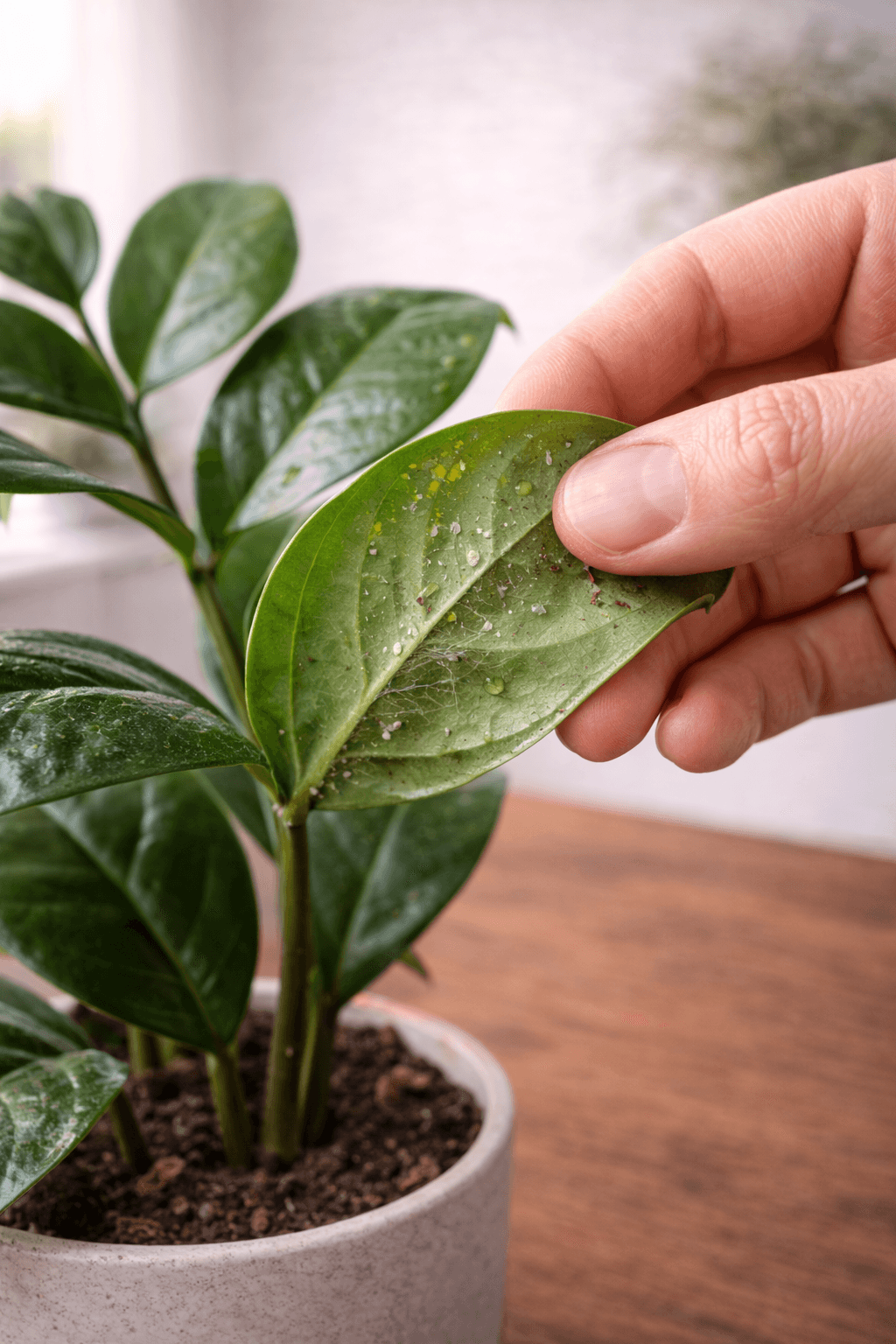
- Drooping plus visible pests (check undersides of leaves)
The universal rule
Before doing anything else, check the soil moisture. This single step will correctly diagnose the majority of drooping problems. The soil tells you what the leaves cannot.
In LeafLovers, each plant tracks its watering history and shows you when it last had a drink - so when drooping happens, you can check your care log and figure out the cause in seconds. It's free and works offline, so it's always there when you need it.
Related guides
Spotted something that needs correcting? Send a message.