How to Build a Plant Watering Schedule (5-Step Guide)
Why generic schedules fail and how to create one that fits your home.
There's no universal plant watering schedule that works for every home. But you can build one that works for yours. The secret is the finger test, grouping plants by needs, and adjusting for seasons. Here's a 5-step guide to building a plant watering schedule that actually keeps your plants alive.
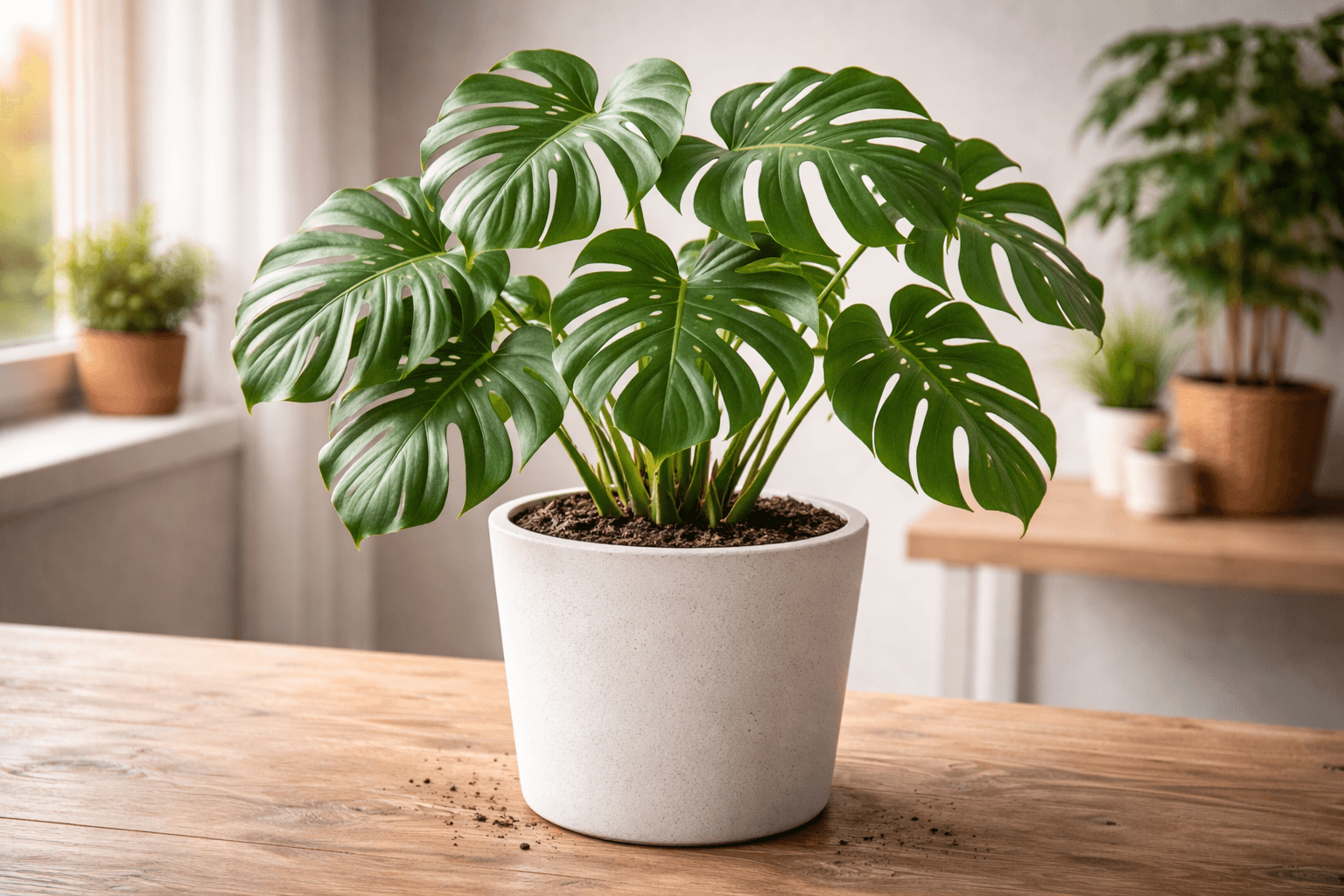
The reason "water once a week" advice kills so many houseplants is that it ignores the variables that actually matter: your pot size, soil type, light levels, humidity, and season. A monstera in a bright, warm room in July needs water twice as often as the same plant in a dim, cool room in January. Your watering schedule needs to account for all of this.
Why generic schedules fail
Every watering guide gives frequencies like "every 7-10 days." These are useful starting points, but they fall apart because:
- Your home is unique. A south-facing apartment in Madrid dries plants much faster than a north-facing flat in Stockholm
- Seasons change everything. Plants use 2-3 times more water in summer than winter
- Pot material matters. Terracotta dries twice as fast as plastic or ceramic
- Pot size matters. A small pot dries in 3 days. The same plant in a large pot stays moist for 10 days
- Soil type matters. Well-draining cactus mix dries much faster than dense tropical mix
- Heating and air conditioning dramatically affect how fast soil dries
The finger test (your best tool)
The single most reliable way to know when any plant needs water:
- Stick your finger into the soil up to the second knuckle (about 5cm / 2 inches)
- If it feels dry at that depth, water the plant
- If it feels moist, wait and check again in a few days
Exceptions:
- Succulents and cacti: let soil dry completely (check deeper)
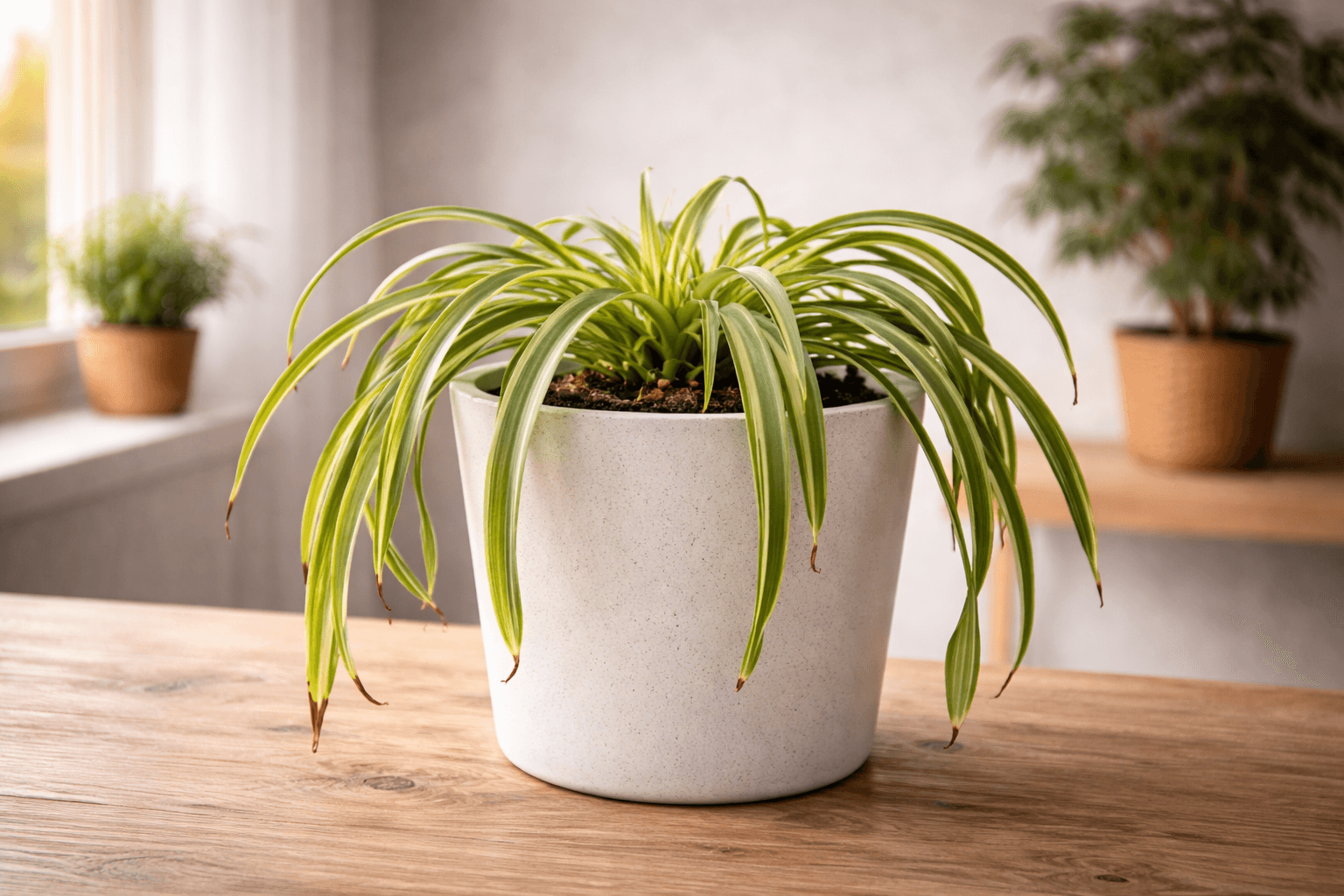
- Calatheas and ferns: water when just the top 2cm is dry (they like consistent moisture)
- Orchids: check the roots (green = hydrated, silver/white = needs water)
The finger test is not glamorous, but it works for every plant, every season, and every home.
Step 1: Group your plants by water needs
Not all plants need the same amount of water. Grouping them makes your life much easier.
Group A: Thirsty plants (check every 3-5 days)
- Calatheas, ferns, peace lilies, fittonias
- Like consistently moist (not wet) soil
- Check the top 2cm - water if dry
Group B: Moderate drinkers (check every 5-7 days)
- Monsteras, pothos, philodendrons, rubber plants
- Like to dry out a bit between waterings
- Check the top 5cm - water if dry
Group C: Drought-tolerant (check every 10-14 days)
- Snake plants, ZZ plants, succulents, cacti
- Need soil to dry completely between waterings
- Check all the way down - only water when fully dry
Group D: Water-sensitive (check every 7-14 days)
- String of pearls, lithops, most cacti
- Absolutely must dry completely, some species need weeks between waterings
- When in doubt, wait
Step 2: Pick your checking days
Instead of watering on a schedule, check on a schedule:
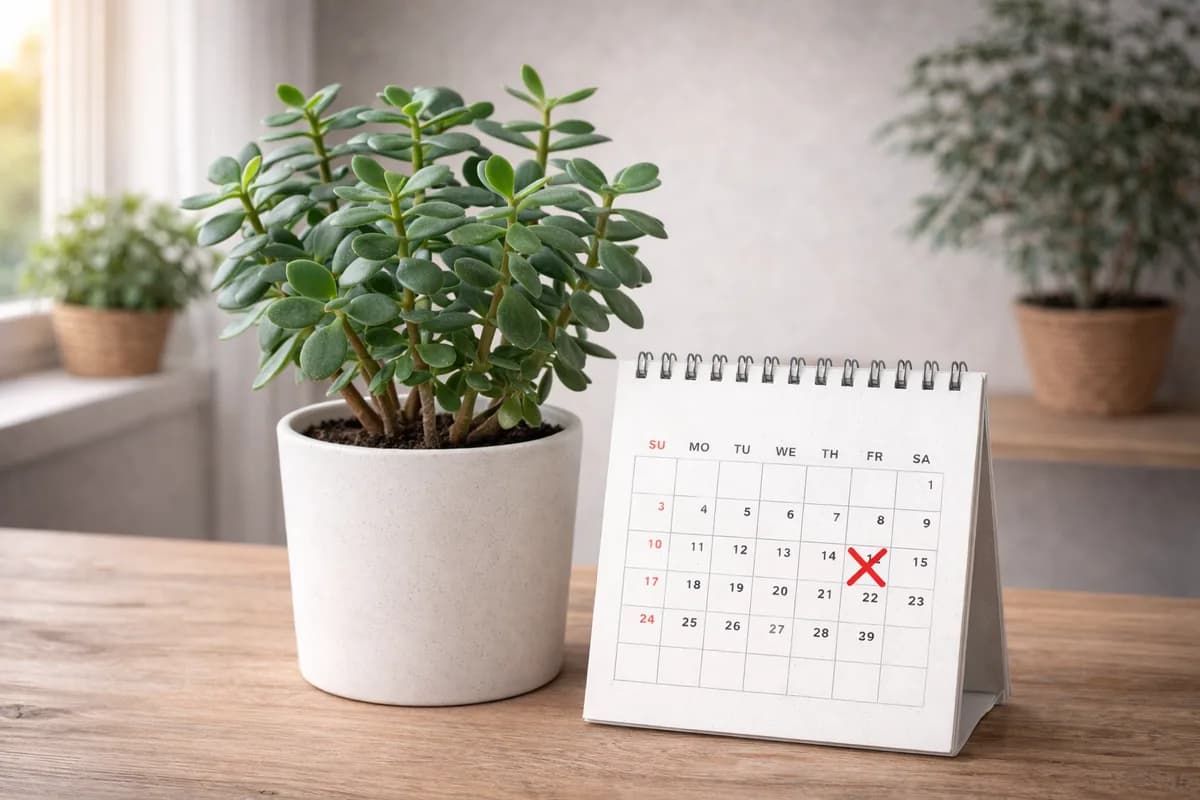
Simple approach: Pick 2 days per week (for example, Sunday and Wednesday) as your "plant check days." On those days, do the finger test on all your plants and only water the ones that need it.
Why this works: You are checking consistently, but watering based on actual need. A thirsty calathea might get water both days. A snake plant might not need water for 3 weeks. Both are getting exactly what they need.
Step 3: Adjust for seasons
This is where most people go wrong. Your plants' water needs change dramatically throughout the year.
| Season | Adjustment |
|---|---|
| Spring (March-May) | Growth begins, gradually increase checking |
| Summer (June-August) | Peak water needs, check more frequently |
| Autumn (September-November) | Growth slows, start reducing |
| Winter (December-February) | Minimum water needs, check but water rarely |
The winter trap: Most indoor plant deaths happen in winter because people keep watering on their summer schedule. Your plants are barely growing. They need much less water. The soil stays wet longer. Root rot sets in silently.
Step 4: Learn your specific plants' signals
Over time, you will learn to read your plants before you even check the soil:
| Signal | Meaning |
|---|---|
| Slight drooping or wilting | Thirsty (peace lilies, fittonias) |
| Leaves curling inward | Thirsty (calatheas, some tropicals) |
| Pot feels light when lifted | Soil is dry |
| Pot feels heavy | Soil is still wet |
| Leaves looking dull | May need water |
| Wrinkled succulent leaves | Thirsty (succulents store water in leaves) |
Step 5: Track and adapt
Keeping a simple log of when you water each plant helps you spot patterns:
- "My monstera needs water every 5 days in July but every 12 days in January"
- "The fern on the windowsill dries out twice as fast as the one in the bathroom"
- "I consistently overwater the snake plant in winter"
After a few weeks of tracking, you develop intuition. You start to know which plants need water before you even check. This is the real goal - not a rigid schedule, but plant intuition built from paying attention.
How adaptive schedules work
Static schedules say "water every 7 days." Adaptive schedules adjust based on real conditions.
An adaptive approach considers:
- When you last watered
- Whether the plant was thirsty or still moist at the last check
- The current season and weather
- Your specific home conditions
This is exactly what LeafLovers does - it learns from your actual watering patterns and adjusts reminders over time. No more generic schedules that ignore your home, your pots, and your seasons.
The bottom line
- Do not water on a calendar. Water based on soil moisture
- Group plants by thirst level to simplify your routine
- Check regularly (2 times per week is plenty) using the finger test
- Adjust for seasons - winter means much less water
- Track your watering to build intuition over time
The perfect watering schedule is not something you find in a guide. It is something you build by paying attention to your specific plants in your specific home. Or you can let LeafLovers pay attention for you - it tracks your watering automatically and adjusts as seasons change.
Related guides
Spotted something that needs correcting? Send a message.