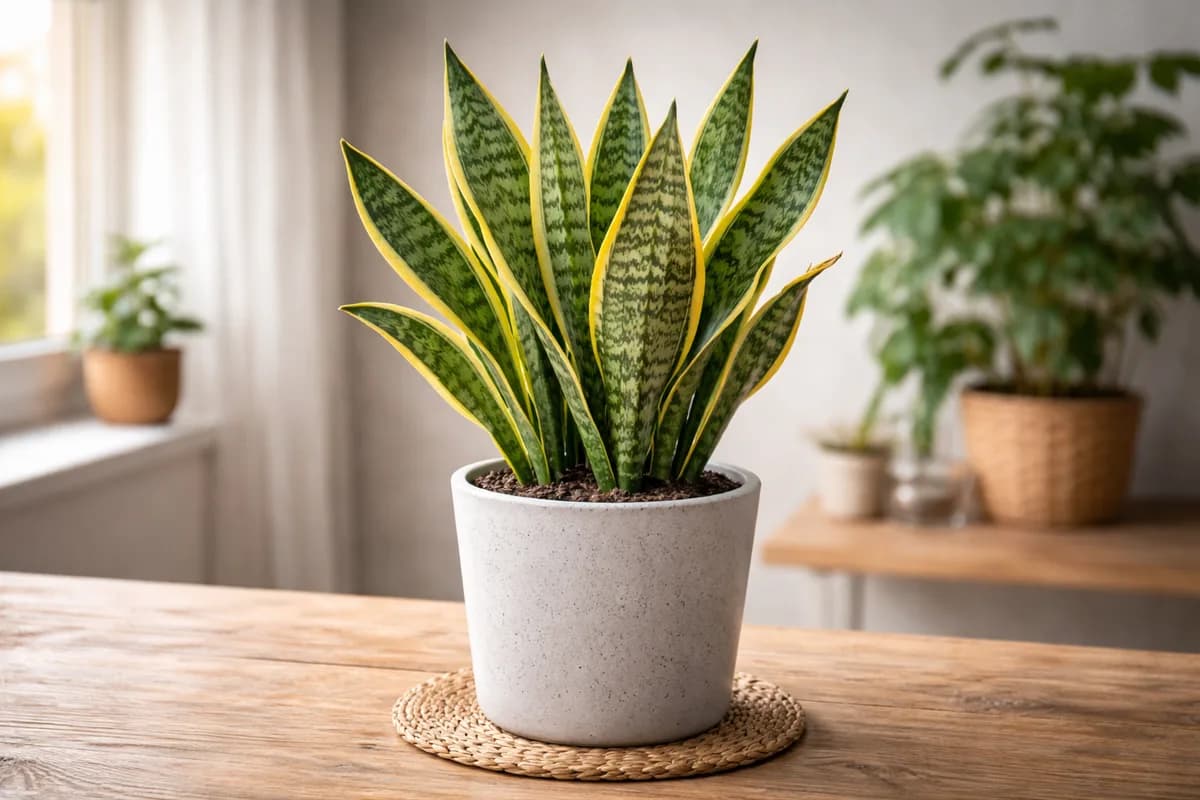
How Often Should You Water a Snake Plant? The Complete Answer
Short answer: less than you think. Here's exactly how often, season by season.
Water your snake plant every 2-3 weeks in summer and every 3-4 weeks in winter. Always let the soil dry out completely between waterings. The number one killer of snake plants is overwatering, so when in doubt, wait.
That is the quick answer. But your exact schedule depends on your pot, soil, light, and season. Here's how to dial it in perfectly.
The finger test (the only test you need)
Forget fixed schedules. The most reliable way to know when your snake plant needs water:
- Stick your finger into the soil, all the way to the second knuckle (about 5cm / 2 inches)
- If the soil is dry all the way down, water
- If there is any moisture at all, wait and check again in a few days
Snake plants store water in their thick, fleshy leaves. They are succulents at heart. They are built to survive drought and punished by excess water.
Seasonal watering guide
| Season | Frequency | Why |
|---|---|---|
| Spring | Every 2-3 weeks | Growth picks up, plant uses more water |
| Summer | Every 2-3 weeks | Active growth, warmer temps, faster drying |
| Autumn | Every 3-4 weeks | Growth slows, less water needed |
| Winter | Every 4-6 weeks | Near-dormant, very little water used |
These are guidelines, not rules. Your specific conditions matter more than the calendar.
What affects how often you water
Pot material
- Terracotta: Dries faster (water more often). Best choice for snake plants
- Plastic or ceramic: Retains moisture longer (water less often)
- No drainage holes: Danger zone. Always use pots with drainage
Pot size
- Smaller pots dry out faster
- Larger pots hold moisture longer (and increase the risk of overwatering)
- Avoid pots that are much larger than the root ball
Soil type
- Cactus/succulent mix: Drains fast, dries quickly (ideal)
- Regular potting soil: Holds moisture longer (mix with perlite to improve drainage)
- Heavy, dense soil: Stays wet too long (repot with better soil)
Light
- Bright light: Soil dries faster, water more frequently
- Low light: Soil stays moist longer, water less frequently
Home temperature
- Warm rooms (22C+): Soil dries faster
- Cool rooms (below 18C): Soil stays moist longer, be careful
Signs of overwatering
Catch these early and your snake plant will recover:
- Soft, mushy leaves at the base - this is the most telling sign
- Yellow leaves - especially lower ones turning yellow and soft
- Leaves falling over or leaning outward
- Mushy stem base - if the base of a leaf feels squishy, that leaf is likely gone
- Musty smell from the soil
- Brown, mushy roots (root rot) - check by gently removing from pot
What to do: Stop watering. Remove from pot and inspect roots. Trim any brown, mushy roots. Repot in dry, well-draining soil. Wait at least 2 weeks before watering again.
Signs of underwatering
Less dangerous but worth catching:
- Wrinkling leaves - the leaves develop visible wrinkles or creases
- Curling inward - the leaf edges curl toward the center
- Brown, crispy tips - the leaf tips dry out
- Dull, pale color - the leaves lose their vibrancy
- Slow or no growth - even in the growing season
What to do: Water thoroughly and the plant should recover within a week. Snake plants are remarkably resilient to drought.
The golden rules
- Dry soil = water. Moist soil = wait. It really is that simple
- Less is more. A forgotten snake plant is a happy snake plant
- Drainage is non-negotiable. Pot with holes + well-draining soil
- Winter means almost no water. Your snake plant is barely active in winter
- Water thoroughly when you do water. No tiny sips - soak it and let it drain
The most common mistake
Most snake plant deaths happen in winter. The plant is barely using water, the soil stays wet for weeks, and root rot sets in silently. If you only take one thing from this guide: dramatically reduce watering from November to February (or May to August in the Southern Hemisphere).
Quick reference
| Light | Low to bright indirect - very adaptable |
|---|---|
| Water | Every 2-4 weeks, soil must dry completely between waterings |
| Humidity | Normal household (30-50%) |
| Difficulty | Absolute beginner |
| Personality | Zen |
| Toxic to pets? | Mildly toxic if ingested (cats and dogs) |
Your snake plant is a Zen plant. In LeafLovers, it would say: "I have been fine for two weeks without water. I will be fine for another week. Relax. We are both going to be okay."
Related guides
Spotted something that needs correcting? Send a message.
Care reference
Need the full care profile for Snake Plant?
Check the encyclopedia for light, watering, soil, pet safety, and pot guidance - then use LeafLovers to fit it to your plant and home.