Common Houseplant Pests: How to Spot and Stop Them
Tiny invaders, big problems. Here is how to fight back.
If something is chewing, sucking, or crawling on your houseplant, you are not alone - and it does not mean you are doing anything wrong. Houseplant pests are incredibly common, and catching them early makes all the difference. The five most common culprits are spider mites, mealybugs, fungus gnats, scale, and aphids. Here is how to identify each one and get rid of them.
Why do houseplants get pests?
Pests are not a sign of failure. They hitchhike in on new plants from the nursery, sneak in through open windows, or hide in bags of soil. Stressed plants (overwatered, underwatered, or in low light) are more vulnerable, but even perfectly healthy plants can get them.
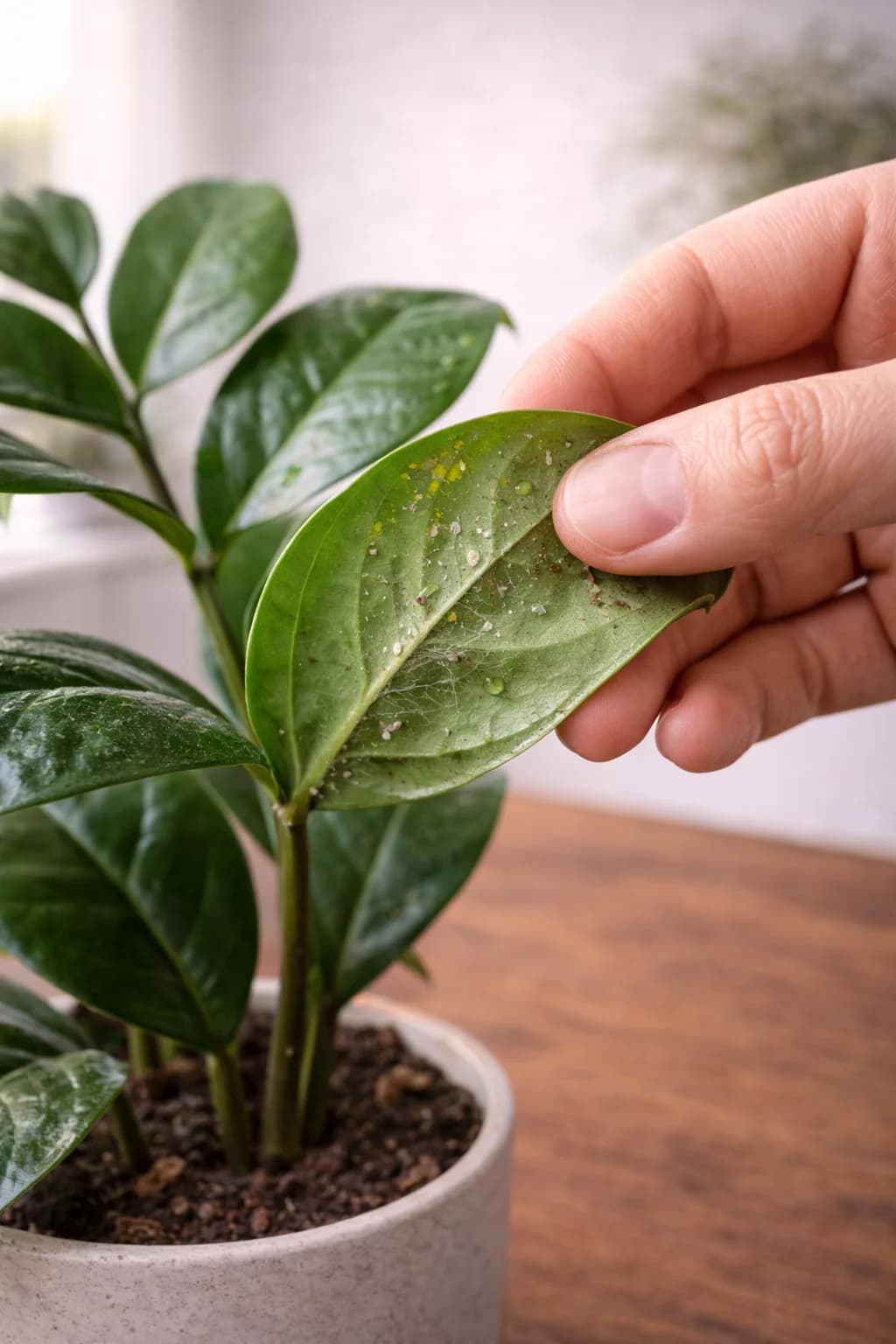
The most important rule: Check your plants regularly. A quick look at the leaves (top and bottom) every time you water can catch an infestation before it spreads.
1. Spider mites
What they look like: Tiny - almost invisible to the naked eye. You will usually notice the damage before you see the mites themselves. They are reddish-brown or yellowish and live on the undersides of leaves.
Signs of infestation:
- Fine webbing between leaves and stems (this is the telltale sign)
- Tiny yellow or white speckles on the tops of leaves
- Leaves looking dusty, dull, or stippled
- Leaves dropping when infestation is severe
Why they show up: Spider mites love dry, warm conditions. Heated rooms in winter are their paradise.
Treatment:
- Isolate the plant immediately to prevent spreading
- Spray the entire plant (especially undersides of leaves) with water to physically remove mites
- Wipe leaves with a damp cloth
- Spray with a solution of water and a few drops of dish soap or neem oil (5ml neem oil per litre of water)
- Repeat every 3-5 days for at least 2 weeks - mite eggs hatch on a cycle
Prevention: Increase humidity around your plants. Mist regularly or group plants together. Spider mites hate moisture.
2. Mealybugs
What they look like: Small, white, cottony clusters - like tiny bits of cotton wool stuck to your plant. They are soft-bodied insects that gather in leaf joints, along stems, and on the undersides of leaves.
Signs of infestation:
- White, fluffy clusters in leaf axils (where the leaf meets the stem)
- Sticky residue on leaves or the surface below the plant (this is honeydew - their excretion)
- Yellowing leaves
- Stunted or deformed new growth
Why they show up: They love warm, sheltered spots and spread easily between plants that are close together.
Treatment:
- For small infestations: dab each mealybug with a cotton swab dipped in rubbing alcohol (isopropyl alcohol). This kills them on contact
- For larger infestations: spray with neem oil solution or insecticidal soap
- Remove heavily infested leaves
- Repeat treatment weekly for at least 3-4 weeks
Prevention: Inspect new plants before bringing them home. Mealybugs are one of the most common hitchhikers from nurseries.
3. Fungus gnats
What they look like: Tiny black flies that hover around the soil surface. The adults are mostly just annoying, but their larvae (small white worms in the soil) can damage roots.
Signs of infestation:
- Small black flies buzzing around your plant when you disturb the soil
- Tiny white larvae visible in the top layer of soil
- In severe cases: wilting despite moist soil (larvae are eating the roots)
Why they show up: Fungus gnats breed in consistently moist soil. If you overwater, you are creating a perfect nursery for them.
Treatment:
- Let the soil dry out between waterings - this kills the larvae and breaks the breeding cycle
- Place yellow sticky traps near the plant to catch the adults
- Water from the bottom (place the pot in a tray of water and let it soak up) to keep the top layer of soil dry
- For persistent infestations: water with a solution of 1 part hydrogen peroxide (3%) to 4 parts water. This kills larvae in the soil without harming the plant
- Top the soil with a layer of sand or fine gravel - this prevents adults from laying eggs
Prevention: Do not overwater. Fungus gnats are almost always a watering problem. Let the top 2-3cm of soil dry out between waterings for most plants.
4. Scale insects
What they look like: Small, flat, oval bumps on stems and the undersides of leaves. They can be brown, tan, or white. They look like part of the plant, which is why people often miss them.
Signs of infestation:
- Hard or waxy bumps along stems and leaf veins that do not wipe off easily
- Sticky honeydew on leaves
- Yellow spots on leaves
- Sooty mould (a black, powdery coating that grows on honeydew)
Why they show up: Like mealybugs, they hitchhike on new plants. They spread slowly but are tough to get rid of once established.
Treatment:
- Scrape off visible scale with a soft toothbrush or your fingernail
- Wipe stems and leaves with rubbing alcohol on a cotton pad
- Spray with neem oil or horticultural oil - this suffocates them
- For heavy infestations, prune and discard the most affected branches
- Repeat weekly for 4-6 weeks
Prevention: Quarantine new plants for 2 weeks before placing them near your collection. Check stems and leaf undersides during this period.
5. Aphids
What they look like: Small, soft-bodied insects that cluster on new growth, flower buds, and the undersides of young leaves. They can be green, black, white, or pink.
Signs of infestation:
- Clusters of tiny insects on stems and new growth
- Sticky honeydew on leaves and nearby surfaces
- Curled, distorted, or stunted new growth
- Ants on or near the plant (ants farm aphids for their honeydew)
Why they show up: Aphids love tender new growth. They reproduce incredibly fast - a small cluster can become a full infestation in days.
Treatment:
- Spray the plant with a strong stream of water to knock them off (do this in the shower or outdoors)
- Wipe affected areas with soapy water
- Spray with neem oil solution
- For severe infestations: insecticidal soap applied every 3-5 days for 2 weeks
- Prune heavily affected growth if needed
Prevention: Keep an eye on new growth, especially in spring when aphids are most active. Healthy, well-fed plants resist aphids better than stressed ones.
General pest prevention tips
These habits will help keep all pests at bay:
- Inspect new plants before adding them to your collection. Quarantine for 2 weeks if possible.
- Check during watering. Every time you water, glance at the tops and bottoms of a few leaves. Early detection is everything.
- Keep leaves clean. Wipe large-leaved plants with a damp cloth every few weeks. Dust buildup attracts pests.
- Do not overwater. Moist soil attracts fungus gnats and weakens roots, making plants more vulnerable.
- Give plants good airflow. Plants crammed together with no air circulation are a pest paradise.
- Isolate sick plants immediately. The moment you spot pests, move that plant away from the others.
When to give up on a plant
Sometimes an infestation is too far gone. If you have been treating a plant for weeks with no improvement, if the pests have spread to other plants despite your efforts, or if the plant is more pest than plant at this point - it is okay to let it go. Protecting the rest of your collection matters more.
There is no shame in composting a heavily infested plant and starting fresh. Every plant parent has been there.
Catching pests early is the key to keeping your plants healthy. With LeafLovers, you can log care notes and track issues for each plant - so when something looks off, you have a history to refer back to.
Related guides
Spotted something that needs correcting? Send a message.