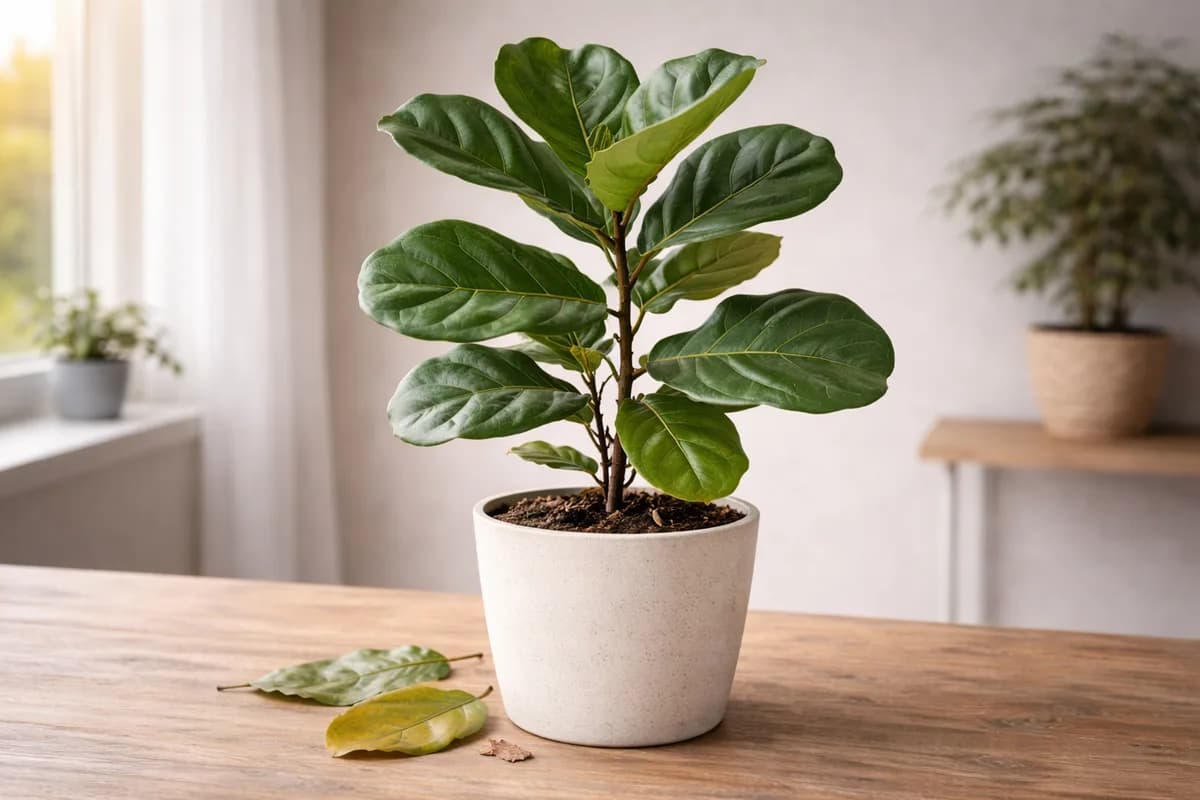
Fiddle Leaf Fig Dropping Leaves? Here's Why and How to Stop It
The most dramatic houseplant is at it again. Let's figure out what's wrong.
If your fiddle leaf fig is dropping leaves, the most likely cause is overwatering or inconsistent watering. Fiddle leaf figs are notorious for being dramatic - they respond to almost any change by dropping leaves. But once you understand what upsets them, they're actually predictable.
The fiddle leaf fig (Ficus lyrata) has a reputation as the most high-maintenance houseplant. That reputation is partly deserved - they don't like change. But "doesn't like change" is actually simple to work with once you know the rules.
1. Overwatering (the most common cause)
Fiddle leaf figs like consistent moisture but hate soggy soil. Too much water suffocates the roots and triggers leaf drop.
How to tell: Leaves are dropping from the bottom up. Dropped leaves may have dark brown spots, especially near the center. The soil stays wet for more than a week after watering. You may notice a musty smell.
The fix:
- Stop watering and let the top 3-5cm (1-2 inches) of soil dry out
- Check for root rot: gently remove the plant and inspect. Healthy roots are white, rotten roots are brown and mushy
- If you find rot, trim affected roots and repot in fresh, well-draining soil
- Going forward, water only when the top 3-5cm of soil is dry
- Use a pot with drainage holes - always
Watering schedule guide:
- Summer: approximately every 7-10 days
- Winter: approximately every 10-14 days
- Always check the soil first rather than relying on a fixed schedule
2. Cold drafts and temperature changes
Fiddle leaf figs are tropical plants from West African rainforests. They expect warmth and stability.
How to tell: Sudden leaf drop after a temperature change. The plant is near a window, exterior door, or heating/cooling vent. Temperatures have dropped below 15C (60F). Leaves may develop brown edges before dropping.
The fix:
- Move the plant away from drafts, vents, and cold windows
- Maintain a consistent temperature of 18-27C (65-80F)
- In winter, pull the plant away from windows at night when temperatures drop
- Avoid placing near radiators too - sudden heat is also stressful
The key insight: Fiddle leaf figs hate temperature fluctuations more than they hate any specific temperature. A steady 20C is better than swinging between 15C and 25C.
3. Being moved or repositioned
This is the one that catches most people off guard. Fiddle leaf figs genuinely dislike being moved.
How to tell: Leaf drop started within 1-3 weeks of moving the plant to a new spot, bringing it home from a shop, or even rotating it. The plant was healthy before the move.
The fix:
- Stop moving it. Seriously. Pick a spot and commit
- Give it 3-4 weeks to adjust to any new location
- During adjustment, maintain consistent watering and don't fertilize
- Some leaf drop after a move is normal and will stop once the plant acclimates
Prevention: When you find a spot your fiddle leaf fig likes, leave it there. If you must move it, do so gradually - shift it a little each day over a week rather than making a sudden change.
4. Low humidity
Fiddle leaf figs come from humid tropical environments. Dry indoor air, especially in winter with central heating, can cause leaf drop.
How to tell: Leaves are developing brown, crispy edges before dropping. The air in your home feels dry. It's winter and the heating is running. The plant is near a radiator or heating vent.
The fix:
- Group plants together to create a humidity microclimate
- Place a tray of pebbles and water beneath the pot (the pot should sit on the pebbles, not in the water)
- Use a humidifier nearby
- Mist the leaves in the morning (not in the evening, to avoid fungal issues)
- Aim for 40-60% humidity
5. Not enough light
Fiddle leaf figs need bright light to maintain their large leaves. In low light, they'll drop leaves to reduce their energy needs.
How to tell: The plant is more than 2 meters from a window. Lower leaves are dropping. New leaves are smaller than older ones. The plant looks leggy or stretched.
The fix:
- Move to a brighter spot with bright indirect light
- East or west-facing windows are ideal
- South-facing windows work if filtered through a sheer curtain
- Some direct morning sun is actually beneficial
Quick diagnostic
| Symptom | Timing | Likely cause |
|---|---|---|
| Bottom leaves dropping, dark spots | Gradual | Overwatering |
| Sudden mass leaf drop | After temperature change | Cold stress |
| Leaf drop after relocation | 1-3 weeks after moving | Repositioning stress |
| Brown crispy edges, then dropping | Winter or dry conditions | Low humidity |
| Lower leaves only, small new growth | Gradual | Not enough light |
The golden rules for fiddle leaf figs
- Find a spot and keep it there. Near a bright window, away from drafts
- Water consistently. Same amount, similar schedule, always checking soil first
- Bright light is essential. They need it to support those big, beautiful leaves
- Stability over perfection. A consistent mediocre spot is better than frequently changing to "better" spots
- Do not panic over a few leaves. Occasional leaf drop is normal. Panic leads to overwatering
Quick reference
| Light | Bright indirect, some direct morning sun is fine |
|---|---|
| Water | Every 7-10 days (summer), 10-14 days (winter), when top 3-5cm is dry |
| Humidity | 40-60% |
| Difficulty | Intermediate |
| Personality | Dramatic |
| Toxic to pets? | Yes - mild (cats and dogs) |
Your fiddle leaf fig is a Dramatic plant. In LeafLovers, it would say: "You moved me THREE FEET to the left. THREE. FEET. I am going to need at least two weeks to recover from this betrayal."
Related guides
Spotted something that needs correcting? Send a message.
Care reference
Need the full care profile for Fiddle Leaf Fig?
Check the encyclopedia for light, watering, soil, pet safety, and pot guidance - then use LeafLovers to fit it to your plant and home.