Monstera Care: Watering, Light and Climbing Support
Build a routine around your plant, its pot and the light in your home.
Quick questions
Is Monstera a good first houseplant?
It can be a manageable first plant if you have a bright position and room for a large climber. A pot that drains and checking moisture before watering matter more than following a calendar.
Why are my Monstera leaves not splitting?
Young plants naturally have solid leaves. Maturity and suitable light affect later leaf shape; a lack of holes alone does not diagnose poor care. Check the growing conditions and judge new leaves over time.
Does a Monstera need a moss pole?
It benefits from sturdy support as it grows, but a moss pole is only one option. A trellis or suitable pole can support the climbing stem.
Can I cut off aerial roots?
They are a normal part of this climbing plant. Guide them towards a support when practical; they do not need routine removal. Avoid pulling roots that have attached to a surface.
How often should I water my Monstera?
There is no reliable weekly interval for every home. Check the mix and pot weight, allowing the upper quarter to one-third to dry before watering thoroughly and draining.
Can a leaf cutting grow a new Monstera?
Include part of the main stem with a node and growth bud. A detached leaf and stalk alone cannot produce a new climbing plant.
Is Monstera safe for cats and dogs?
No. Monstera deliciosa contains insoluble calcium oxalates that can irritate the mouth and cause drooling, vomiting or difficulty swallowing. Keep it out of reach and contact a veterinarian promptly if chewing or ingestion is suspected.
Is Mini Monstera the same plant?
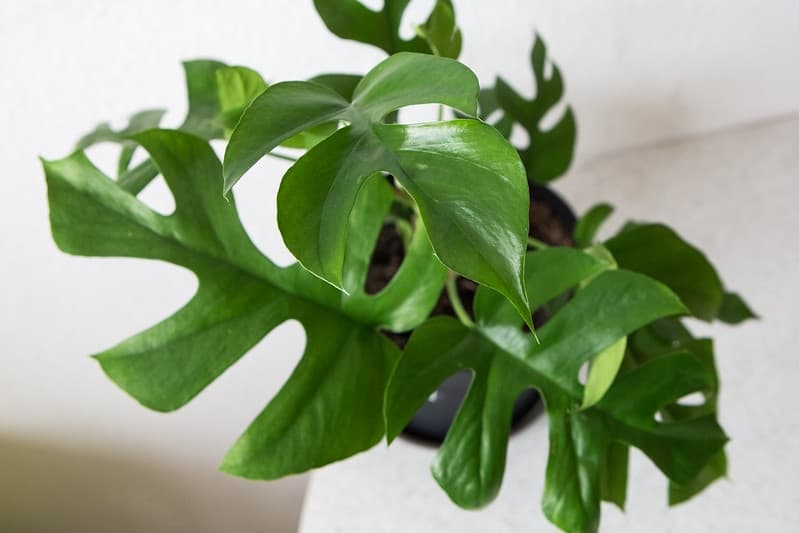
No. Mini Monstera is usually Rhaphidophora tetrasperma, a different species. Check the botanical name before applying plant-specific advice.
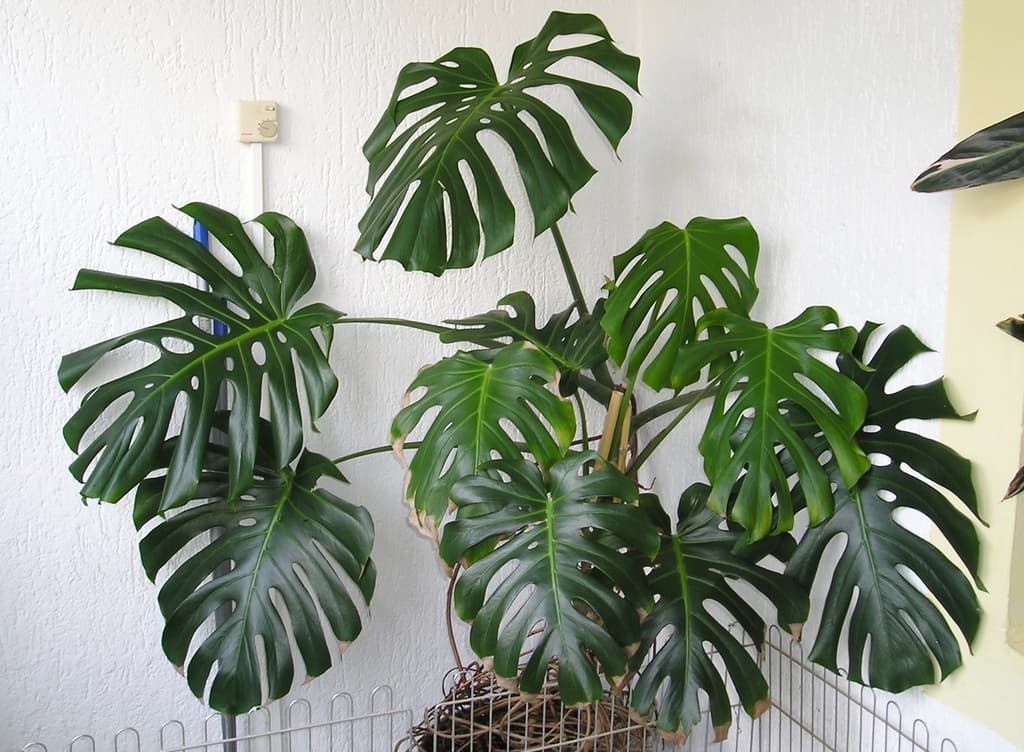
A Monstera deliciosa needs room to climb, useful daylight and a pot that can drain. The most helpful habit is to check the pot before watering: the same plant may dry much faster in a warm, bright room than in a cool corner.
This guide covers everyday care for Monstera deliciosa, the large-leaved Swiss cheese plant. If yellow leaves brought you here, start with our Monstera yellow-leaf checks.
Find a bright position
Choose bright, indirect light. Watch where the sun actually falls during the day; a window direction alone cannot tell you whether nearby buildings, trees or a curtain are shading the plant.
If strong sun reaches the leaves, filter it or move the plant out of that beam. Introduce brighter conditions gradually. A dark corner may keep a plant alive for a while, but it is a poor place to expect strong growth.
Water according to the pot
Allow roughly the upper quarter to one-third of the mix to dry before watering again, following NC State's species guidance. Check below the loose surface and learn how much lighter the pot feels as it dries. A surface that looks dry can hide a wet root ball.
When it needs water, soak the mix evenly and let the excess run out. Empty the saucer or outer decorative pot. Check again before the next watering rather than repeating a weekly dose.
A reminder is useful for checking the plant. It should not be an instruction to add water regardless of what you find.
Choose soil and a pot that drain
Use a porous houseplant mix that retains some moisture while allowing air around the roots. Perlite or bark can improve the structure of a dense mix; there is no single recipe that suits every home.
Choose a pot with drainage holes. Gravel at the bottom does not replace drainage. Repot when roots have filled the container, rather than simply because another year has passed. Move up only a few centimetres in pot width and keep the plant at its existing planting depth. A large volume of unused mix can stay wet too long.
Give the climbing stem support
A sturdy pole or trellis helps a mature plant stay upright. Fit it when repotting so you can see where the roots are, and loosely secure the main climbing stem with soft ties. Leave the leaf stalks free to move.
Aerial roots are normal. Guide flexible ones towards the support without forcing or sharply bending them. Check ties as the stem thickens.
Feed for the growth you see
Use a houseplant fertiliser at the label's dilution and frequency while the plant is actively growing. Reduce or pause feeding when growth slows in low light. Check whether fresh potting mix already contains fertiliser before adding more.
More feed does not guarantee larger leaves. Excess fertiliser can damage roots and contribute to brown tips. Investigate a struggling plant's conditions before treating it with extra nutrients.
Keep the room comfortable
Keep the plant away from cold draughts, hot radiators and air-conditioning outlets. If the air is very dry, a humidifier can help; misting is not a reliable way to maintain humidity. Brown edges alone do not prove that humidity is the problem.
Wipe dusty leaves gently with a damp cloth, supporting each leaf from underneath. Use this moment to check the undersides and stem joints for pests.
Propagate a piece of stem
A cutting needs a node on the main stem, where a leaf attaches, with a bud capable of making new growth. A leaf and its stalk alone will not make a new climbing plant.
Use clean tools and a healthy stem section. Place the node in a moist, airy propagation medium, keeping the leaf above it, and provide warmth and bright indirect light. Keep the medium moist rather than waterlogged. If rooting in water, change it regularly and expect a period of adjustment when transferring the cutting to potting mix. Rooting speed varies; look for developed roots rather than relying on a deadline.
Wear gloves when cutting or handling sap. Keep the plant and cuttings out of reach of children and pets.
When something changes
Take a photo and note what changed recently: position, watering, feeding or pot size. That history is more useful than trying several fixes at once.
For a plant that is yellowing or wilting, use the yellow-leaf troubleshooting guide. It walks through the pot, roots, light and pests before suggesting a response.
Sources for this guide
8 sources
- NC State Extension: Monstera deliciosa
- RHS: growing Swiss cheese plants
- Maryland Extension: watering indoor plants
- Maryland Extension: potting and repotting
- Maryland Extension: fertilizer for indoor plants
- Maryland Extension: temperature and humidity
- Iowa State Extension: stem tip cuttings
- ASPCA: Monstera deliciosa toxicity
Spotted something that needs correcting? Send a message.