Monstera Albo Care: Read the Diva’s Signals
Brown white patches, greener leaves or a droopy stem? Check the clues before you change its care.
Quick questions
Why are the white parts of my Monstera Albo brown?
Pale tissue can be damaged by direct sun, dry air or a watering problem. Check the affected leaf, room and pot before changing care. Brown tissue will not regain its colour.
Does more light make Monstera Albo whiter?
Bright indirect light supports growth, but it cannot guarantee a whiter next leaf. Harsh direct sun can scorch pale tissue.
Does an all-green new leaf mean my Albo has reverted?
Not always. Variegation can vary between leaves. If green growth continues, check light and the growing stem before considering pruning.
What should I do if my Monstera droops in wet soil?
Do not add more water. Check drainage and inspect the roots if decline continues; dark, soft roots need prompt attention.
When should I water Monstera Albo?
Check the upper potting mix. Water thoroughly when it begins to dry and let excess drain; the interval varies with conditions.
Is Monstera Albo toxic to pets?
Yes. It contains irritating calcium oxalate crystals. Keep it away from chewing pets and call a veterinarian after ingestion.
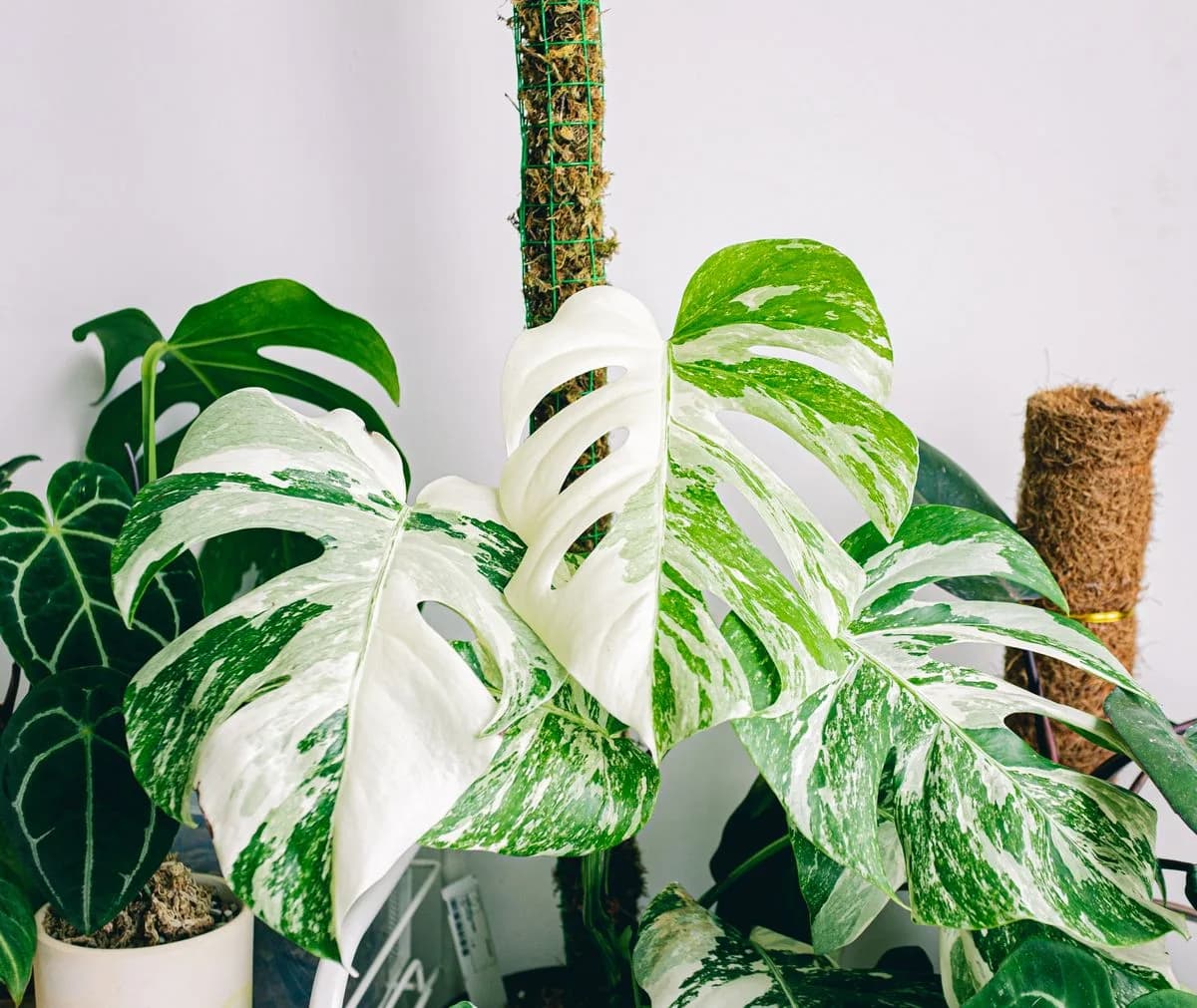
Monstera Albo knows how to make an entrance. One leaf wears a splash of white; the next keeps you guessing. It can feel like caring for a diva, but its requests are readable: useful light, a pot that drains and a little patience. The white tissue has little or no chlorophyll, so the green parts do the work of feeding the plant.
First, read the room
Give this climbing Monstera deliciosa bright, indirect light. Harsh direct sun can scorch pale patches. Use an airy potting mix in a container with drainage holes. When the upper mix begins to dry, water thoroughly and empty the saucer. The time between waterings changes with the room, season and pot. Give the stem a firm pole or trellis to climb.
Which problem are you seeing?
- White patches turning brown? Check direct sun, dry air, the pot's moisture and whether the damage is spreading.
- New leaves mostly green? Check the light, but remember that variegation can change from leaf to leaf.
- Yellowing or drooping? Check the mix below the surface and whether the pot drains before adding water.
- Soft stem, dark mushy roots or rapid decline? Inspect the roots promptly. This needs more than a new watering reminder.
- Specks, webbing or raised bumps? Inspect leaf undersides and stems for pests.
One leaf is a clue, not a diagnosis. Here are the first fixes you can make without guessing.
If the white parts brown
Move the plant away from strong direct sun if the affected patches face the window. If leaf edges are drying near a heater or in very dry air, move it away from the heat and consider a humidifier. Check the mix before changing watering: a dry pot and a soggy pot need opposite responses. Brown tissue will not turn white again, so judge a change by the new growth. An older leaf can also age without the whole plant being in trouble.
If the next leaf is mostly green
Keep the plant in bright, indirect light and look at several leaves and the growing stem, rather than treating one greener leaf as an emergency. A greener leaf is not the diva retiring her wardrobe. Low light can reduce variegation, but a fully green shoot can also be reversion. More light cannot promise a whiter next leaf, and strong sun can burn this one. If green growth continues, review the stem and growing point before any pruning; cutting a healthy collector plant on a hunch can remove useful green tissue.
If the plant droops or yellows
Feel below the top layer and check that excess water can escape. If the mix is dry, water thoroughly and let it drain. If it stays wet and leaves keep declining, inspect the roots: healthy roots are firm; dark, soft roots point to damage. Remove rotted portions with clean tools and repot healthy material into fresh, draining mix. Keep a healthy cutting with a node as a backup if much of the root system is lost. If you find pests instead, identify them before choosing a treatment.
The diva's sensible limits
A leaf without a node will not grow a new vine, and no care trick can guarantee a particular white pattern. Keep Monstera away from pets that chew leaves; its tissues contain irritating calcium oxalate crystals. If a pet has chewed it, contact a veterinarian.
When several clues conflict, note changes in light and watering, and compare any photos you have saved. Premium Plant Doctor can use the care history you save and photos or details you choose to share to suggest possible causes and next checks. It cannot guarantee a diagnosis or restore damaged tissue. For the everyday green form, see Monstera deliciosa care.
Spotted something that needs correcting? Send a message.