Sago Palm Care: Bright Light and a Serious Pet Warning
Cycas revoluta is a slow-growing cycad with a critical safety risk.
Quick questions
Is sago palm a true palm?
No. Cycas revoluta is a cycad, an ancient group of seed plants.
Is any part of sago palm safe for pets?
No. Every part can be dangerous, including seeds and fronds. Choose another plant if a pet can reach it.
What should I do if a pet eats it?
Contact a veterinarian or animal poison control immediately, even if the pet appears well.
How much light does it need?
Give bright filtered light and acclimate it gradually before any stronger direct sun.
How often should I water it?
Check the mix and water when it begins to dry; drain the pot fully. Avoid a fixed calendar.
Why are new fronds pale?
Freshly emerged fronds can be lighter and softer before they mature. Assess the whole plant and growing conditions.
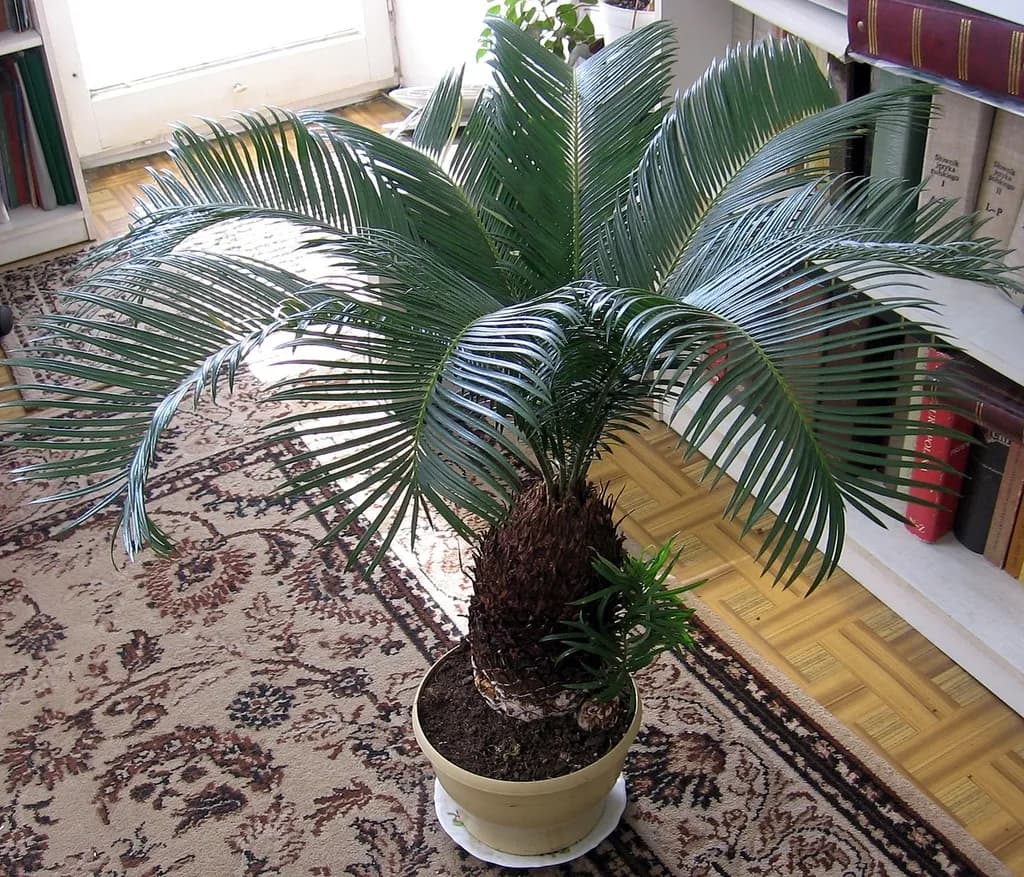
Sago palm (Cycas revoluta) looks like a palm but is a cycad. It grows slowly, with stiff fronds that emerge from a central trunk. Before buying one, consider its safety: every part is highly toxic to dogs and cats, including the seeds and fronds. In a home where a pet can reach it, choose another plant.
Light and position
Give it bright, filtered light. A plant raised in shade can be damaged by an abrupt move into harsh direct sun, so change light gradually. Rotate the pot occasionally for even growth, and protect the fronds from frost and cold draughts.
Water and pot
Use a well-drained pot and a loose mix. Check the mix below the surface and water when it begins to dry, letting the pot drain fully. Persistent wetness and poor drainage can damage roots. Growth is slow, so do not force it with extra watering or fertiliser.
Fronds and growth
New fronds emerge in a flush and may look pale or soft at first. Leave healthy fronds in place. Remove a fully dead frond with clean tools, keeping hands away from the sharp leaf tips. If new growth stalls, inspect light, roots and pests before changing care.
If a pet may have chewed it
Call a veterinarian or animal poison control immediately. Do not wait for symptoms. ASPCA reports that sago palm ingestion can cause severe liver damage and death. Take the plant name or a photo when seeking help.
Related LeafLovers guides
Sources for this guide
3 sources
Spotted something that needs correcting? Send a message.