Parlor Palm Care Guide: Light, Water and Brown Fronds
Give this slow-growing palm filtered light and check the mix before watering.
Quick questions
Can parlor palm grow in low light?
It tolerates lower light than many palms, but growth can slow. Give it a lit room with filtered light or a suitable grow light rather than a windowless corner.
When should I water my parlor palm?
Let the upper mix dry slightly, then water thoroughly and drain the pot. Check the mix rather than using the same interval all year.
Why are my parlor palm tips brown?
Check whether the mix has stayed too dry or wet, then look at dry air, cold draughts and recent changes. A brown tip alone does not identify one cause.
Why is a lower frond yellow?
An isolated older frond may be ageing. Several yellow fronds with a wet pot call for a drainage and root check.
How often should I repot a parlor palm?
Repot when roots crowd the container or the mix breaks down. This slow-growing palm does not need a larger pot on a fixed schedule.
Is parlor palm safe for cats and dogs?
ASPCA lists Chamaedorea elegans as non-toxic to cats and dogs. Confirm the botanical name and prevent chewing, which can still upset a pet.
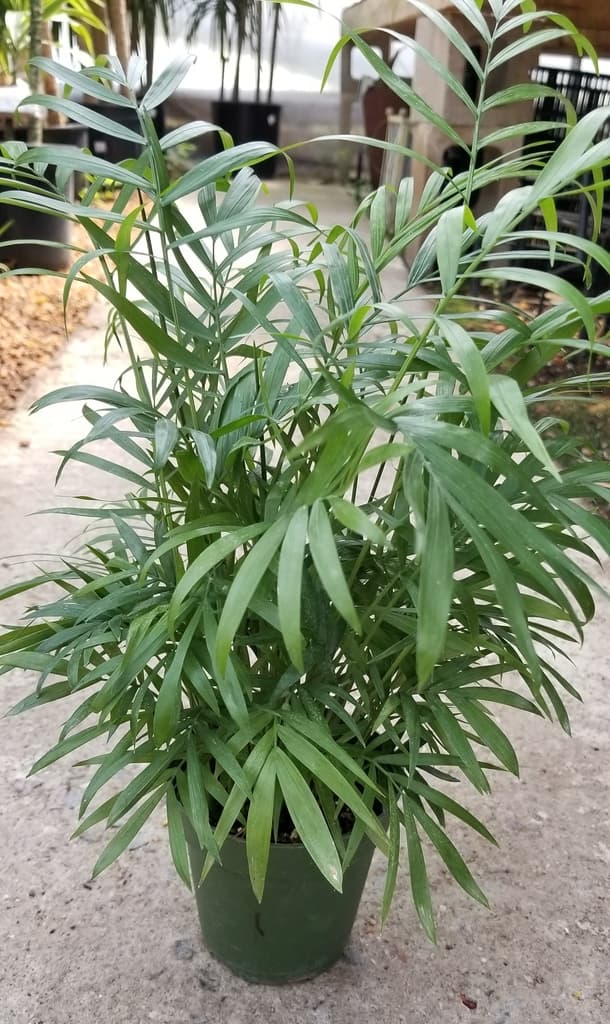
Parlor palm (Chamaedorea elegans) is a small, slow-growing palm with fine, arching fronds. It tolerates less light than many palms, but it still needs a lit position and a pot that drains.
Choose filtered light
Bright, indirect light is a good starting point. The palm can tolerate a lower-light room, but expect slower growth there. A windowless hall is too dark without a suitable grow light. Protect the fronds from harsh direct sun and keep the plant away from cold draughts.
Water after checking the pot
Feel the upper mix and let it dry slightly before watering again. When it is ready, water thoroughly and empty the saucer after the pot drains. A fixed ten-day schedule can leave one pot dry and another waterlogged. Growth and water use usually slow in cooler, darker months, so check the mix first.
Use a humus-rich, well-draining mix and a pot with drainage holes. Repot when the roots crowd the pot or the mix no longer drains well. This palm grows slowly, so a large new pot can leave too much wet mix around the roots.
Read the fronds before changing care
A single older lower frond may yellow as it ages. Several yellow fronds together with wet mix deserve a root and drainage check. Brown, crisp tips can follow several stresses, including a dry mix, dry air or a cold draught. Check the pot and position before buying a water filter or adding more water. Damaged tips do not turn green again, so watch new fronds after a change.
If you see fine webbing or moving specks beneath the fronds, isolate the palm and check for spider mites. Clean and monitor the foliage, then use a treatment labelled for indoor plants if pests are confirmed. Do not treat a brown tip as proof of mites.
Feeding and pets
A light feed during active growth is enough; follow the product directions and avoid feeding a stressed plant in wet mix. ASPCA lists Chamaedorea elegans as non-toxic to cats and dogs. Match the botanical name on the label, because plants sold as palms are not all the same species. Even non-toxic foliage can cause stomach upset when chewed.
Record light changes, pot checks and new frond growth in LeafLovers. That gives you a better comparison than a fixed watering calendar.
Related guides
Sources for this guide
3 sources
Spotted something that needs correcting? Send a message.