Arrowhead Plant Care: Light, Vines and Water
Grow Syngonium podophyllum with room for its changing leaves.
Quick questions
Why are older leaves changing shape?
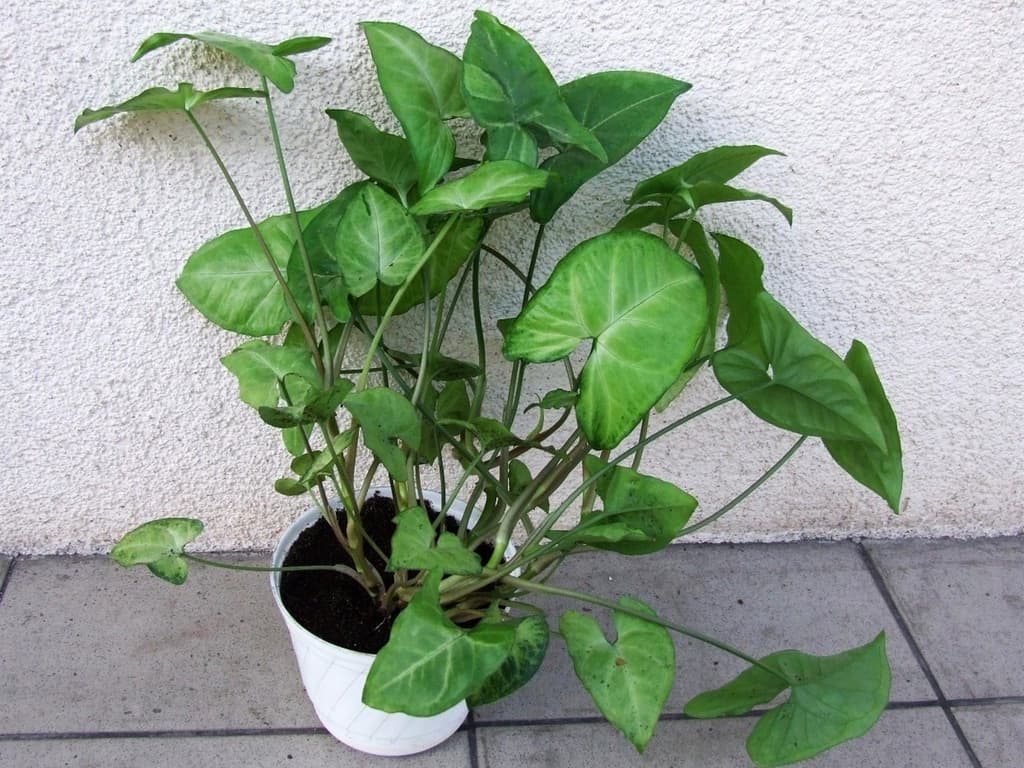
Juvenile arrow-shaped leaves become more divided as Syngonium matures, especially on supported growth.
Does arrowhead plant need direct sun?
No. Bright filtered light is a safer starting point; strong direct sun can burn leaves.
Should I water when it droops?
First check the mix and pot. Both a dry root ball and damaged roots in wet mix can cause drooping.
Is Syngonium safe for pets?
No. Its calcium oxalate crystals can irritate the mouth; keep it out of reach.
Syngonium podophyllum starts with arrow-shaped leaves and develops a climbing or trailing habit as it matures. Cultivars vary in colour, so use the exact plant label when checking advice.
Light and position
Choose bright, filtered light. Strong direct sun can bleach or burn leaves; a very dark position slows growth. Variegated forms may need brighter indirect light to retain their pattern.
Water by checking the pot
Check the upper mix before watering. When it has begun to dry, water thoroughly and let excess drain. A drooping leaf is a prompt to inspect the pot, not proof that more water is needed.
Soil, pot and growth
Use a draining container and an airy mix that retains some moisture. Let stems trail or give them a support. Prune a healthy vine above a node to shape it, and root stem cuttings with nodes for propagation.
If something looks wrong
Yellow leaves can follow several causes. Compare old and new leaves, check moisture below the surface and inspect undersides for pests. If the mix stays wet and growth declines, examine root health.
Safety and the next check
Syngonium contains irritating calcium oxalate crystals. Keep it away from pets and children who might chew it, and seek veterinary advice after exposure.
Keep a short record of when you checked the mix, watered and moved the plant. Compare new growth with your notes before making another change.
Related LeafLovers guides
Sources for this guide
2 sources
Spotted something that needs correcting? Send a message.