Ponytail Palm Care: Sunny Light and Dry Soil
Water the roots deeply, then let the swollen base do its job.
Quick questions
Is a ponytail palm really a palm?
No. Beaucarnea recurvata belongs to the asparagus family and stores water in its swollen base.
How often should I water it?
Let the mix dry between deep waterings, then drain completely. Conditions determine the interval.
Can it grow in low light?
It grows best with a sunny window or very bright light. Long-term dimness can weaken growth.
Why is the base soft?
Check for a persistently wet mix and root damage. A soft base is more concerning than a dry leaf tip.
Should I mist it?
It tolerates ordinary indoor air well; misting is not a substitute for checking the root ball.
When should I repot it?
Repot when roots truly crowd the container or the mix has broken down, keeping the swollen base at its usual depth.
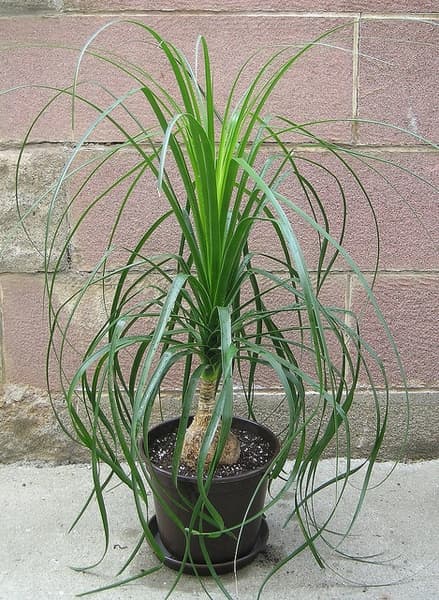
Ponytail palm (Beaucarnea recurvata) is not a true palm. Its swollen base stores water, and the narrow leaves arch from the top like a fountain. It grows slowly as a houseplant.
Light and position
Give it a sunny window or very bright light. Move a plant from a dim shop into direct sun gradually. A pot on a protected patio can work in warm weather after gradual adjustment, but bring it in before cold conditions.
Water by checking the pot
Let the mix dry between waterings, then soak it deeply and allow complete drainage. Check below the surface in a large pot. During cool, dark months it may take much longer to dry; do not follow a fixed two-week schedule.
Potting and growth
Use a gritty, well-drained cactus or succulent mix and a pot with holes. Do not bury the swollen base deeper when repotting. Its slow growth means it often needs less frequent repotting than leafy tropical plants.
Work through common problems
Brown tips can follow physical damage or dry conditions, but first check pot moisture and new growth. A soft base or persistently wet mix is a reason to inspect roots for rot. Check the leaf bases for scale and mealybugs rather than applying a treatment to every brown tip.
Safety and your next check
Keep long leaves away from children or pets that pull or chew plants. Verify the exact species against a veterinary safety list if pet access is a concern. Damaged tips can be trimmed for appearance but will not regrow green.
Related LeafLovers guides
Sources for this guide
2 sources
Spotted something that needs correcting? Send a message.