African Milk Tree Care Guide - Light, Water, Soil & Expert Tips
A bold, fast-growing succulent that looks like a cactus but is not.
Quick questions
Is African milk tree a cactus?
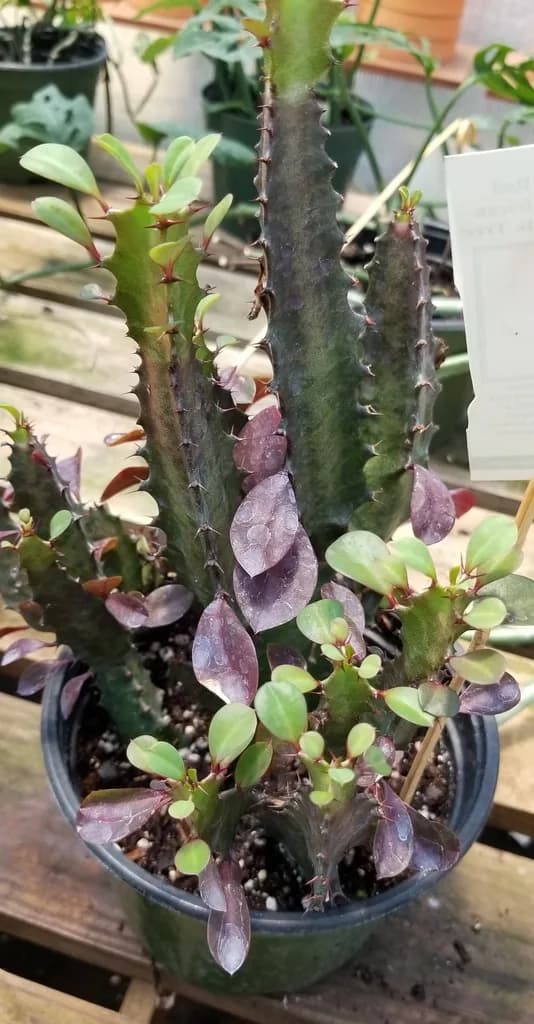
No. Euphorbia trigona is a succulent euphorbia. Its three-angled, spiny stems look cactus-like, but it belongs to the spurge family and releases irritating milky sap when cut.
When should I water African milk tree?
Check the upper 2.5 to 5 cm of mix. When it is dry, water thoroughly and let excess drain. Check less often in winter; do not use a fixed number of days.
Where should I place it indoors?
Give it bright indirect light and a warm position away from cold drafts. Acclimate it gradually if you move it into stronger direct sun.
Why are its leaves falling?
A little seasonal leaf drop can be normal. If many leaves fall suddenly, check for cold, pests and prolonged wetness before changing care.
Is African milk tree safe around pets?
No. Keep Euphorbia trigona away from pets and children. Its milky sap can irritate skin and eyes, and ingestion needs prompt veterinary or medical advice.
How do I handle pruning safely?
Wear gloves and eye protection, avoid touching your face and wash skin after handling. Large or rotting stems need extra care because cutting releases sap.
African milk tree, Euphorbia trigona, is a spiny succulent in the spurge family. Its upright, three-angled stems give it a cactus-like shape, but it is a euphorbia. Small leaves can appear along the stem ridges and may drop seasonally.
Handle it with care. Broken stems release milky sap that can irritate skin and seriously irritate eyes. Keep this plant away from pets and children who might touch or chew it. Wear gloves and protect your eyes when pruning or repotting.
Light and position
Choose a bright indoor spot with indirect light. Introduce stronger direct sun gradually and watch for scorching. Rotate the pot occasionally if growth leans toward the window. Keep it warm and away from cold drafts.
Water by checking the pot
Check the upper 2.5 to 5 cm of mix before watering. When it is dry, water thoroughly and let excess drain. The interval changes with light, pot size and season, so do not follow a fixed calendar. Growth slows in winter; check the mix and water less often then. Persistent wetness raises the risk of root rot.
Soil and stability
Use a draining cactus or succulent mix in a pot with drainage holes. As stems grow taller, check that the container is stable and cannot tip. Size up only when roots need space; a much larger pot can stay wet too long.
If something looks wrong
Soft or darkening stems: Check the mix and roots for prolonged wetness and rot. Isolate a badly affected plant and seek species-specific help before cutting into a large stem, because the sap and spines make pruning hazardous.
Leaves dropping: Some seasonal leaf loss is normal. Sudden heavy loss calls for a check of temperature, light, pests and root moisture.
Stretched or leaning growth: Review the light and the pot's stability. Move the plant gradually to a brighter position.
Safety and the next check
Wear gloves and eye protection for work that could break stems. Wash exposed skin promptly. If sap reaches an eye or any part is swallowed, seek medical or veterinary advice immediately.
Use LeafLovers to note light, pot moisture and changes in the stems. A short record is more useful than an automatic watering date when conditions change.
Sources for this guide
2 sources
Spotted something that needs correcting? Send a message.