Dragon Tree Care: Narrow Leaves and Steady Growth
Care for Dracaena marginata, now treated as D. reflexa var. angustifolia.
Quick questions
Is Dracaena marginata the same as this dragon tree?
Yes. NC State lists Dracaena marginata as an older name for Dracaena reflexa var. angustifolia.
Does it need direct sun?
Bright indirect light is a good indoor starting point.
How often should I water it?
Let the upper mix dry, then water and drain. Check the pot rather than a calendar.
Why are the leaf tips brown?
Check water quality, moisture and fertiliser use. This dracaena is sensitive to fluoride.
Is it safe for pets?
No. ASPCA lists Dracaena marginata as toxic to cats and dogs.
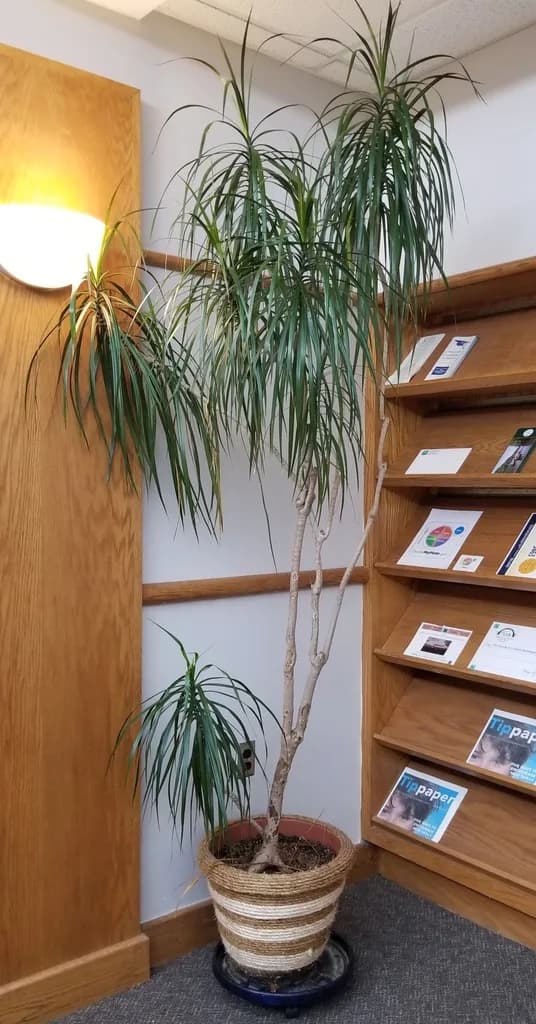
Madagascar dragon tree is often sold as Dracaena marginata. NC State lists it as Dracaena reflexa var. angustifolia. It grows slowly into a narrow-stemmed plant with tufts of pointed leaves, like the potted specimen pictured.
Light and position
Bright, indirect light supports compact growth. A darker room may slow new leaves and stretch the stems. Keep it away from cold draughts and rotate the pot occasionally so growth is more even.
Water and mix
Use a draining pot and allow the upper mix to dry before watering. Do not let the root ball stay saturated or become severely dry for long periods. The interval changes with light, pot size and season.
Brown tips and shaping
Brown tips can follow several causes. This dracaena is sensitive to fluoride, so a low-fluoride water source may help if your local water contains it. Also check moisture and fertiliser use before cutting tips. A healthy stem can be pruned to encourage branching, but new growth takes time.
Pests and pets
Check leaves for mites and thrips, and inspect any spots before using a treatment. ASPCA lists dragon tree under its older name Dracaena marginata as toxic to cats and dogs. Keep it away from chewing pets.
Related LeafLovers guides
Sources for this guide
2 sources
Spotted something that needs correcting? Send a message.