African Violet Care Guide: Watering, Light and Blooms
Keep the mix lightly moist and give the flowers enough filtered light.
Quick questions
Must African violets always be watered from below?
No. You can water the mix carefully from above with a narrow spout or water from below, then drain the pot. Avoid leaving droplets on leaves or water in the crown.
How often should I water an African violet?
Check the mix and water as the surface begins to dry. Keep it lightly moist without leaving the pot waterlogged; timing changes with light, temperature and pot size.
Why is my African violet not blooming?
Check for enough filtered light and a daily dark period, then review temperature, feeding and roots. A lack of flowers does not identify one cause by itself.
What causes spots on African violet leaves?
Water left on fuzzy leaves can make spots. Strong light and other damage can also mark leaves, so inspect the location and recent care changes.
Can I use a self-watering pot for African violets?
A well-managed wick pot can provide steady moisture. Keep the mix lightly moist, check the reservoir and avoid leaving the crown or roots waterlogged.
Are African violets safe for cats and dogs?
ASPCA lists African violet (Saintpaulia spp.) as non-toxic to cats and dogs. Confirm the exact plant and discourage chewing because plant material can still upset a pet.
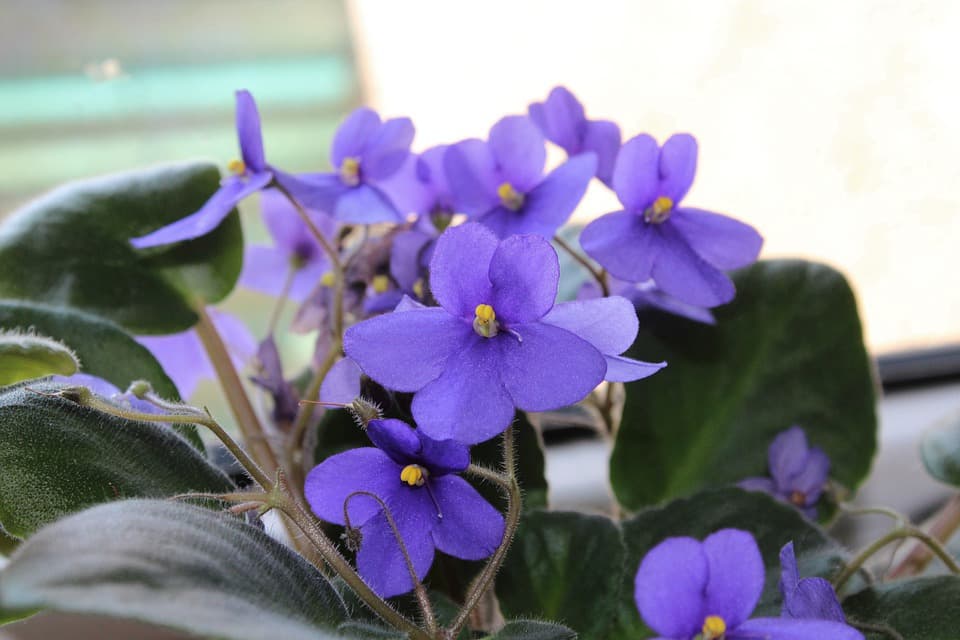
African violet is often sold under the name Saintpaulia; botanical references also use Streptocarpus ionanthus. Its fuzzy leaves and small flowers respond best to steady moisture, a draining pot and enough filtered light. Blooming several times a year is possible, but it is not guaranteed all year.
Set up light for flowers
Choose a bright position without harsh direct sun. A north or northeast-facing window can work; adjust for your own window's brightness. An LED grow light can help if natural light is limited. The University of Minnesota Extension recommends a long light period with a dark period for flowering, so avoid leaving a grow light on all night.
If leaves are healthy but flowers are absent, check light first, then temperature, feeding and root health. Pale or bleached leaves can mean the light is too strong. Long, narrow leaves and no flowers can point to too little light or a cool room.
Keep the fine roots moist, not soggy
Feel the mix rather than watering every five days. Water when the surface begins to dry, aiming for lightly moist mix that drains freely. You can water carefully from above with a narrow spout directed at the mix, or soak from below until the surface feels moist, then remove the pot and drain it. Bottom watering is an option, not a rule. Avoid leaving the pot in water.
Use room-temperature water and keep water out of the crown. Droplets left on the fuzzy leaves can cause spots, so brush or shake them off. A limp plant in wet mix may have damaged roots; adding more water will not fix that.
Potting, humidity and feeding
Use a light, well-drained African violet mix and a small pot with drainage holes. Refresh tired mix when it compacts; the University of Minnesota Extension suggests repotting into fresh mix about once a year. Average comfortable room temperatures suit the plant. If indoor air is dry, group plants or use a pebble tray with the pot above the waterline.
Feed gently with a fertilizer labelled for African violets, following its directions. Too much fertilizer can build up in the mix, while too little may reduce growth and flowers. Water plain occasionally to flush salts through a draining pot.
Read spots and missing blooms
A spot where water sat on a leaf can remain after the leaf dries. Remove a badly marked leaf if needed, but watch new leaves to judge the change. A plant that wilts while its mix stays wet needs a root and drainage check. One with long leaves and few flowers may need more light. Make one change, then give new growth time to respond.
ASPCA lists African violet (Saintpaulia spp.) as non-toxic to cats and dogs. Confirm the label, since other plants also have violet in their common name. Chewing any plant can still upset a pet's stomach.
Use LeafLovers to record moisture checks, light changes and flowering. That helps you spot what works in your own room.
Related guides
Sources for this guide
3 sources
Spotted something that needs correcting? Send a message.