Philodendron Verrucosum Care: Velvet Leaves and Climbing Growth
A velvet-leaved climber that rewards steady warmth and a thoughtful watering rhythm.
Quick questions
Does Philodendron verrucosum need high humidity?
It appreciates humid air, but steady warmth, sensible watering, and airflow matter too. Avoid sealing it in a stagnant enclosure.
Should I use a moss pole?
A pole or stake supports its climbing habit and can help it develop larger leaves as it matures.
Why are the petioles fuzzy?
Textured or hairy leaf stalks are a normal feature of this species.
When should I water?
Water when the upper part of an airy mix begins to dry, then let excess water drain. Do not use a fixed schedule.
Is it toxic to cats and dogs?
Yes. Philodendrons contain irritating calcium oxalate crystals; keep the plant away from chewing pets.
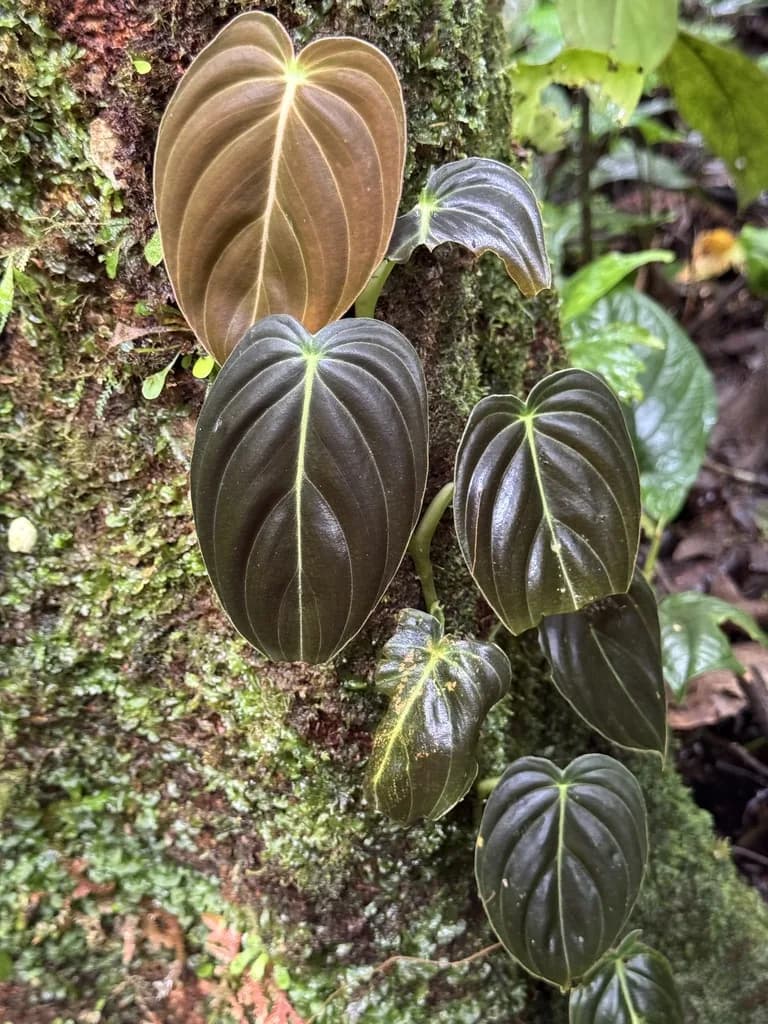
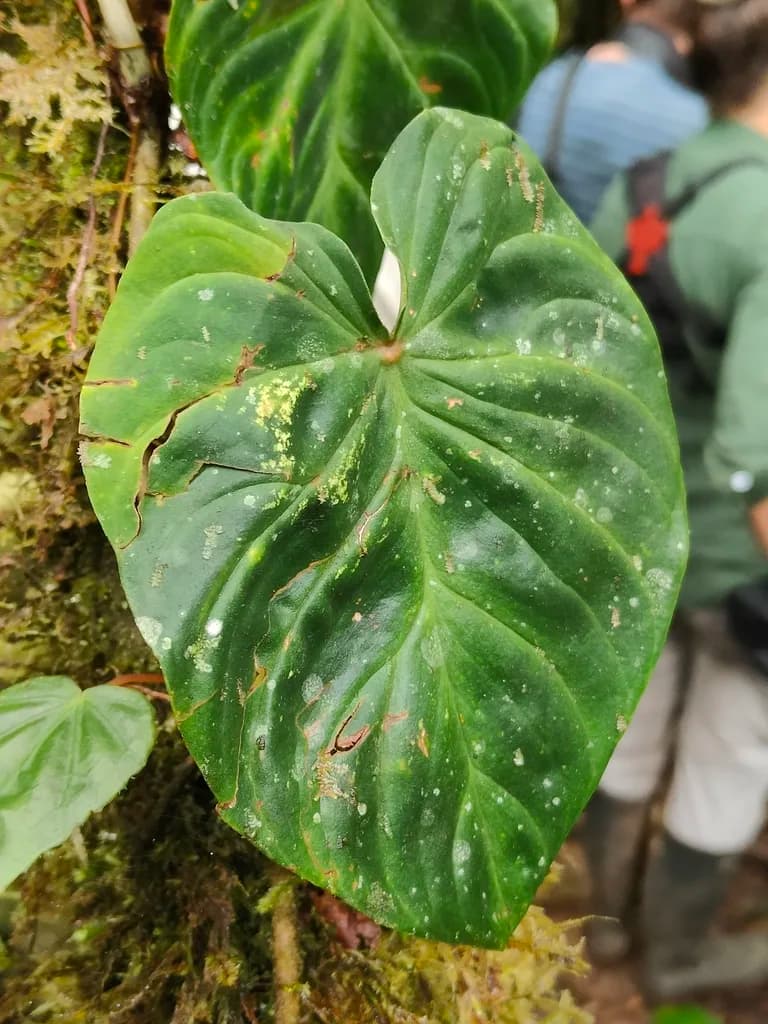
The soft, heart-shaped leaves of Philodendron verrucosum can look almost painted: pale veins over deep green velvet, sometimes with reddish tones beneath. Its textured leaf stalks are part of the plant's character. This is a climbing species, so a support and a little space to grow make more difference than a complicated care ritual.
Light and warmth
Choose bright, filtered light. Strong direct sun can mark the leaves, while a dim corner gives slow, stretched growth. Keep the plant comfortably warm and away from cold windows or drafts. It appreciates humid air, but leaves also need airflow. A humidifier can help in a dry room; a sealed, stagnant space can invite trouble.
Watering and potting mix
Use an airy, draining mix that holds some moisture without staying soggy. Check below the surface and water when the upper portion is beginning to dry, then empty the saucer. The timing will change with light, temperature, pot size, and season. Yellowing with a persistently wet pot is a reason to inspect the roots, not to add more water.
Support and new leaves
Guide the stem onto a pole or stake as it grows. Larger leaves may develop as the plant matures and climbs, though each home grows differently. Handle the velvety surface gently: rubbing can leave marks. Compare new growth over several weeks rather than judging the plant by one imperfect leaf.
Like other philodendrons, verrucosum contains calcium oxalate crystals and can irritate pets if chewed. Keep it beyond their reach. If you like velvet leaves, Philodendron melanochrysum offers a different climbing look.
Sources for this guide
2 sources
Spotted something that needs correcting? Send a message.