Java Moss Care: Attachment, Thickness and Aquarium Debris
Secure Taxiphyllum barbieri Bogor Moss while it establishes, then watch its thickness.
At a glance
Pets & children
Safety is a separate check
Care references do not establish ingestion safety. Keep clippings out of reach; aquarium-animal compatibility needs its own check.
Light
Light the moss you actually have
Tropica rates Java moss for low light. Check shade within the mat as well as the light reaching its surface.
Water & environment
Keep flow and debris in view
Moss can catch loose material as it thickens. Aquarium maintenance and gentle cleaning matter more than a terrestrial watering schedule.
Attachment
Secure first, shape later
Fasten a thin layer to aquarium-safe hardscape without tight bands or loose strands. Let it establish before expecting a finished cushion.
Safety notes
- Pets:
- Pet ingestion safety is not established by the care references linked here. Keep plants and clippings away from chewing pets.
Source: Scope of the linked horticultural references; no veterinary safety conclusion.
- People:
- This guide does not establish that the plant is edible or safe for children to chew. Keep it out of mouths.
Source: Scope of the linked care references; no human ingestion assessment.
- Handling (skin/sap):
- Wash hands after tank care. Wear gloves for maintenance, especially with cuts.
Source: CDC: Fish, Healthy Pets Healthy People
Looking for plants listed as non-toxic to cats and dogs? See our pet-safe houseplants.
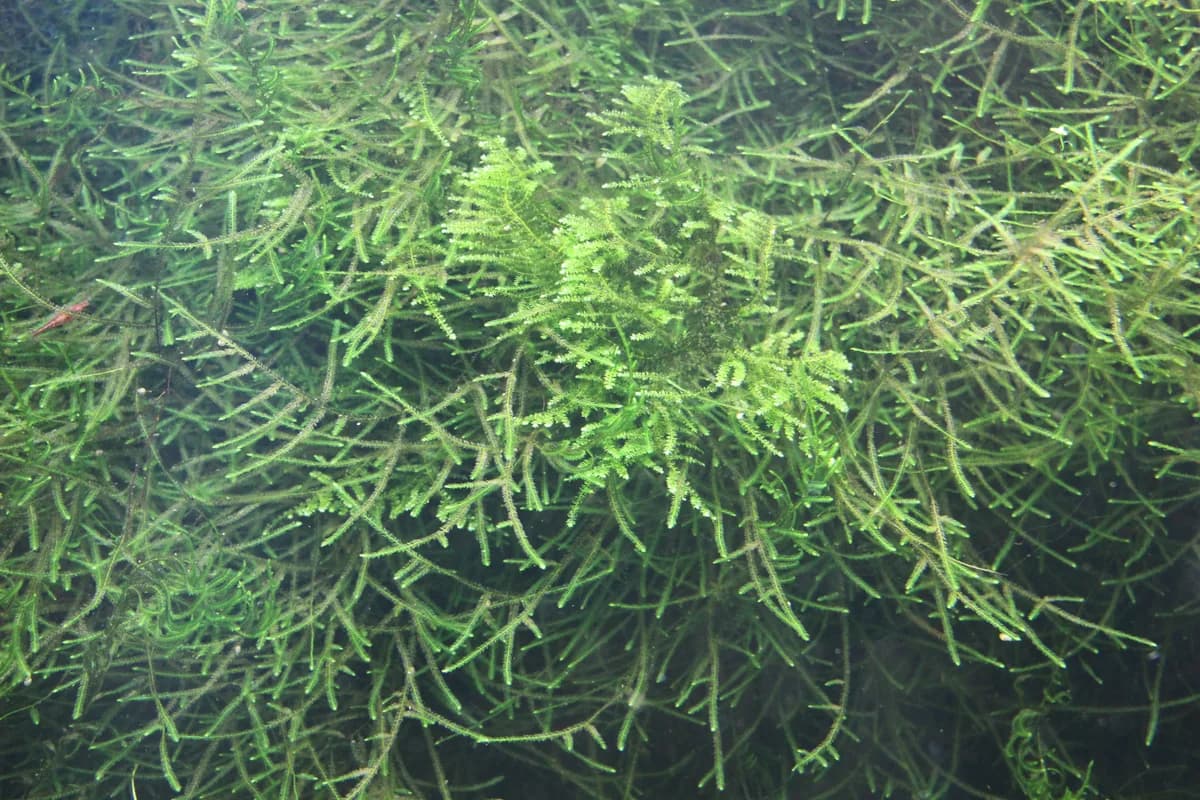
This guide covers Taxiphyllum barbieri, sold by Tropica as Bogor Moss, the aquarium plant commonly sold as Java moss. It is the cheerful blanket maker: happy to soften hard edges, equally happy to wander if loose pieces escape. Secure a thin layer while it establishes, then manage thickness and trapped debris rather than waiting for a dense mat to manage itself.
Keep the scientific and trade names with your record. Moss common names can be applied loosely, and care observations are more useful when everyone is talking about the same plant.
Read the shape and the layer underneath
Look beyond the green surface. A thick cushion can hide detritus, weak interior growth or a tie that needs attention.
| What you notice | Check first | A useful next step |
|---|---|---|
| Moss lifting from wood or rock | Has the attachment loosened, or is the mat pulling away under its own thickness? | Collect loose pieces, thin the mat and refasten a light layer. |
| Brown or weak interior | Can light and flow reach beneath the surface? Is debris trapped? | Trim in stages and clean gently without scattering fragments through the tank. |
| Stringy or uneven growth | Is one side shaded or collecting more debris? | Review placement and aquarium light before attempting to force a particular shape. |
| Algae threaded through the moss | Has light or tank balance changed? | Remove affected strands carefully and address the aquarium condition rather than stripping everything at once. |
| Moss spreading into equipment | Are trimmings and fragments being collected? | Pause equipment if appropriate during maintenance, capture loose pieces and restore safe operation afterwards. |
Attach a thin beginning
Spread the moss over aquarium-safe rock or wood rather than tying down a thick lump. Use suitable fishing line or thread to hold it without crushing the growth or leaving loose loops.
Check the attachment as the moss develops. Thread can loosen or disappear beneath the growth. The aim is a stable plant, not an invisible maintenance problem.
Collect stray pieces during setup. Java moss does not respect the edge of a design once fragments drift into crevices, filter areas or other plants.
Choose light for health, not a forced silhouette
Give it consistent aquarium light and observe the form it produces in your setup. Light, flow, nutrients and maintenance interact, so there is no responsible promise that one intensity will create the same compact cushion in every tank.
If it grows unevenly, check shade from hardscape and nearby plants. If algae becomes entangled, review aquarium balance before simply increasing or decreasing light at random.
Make a single considered adjustment and compare later growth. Old brown areas will not become fresh green again.
Keep water moving around, not battering through
As moss thickens, it can trap loose material. Use the aquarium's normal maintenance to inspect and gently clean it. Avoid blasting the mat so forcefully that fragments spread or animals sheltering nearby are disturbed.
This submerged moss does not need misting or a terrestrial watering schedule. Keep water maintenance, fertiliser and equipment care tied to the needs of the aquarium. If you add fertiliser, follow its label and account for livestock and other plants.
Ask what a new plant was treated with and follow the introduction method suitable for your animals. A plant being commonly used in aquariums is not, by itself, a treatment or compatibility guarantee.
Trim before the cushion becomes a wall
Trim when the moss becomes too thick for light, flow, cleaning or the intended layout. Use clean, controlled cuts and collect fragments as you work. A fixed weekly or monthly haircut ignores how differently moss grows across aquariums.
Thin a dense mat in stages so the remaining attachment stays secure. If the base has detached or deteriorated, remove the loose section, clean the hardscape as appropriate and refasten healthy growth in a thinner layer.
Healthy trimmings can be used to start another patch. Confirm the new location will not block equipment or overrun a slower neighbour before fastening them.
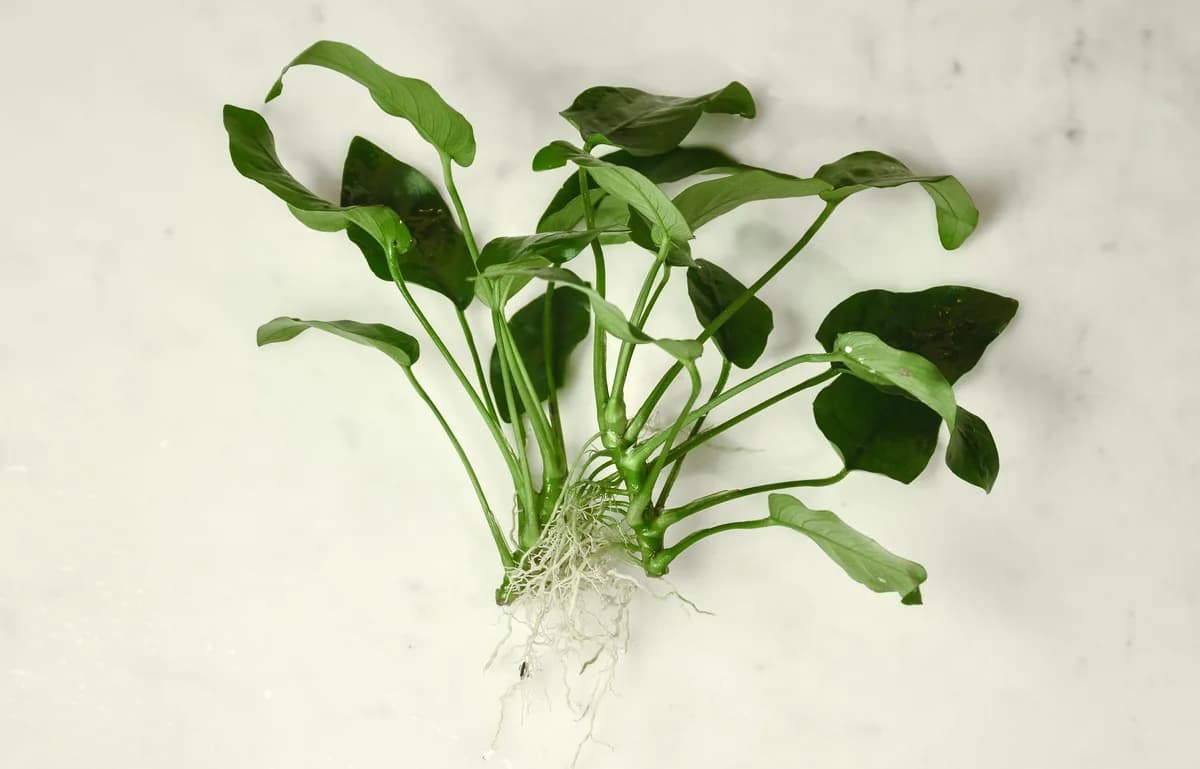
Building around wood or stone? The Anubias nana guide covers another hardscape planting option without treating moss and rhizomes as the same thing.
When the clues overlap
Check the underside, attachment and trapped material before diagnosing the colour from above. Note changes in light, flow, maintenance and fertiliser, then compare the next growth.
Plant Doctor can help arrange a photo and saved aquarium-care notes into possible checks. It is not a substitute for livestock-specific advice or a guaranteed diagnosis, so review suggestions in the context of your tank.
About the checks: the symptom table and recording suggestions are practical starting points, not a diagnosis or fixed care schedule. Botanical care references are linked below.
Quick questions
How do I attach Java moss?
Spread a thin layer on aquarium-safe rock or wood and secure it with suitable fishing line or thread. Avoid tight pressure and collect loose fragments.
Does Java moss have to go in the substrate?
No. It attaches to surfaces such as wood and stone. Securing a thin layer makes it easier to keep the moss where you want it.
Why is the inside of a moss clump brown?
Check whether the growth has become so thick that light, flow and cleaning no longer reach the interior. Trim in stages and remove trapped debris rather than tearing the whole mat away.
How often should I trim Java moss?
Trim by thickness, shape and aquarium function, not a fixed calendar. Check whether it blocks flow, traps debris or spreads beyond the intended hardscape.
Does Java moss need strong light?
Use useful, consistent aquarium light. Review its growth and algae pressure before increasing intensity, and avoid an unsupported one-setting-fits-all rule.
Is Java moss safe for shrimp, fish or pets?
These are separate safety questions. Confirm the plant identity, ask about treatments and check compatibility for the animals in your setup.
Spotted something that needs correcting? Send a message.