Cryptocoryne Wendtii 'Green' Care: Space, Roots and Change
Choose an aquarium position with its mature height and spread in mind.
At a glance
Pets & children
Safety is a separate check
Care references do not establish ingestion safety. Keep clippings out of reach; aquarium-animal compatibility needs its own check.
Light
Place the whole rosette
Tropica rates Green for low light. Check that larger neighbours have not shaded the rosette completely.
Water & environment
Stability matters after a move
Tropica reports hard-water tolerance. Check actual tank conditions and recent changes rather than guessing a water-chemistry target from leaf colour.
Rosette & roots
Root it with room to spread
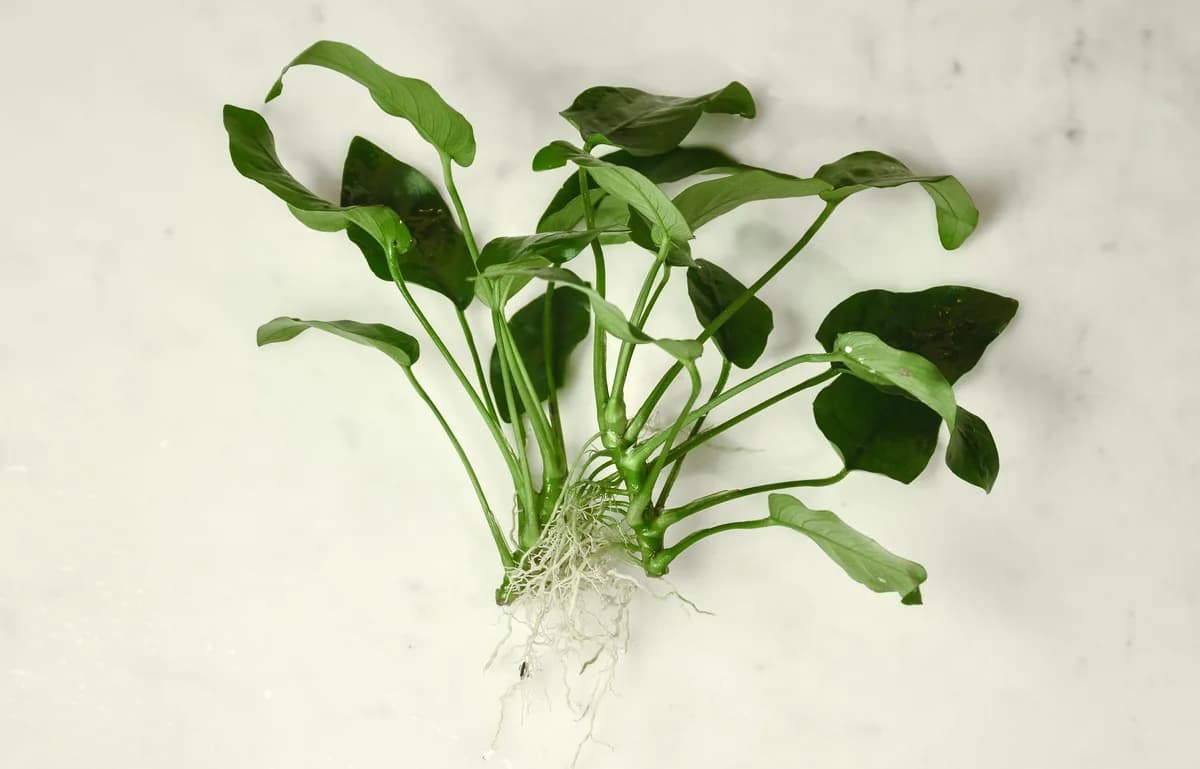
Plant the roots in suitable aquarium substrate while keeping the central growing point clear. Plan for a real rosette, not a permanent tiny foreground dot.
Safety notes
- Pets:
- Pet ingestion safety is not established by the care references linked here. Keep plants and clippings away from chewing pets.
Source: Scope of the linked horticultural references; no veterinary safety conclusion.
- People:
- This guide does not establish that the plant is edible or safe for children to chew. Keep it out of mouths.
Source: Scope of the linked care references; no human ingestion assessment.
- Handling (skin/sap):
- Wash hands after tank care. Wear gloves for maintenance, especially with cuts.
Source: CDC: Fish, Healthy Pets Healthy People
Looking for plants listed as non-toxic to cats and dogs? See our pet-safe houseplants.
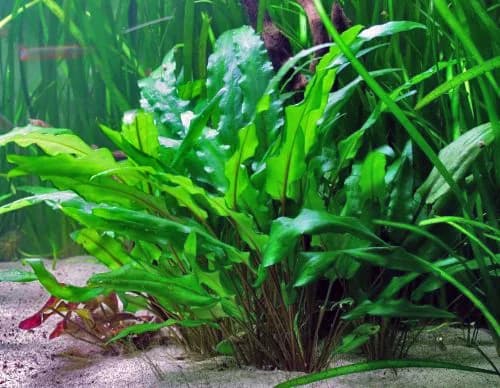
Cryptocoryne wendtii 'Green' is the shy rosette that can look modest at the shop and claim more room once it settles. Plan its position around an established clump, not one newly planted leaf fan. Set the roots into suitable aquarium substrate, keep the central growing point clear and leave space around it.
Tropica lists this green rosette at roughly 10–30 cm tall and 8–15 cm wide. In open space, its leaves can spread low across the bottom. Give this quiet neighbour an actual address, not the last gap between two rocks.
Read the change before reaching for a fix
Deteriorating leaves do not identify one cause. Work from the evidence in your aquarium.
| What you notice | Check first | A useful next step |
|---|---|---|
| Older leaves turning translucent or breaking down | Was the plant recently bought, moved or exposed to a tank change? | Remove fully failing tissue, keep the crown clear and avoid adding several new changes at once. |
| Whole rosette loosening | Are roots anchored, and is the crown firm rather than buried? | Replant the roots gently at the correct depth without covering the growing point. |
| Small or pale new leaves | Is the rosette shaded? What substrate and fertiliser plan is already in use? | Review light and root-zone support before choosing a nutrient product. |
| Leaves collecting debris or algae | Is flow reaching the plant without battering it? Is it crowded? | Clear debris gently and review the position and neighbouring growth. |
| No visible recovery yet | Are roots and the centre still sound? | Keep conditions steady and look for new growth; do not promise a recovery deadline. |
Choose the final neighbourhood early
Give the rosette room to widen without crowding a path, filter intake or much smaller foreground plant. Check how nearby stems, rocks and wood will affect its light once everything grows in.
Plant the roots in a suitable aquarium substrate. Keep the crown, where the leaves meet, at the surface rather than burying it deeply. If a new plant floats up, settle the roots again without packing substrate over the centre.
A position can be technically bright yet become shaded by fast-growing neighbours. Trim the neighbour or reconsider the layout before repeatedly uprooting the Cryptocoryne.
Use light to support the rosette
Choose consistent aquarium light that reaches the whole plant. Avoid treating leaf colour as a demand for maximum intensity. Stronger light changes the balance of the aquarium as well as the plant, including algae pressure and nutrient demand.
After a move, judge the newest leaves. Existing leaves formed under different conditions may not become a perfect match for the new environment. Already damaged tissue will not repair itself.
Make one considered adjustment, record it and wait for meaningful new evidence. A series of fast moves can make it impossible to know what the plant was responding to.
Support roots without guessing a deficiency
This is a rooted rosette, so the substrate and root zone matter. Review what the substrate already provides and whether your aquarium plan includes root fertiliser. Follow product directions and account for livestock and other plants.
Do not insert extra fertiliser merely because one old leaf is pale. Recent transplanting, shading, root disturbance and broader aquarium conditions can overlap. If several rooted plants show a similar change, that wider pattern is useful evidence.
Submerged care is not a fixed houseplant watering schedule. Maintain the aquarium according to its tested needs and keep track of major water, equipment and fertiliser changes.
Handle decline without stripping the crown
Remove a fully deteriorated leaf close to its base with a clean tool, taking care not to damage the centre. Keep leaves that are still functioning, even if their appearance is imperfect.
Keep the rosette undisturbed while it settles. Remove only fully deteriorated leaves without damaging the centre, and leave room for Tropica's listed 8–15 cm spread.
When introducing any new aquarium plant, ask about its treatment history and use the introduction method appropriate to your livestock. Do not use a pet-toxicity answer as a substitute for aquarium compatibility.
Planning the rest of the rooted planting? Read the Amazon sword space and shading guide before choosing a larger neighbour.
When the clues overlap
Check the centre and roots, then list recent changes. Was the plant converted from a different growing condition? Was it uprooted, shaded or moved? Did aquarium maintenance or equipment change at the same time?
Keep the next action narrow. A clear buried crown needs correction; an otherwise firm plant after a move may need stability. Plant Doctor can help organise saved notes and a photo into possible checks, but its suggestions are not a guaranteed diagnosis.
About the checks: the symptom table and recording suggestions are practical starting points, not a diagnosis or fixed care schedule. Botanical care references are linked below.
Quick questions
Where should I plant Cryptocoryne wendtii 'Green'?
Choose a rooted position with room around the rosette and enough light for the leaves. Do not plan around the size of a newly bought plant alone.
Should the crown be buried?
Set the roots into suitable aquarium substrate while keeping the central growing point clear rather than packing substrate over the heart of the rosette.
How much room does Green need?
Tropica lists a rosette about 10–30 cm tall and 8–15 cm wide. Leave room for the leaves to spread, especially in an open position.
Should I move it when leaves decline?
Not automatically. If the crown and roots are sound, repeated moves can add another change. Correct a clear placement problem, remove fully failing tissue and watch for new growth.
Does it need root fertiliser?
Review the substrate, aquarium stocking and fertiliser plan together. Do not diagnose a particular nutrient need from one leaf or add an unmeasured product as a rescue.
Is it safe for pets or aquarium livestock?
The linked care references do not establish either. Pet toxicity and aquatic-livestock compatibility need different evidence, and the plant treatment history also matters.
Spotted something that needs correcting? Send a message.