Amazon Sword 'Bleherae' Care: Space, Roots and Shading
Plan this specific Amazon sword for a larger aquarium and watch what it shades.
At a glance
Pets & children
Safety is a separate check
Care references do not establish ingestion safety. Keep clippings out of reach; aquarium-animal compatibility needs its own check.
Light
Light the rosette and its neighbours
Give the sword useful aquarium light, then watch how its broad leaves change the light below and beside it.
Water & environment
Care for the whole aquarium
A submerged sword follows aquarium conditions, not a pot-watering day. Keep water, fertiliser and major equipment changes in the same care history.
Size & roots
Plan for a substantial rosette
Give the roots suitable substrate and leave room above and around the plant. A young sword can become a strong visual and shading presence.
Safety notes
- Pets:
- Pet ingestion safety is not established by the care references linked here. Keep plants and clippings away from chewing pets.
Source: Scope of the linked horticultural references; no veterinary safety conclusion.
- People:
- This guide does not establish that the plant is edible or safe for children to chew. Keep it out of mouths.
Source: Scope of the linked care references; no human ingestion assessment.
- Handling (skin/sap):
- Wash hands after tank care. Wear gloves for maintenance, especially with cuts.
Source: CDC: Fish, Healthy Pets Healthy People
Looking for plants listed as non-toxic to cats and dogs? See our pet-safe houseplants.
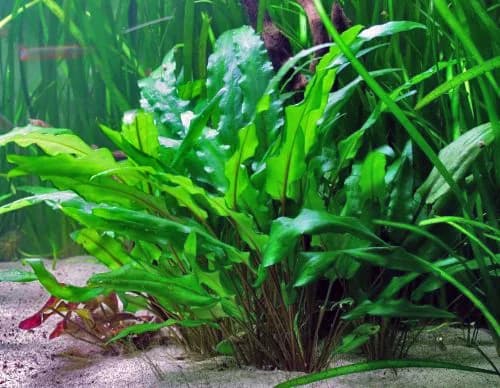
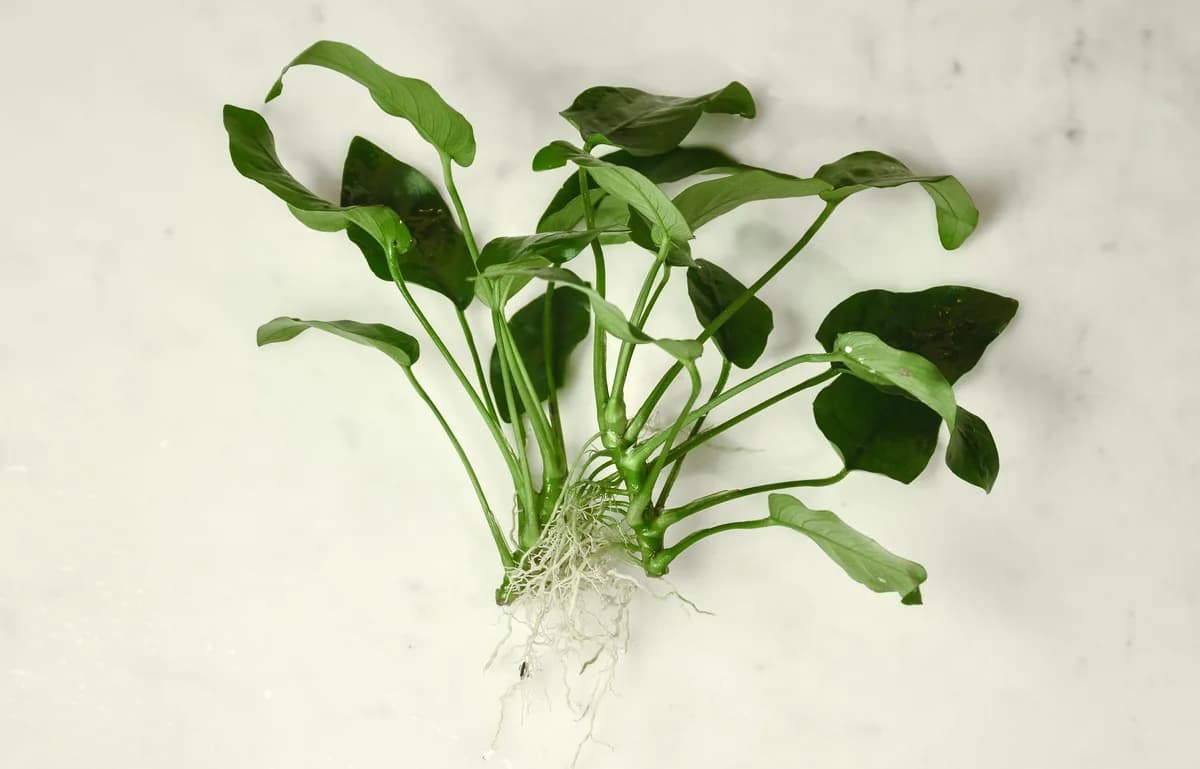
This guide is for Echinodorus grisebachii 'Bleherae', an Amazon sword that grows as a substantial rooted rosette. The common name is shared by more than one plant, so this adventurer needs its full name on the luggage tag. Give it root space, keep the crown clear and plan for broad leaves that can shade their neighbours.
Tropica lists this sword at around 20–50 cm tall and recommends a nutritious substrate. A newly bought sword can make the chosen position look generous. Think ahead to the established plant before placing it beside a filter intake, the front glass or a carpet that depends on light from above.
Read the whole rosette
One outside leaf does not tell the whole story. Compare old and new growth, then look below the leaves at the crown and root zone.
| What you notice | Check first | A useful next step |
|---|---|---|
| One old outer leaf yellowing | Is the centre producing sound new growth? | Remove the leaf when it is fully failing and continue watching the centre. |
| Several pale or weak new leaves | Is the rosette shaded? What does the substrate already provide? | Review light and root-zone support before choosing a nutrient product. |
| Crown looks buried or loose | Has substrate shifted, or was the plant set too deep? | Replant the roots while leaving the central growing point clear. |
| Leaves blocking smaller plants | Has the sword outgrown the original layout? | Trim only what is needed and reconsider the neighbours rather than repeatedly cutting every new leaf. |
| Leaf holes or ragged damage | Are leaves rubbing, being grazed, or affected across the tank? | Inspect the pattern and aquarium before diagnosing a deficiency. |
Reserve enough aquarium real estate
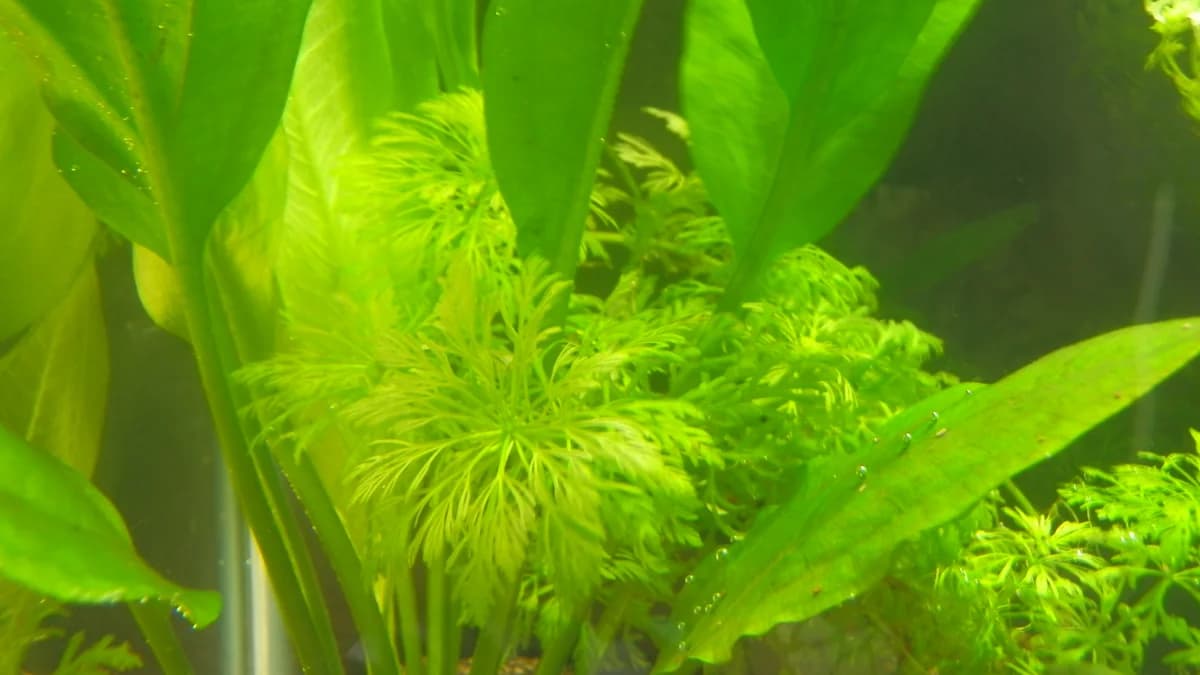
Choose a position with room above and around the rosette. Keep access to equipment and enough open space for the aquarium's animals. Broad leaves can alter flow and shade plants that looked comfortably distant at planting time.
Set the roots into suitable aquarium substrate while keeping the crown at the surface. The crown is the centre from which leaves emerge; burying it is not the same as covering roots.
Avoid uprooting the sword whenever the layout feels slightly untidy. Root disturbance is a real change. If the plant is healthy but too large for the position, make a deliberate layout decision rather than a cycle of moves.
Balance its light with the layout
Give the whole rosette useful aquarium light. Check whether hardscape or taller stems block the centre, and watch how the sword's own leaves shade lower growth.
More intensity is not automatically the answer to a pale leaf. It changes algae pressure and the needs of the whole tank. Review the newest leaves, the root zone and recent aquarium changes first.
If you adjust the lighting, keep the rest of the routine steady enough to judge what follows. Already damaged tissue will stay damaged, so compare later growth.
Support a rooted feeder thoughtfully
The substrate and root zone deserve attention for a large rooted rosette. Check what the substrate contains, how old it is and what fertiliser plan the aquarium already follows. Use any root fertiliser according to its label and with the tank's livestock in mind.
Do not turn every hole or yellow edge into a specific deficiency. Physical damage, shading, old leaves, root disturbance and wider tank conditions can overlap. A similar pattern on several plants may point to a broader aquarium issue.
This submerged plant has no separate watering calendar. Record water maintenance, fertiliser and major equipment changes together so the history reflects its real environment.
Trim from the outside, protect the centre
Remove a fully failing outer leaf close to its base with a clean tool. Do not cut into the crown or tear a leaf out forcefully. A cosmetically marked leaf can remain if it is still functioning and not blocking the layout.
Remove outer leaves that are shading smaller plants when needed. If keeping the view requires cutting away every healthy new leaf, the sword may need a roomier aquarium.
Ask a seller for the full plant name and treatment history. That record matters for accuracy and aquarium introduction. A statement about pet toxicity would not establish safety for fish, shrimp or snails.
For a different rooted rosette, compare Cryptocoryne wendtii Green and plan the mature space for each plant.
When the clues overlap
Check the centre first: is new growth firm and is the crown clear? Then review the roots, light, shading and recent changes. Keep the common name from blurring the diagnosis by confirming this is the plant your care record describes.
Plant Doctor can help you organise saved care notes and a photo into possible next checks. It cannot confirm a species or diagnose the aquarium with certainty, so review its suggestions alongside reliable aquarium advice.
About the checks: the symptom table and recording suggestions are practical starting points, not a diagnosis or fixed care schedule. Botanical care references are linked below.
Quick questions
Is every Amazon sword Echinodorus grisebachii 'Bleherae'?
No. Amazon sword is used for more than one plant. Keep the full supplier or botanical name with your record and do not apply species-specific claims across the whole group.
Where should I place this Amazon sword?
Choose a rooted position with room for a substantial rosette and broad leaves. Consider the view, equipment access and the smaller plants it may shade.
Should I bury the crown?
Plant the roots in suitable aquarium substrate while keeping the central growing point clear. Do not pack substrate over the heart of the rosette.
Why are the outer leaves yellowing?
An old outer leaf may decline, but repeated yellowing needs a wider check of roots, crown, light, substrate support and recent aquarium changes.
Does an Amazon sword need root tabs?
Review what the substrate already provides and the fertiliser plan for the whole aquarium. Follow product directions rather than adding root fertiliser from one symptom alone.
Can I keep it in a small aquarium?
Plan from the mature plant, not the shop size. If the rosette would block equipment, crowd livestock space or shade the layout, choose a smaller plant or a roomier position.
Spotted something that needs correcting? Send a message.