Java Fern Care: Rhizome, Leaves and Aquarium Placement
Keep the rhizome exposed and read leaf changes with care.
At a glance
Pets & children
Safety is a separate check
Care references do not establish ingestion safety. Keep clippings out of reach; aquarium-animal compatibility needs its own check.
Light
Useful light, no spotlight race
Place Java fern where steady aquarium light reaches its leaves. Review algae and new growth before assuming it needs more intensity.
Water & environment
Keep tank care consistent
This is a submerged fern, not a potted fern waiting for a watering can. Track aquarium conditions and recent changes together.
Rhizome
The thick stem stays visible
Attach the rhizome to rock or wood and let the roots grip. Burying the rhizome can lead to decline.
Safety notes
- Pets:
- Pet ingestion safety is not established by the care references linked here. Keep plants and clippings away from chewing pets.
Source: Scope of the linked horticultural references; no veterinary safety conclusion.
- People:
- This guide does not establish that the plant is edible or safe for children to chew. Keep it out of mouths.
Source: Scope of the linked care references; no human ingestion assessment.
- Handling (skin/sap):
- Wash hands after tank care. Wear gloves for maintenance, especially with cuts.
Source: CDC: Fish, Healthy Pets Healthy People
Looking for plants listed as non-toxic to cats and dogs? See our pet-safe houseplants.
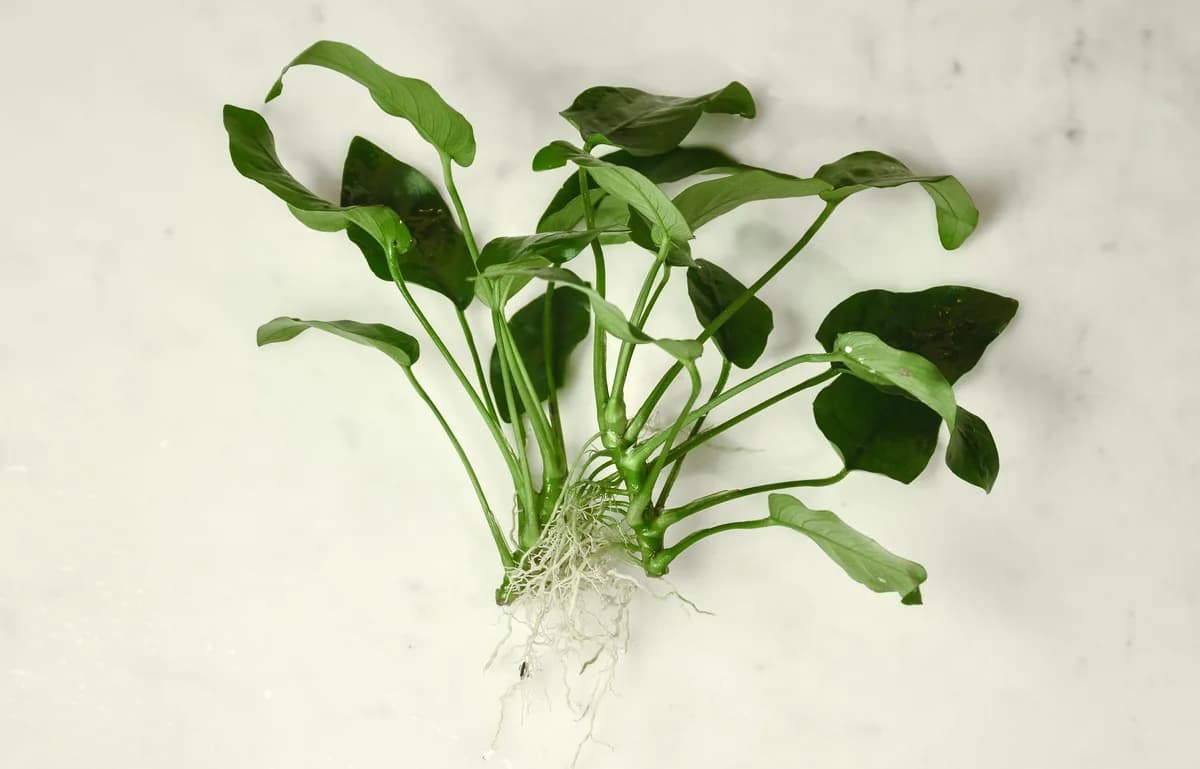
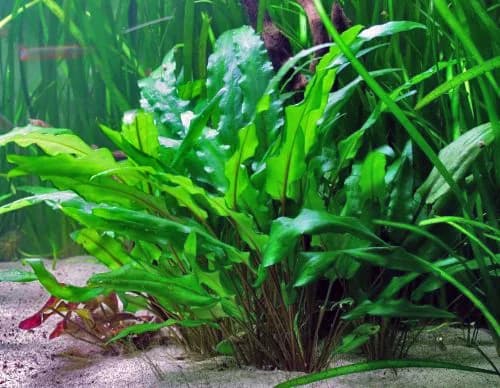
Java fern is sold as Microsorum pteropus, a slow-growing aquatic fern with a habit that can look more mysterious than it is. Old leaves may carry dark reproductive structures or young plantlets, while the plant's thick creeping stem prefers to stay in view. Attach that rhizome to rock or wood instead of burying it.
The fine roots are the anchors. The rhizome is the horizontal stem that joins the leaves. Learn which is which before placing the plant, and you have already made its most useful care decision.
Read the leaf, then the whole plant
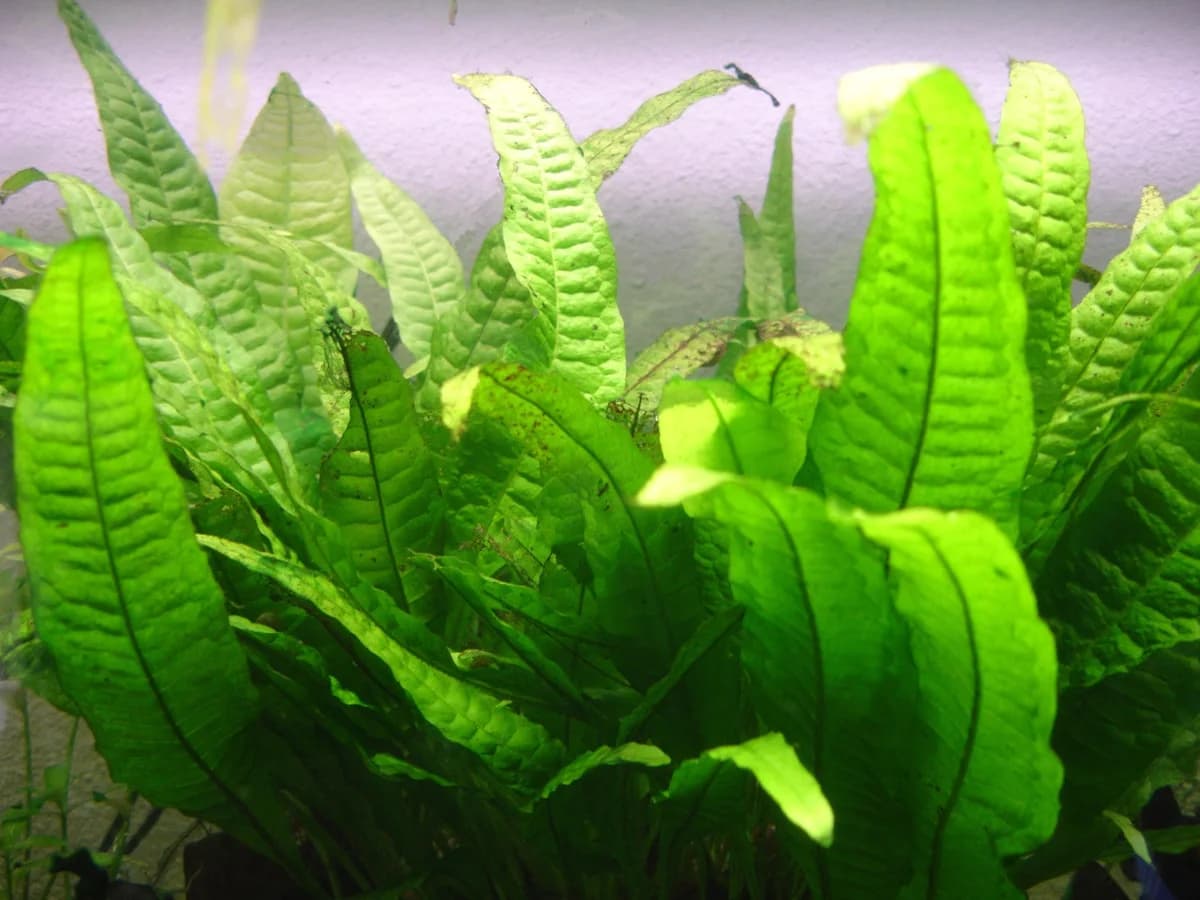
Java fern leaves can carry several kinds of marks. Dark dots on the underside may be spore-producing structures called sporangia. Tiny plants with their own leaves and roots are plantlets. Neither makes every soft, spreading brown patch normal.
| What you notice | Check first | A useful next step |
|---|---|---|
| Dark dots or small structures on an older leaf | Are they organised, firm, or developing into tiny leaves and roots? | Observe before removing them; Java fern reproduces from its leaves. |
| Soft, translucent or rapidly failing tissue | Is the rhizome buried or soft? Did aquarium conditions change? | Expose the rhizome and review recent changes; remove tissue that is fully failing. |
| Brown-edged older leaf | Is the rest of the plant steady, with healthy new growth? | Keep useful green tissue and judge the next leaf rather than expecting the old edge to recover. |
| Algae coating | Is this slow leaf in the brightest or least-maintained spot? | Clean gently if practical and review light and tank care before adding more products. |
| Plant has come loose | Are the roots secured without crushing the rhizome? | Reattach it to stable hardscape and give the roots time to grip. |
Put the rhizome where you can see it
Rest the plant against aquarium-safe rock or wood. Secure the fine-root area with a loose plant-safe tie. Keep the growing rhizome exposed and avoid fastening anything so tightly that it cuts into the plant.
If the roots eventually reach gravel or planted substrate, that is not the same as burying the rhizome. Check the placement from the side during maintenance. A rhizome hidden by shifting substrate can be easy to miss.
Choose its mature position before attaching it permanently. A small fern placed against the front glass may later interrupt the view, while a plant tucked too far behind hardscape can disappear from inspection.
Choose steady light over a dramatic move
Give Java fern consistent aquarium light without assuming the strongest setting is the goal. Slow leaves remain exposed for a long time and can gather algae when tank conditions favour it.
If growth seems slow, remember that slow is part of this plant's character. Check whether the rhizome is firm and whether new leaves are appearing before moving it into harsher light. If you do change the light, change one part of the setup and observe the result.
Leaf colour or holes alone cannot tell you which nutrient is missing. Review the whole aquarium, other plants, fertiliser use and recent maintenance before choosing a treatment.
Treat submerged care as aquarium care
Java fern growing underwater does not need a terrestrial fern's misting or pot-watering routine. Keep the aquarium's maintenance stable and use fertiliser only as part of a considered tank plan, following the product label.
Record meaningful changes: a new light, a move to different hardscape, a large trim, a change in fertiliser or an unusual shift in aquarium conditions. That history is more useful than a rigid promise that one leaf will change by a particular day.
Before introducing a newly bought plant, ask the seller about treatments and follow the introduction practice appropriate to your livestock. A statement about cats and dogs would not answer a shrimp or fish compatibility question.
Let plantlets become recognisable
Java fern can produce young plants on older leaves. A developing plantlet may show tiny leaves followed by roots. Let it gain enough structure to handle, then separate it gently when it releases or can be removed without tearing healthy tissue.
Attach the young plant by its root area and keep its rhizome exposed. Do not bury a plantlet because it looks too small to tie down. A protected crevice in hardscape can hold it while the roots begin to grip.
Trim fully dead or failing leaves at their base with a clean tool. Keep enough healthy leaf area to support a small plant, and do not remove an older leaf carrying plantlets merely because its appearance is untidy.
For another slow-growing hardscape plant, compare Anubias nana placement; both guides begin by keeping the rhizome visible.
When the clues overlap
Start at the rhizome. Is it exposed and firm? Then look at the newest leaves, the position in the tank and what changed recently. Check whether other plants show the same pattern before diagnosing a Java-fern-only problem.
If the clues still do not add up, Plant Doctor can help organise a photo and the care history you choose to save, then suggest possible next checks. It cannot guarantee a diagnosis, so use its suggestions alongside aquarium-specific advice.
About the checks: the symptom table and recording suggestions are practical starting points, not a diagnosis or fixed care schedule. Botanical care references are linked below.
Quick questions
Can I plant Java fern in gravel or soil?
Do not bury its thick rhizome. Attach the plant to rock or wood, or position it so only the fine roots reach the substrate while the rhizome stays exposed.
What are the dark marks on a Java fern leaf?
Dark underside spots may be reproductive sporangia. Tiny leaves with roots are plantlets. Soft, spreading damage needs a separate check; do not scrape every dot off a healthy leaf.
Why are tiny plants growing on an old leaf?
Java fern can form plantlets on its leaves. Let a plantlet develop roots and leaves before gently separating it, rather than scraping off every bump or small growth.
Does Java fern need strong aquarium light?
It does not need the tank spotlight. Give it useful, steady light and judge the placement by new growth, leaf condition and algae pressure.
Should I remove a damaged Java fern leaf?
Remove a fully failing leaf with a clean tool at its base. Keep marked but functioning leaves if they are still useful to the plant, especially when the plant is small.
Is Java fern safe for pets and aquarium animals?
No blanket safety claim is made here. Veterinary toxicity and aquatic-livestock compatibility are separate questions, and treatment history also matters when adding any plant to a tank.
Spotted something that needs correcting? Send a message.