Anubias Barteri Nana Care: Rhizome, Light and Placement
Attach this slow aquarium plant instead of burying its rhizome.
At a glance
Pets & children
Safety is a separate check
Care references do not establish ingestion safety. Keep clippings out of reach; aquarium-animal compatibility needs its own check.
Light
Gentle light, steady leaves
Tropica rates this slow grower for low light. Its long-lived leaves can collect algae; extra brightness is not automatically helpful.
Water & environment
Submerged means no watering day
Keep aquarium conditions stable and judge the plant in the context of the whole tank. This guide does not turn a houseplant watering schedule into aquatic care.
Rhizome
Attach it, do not bury it
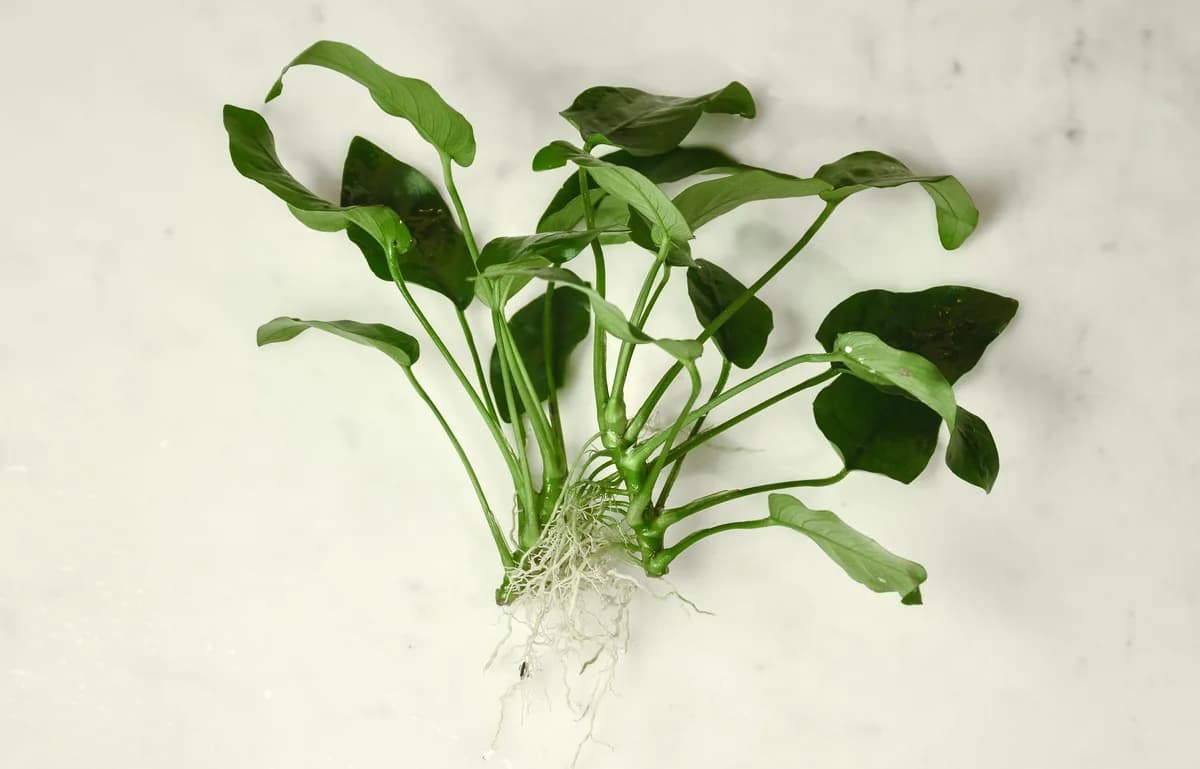
Secure the roots to rock or wood while the thick horizontal rhizome stays exposed. Buried rhizomes can decline.
Safety notes
- Pets:
- Pet ingestion safety is not established by the care references linked here. Keep plants and clippings away from chewing pets.
Source: Scope of the linked horticultural references; no veterinary safety conclusion.
- People:
- This guide does not establish that the plant is edible or safe for children to chew. Keep it out of mouths.
Source: Scope of the linked care references; no human ingestion assessment.
- Handling (skin/sap):
- Wash hands after tank care. Wear gloves for maintenance, especially with cuts.
Source: CDC: Fish, Healthy Pets Healthy People
Looking for plants listed as non-toxic to cats and dogs? See our pet-safe houseplants.
Anubias barteri var. nana is the calm one in the aquarium: slow to rush, sturdy in appearance and happiest when its most important stem stays where you can see it. Its main care decision happens at placement. Attach it to rock or wood and keep the horizontal rhizome above the substrate.
The fine roots can grip hardscape or grow towards the substrate. The thick rhizome joining the leaves is different. Treating both as ordinary roots and burying the whole plant is one of the quickest ways to give this unhurried plant a bad start.
Read the plant before changing the tank
Start with the rhizome, then widen the check to the leaves and aquarium. This plant changes slowly, so a quick reaction can create more confusion than one careful observation.
| What you notice | Check first | A useful next step |
|---|---|---|
| Yellow or soft leaves | Is the rhizome firm and exposed? Did the plant recently move? | Uncover a buried rhizome and remove only fully failing leaves; keep the rest of the setup steady while you watch new growth. |
| Dark coating or algae on older leaves | Is the plant sitting in the strongest light? Has maintenance changed? | Gently clean what lifts away and review light and tank balance before increasing fertiliser or replacing the plant. |
| Plant keeps floating loose | Is it attached around roots rather than squeezed across the rhizome? | Refasten it to stable hardscape without crushing living tissue. |
| Holes or ragged edges | Are animals grazing, leaves rubbing, or several plants affected? | Inspect the pattern and the whole aquarium; damage alone does not identify a nutrient problem. |
| No obvious new leaf | Is the rhizome firm, with existing leaves holding steady? | Give this naturally slow grower time rather than repeatedly moving it. |
Give the rhizome a seat, not a burial
Choose a rock or piece of wood where you can inspect the plant. Rest the roots against the surface and secure them lightly with a short length of suitable fishing line. Keep the growing tip clear and do not cinch the line tightly around the rhizome.
If you want the roots near substrate, position the plant at the edge of the hardscape and let the roots find their way down. The rhizome should remain above the surface. Check new attachments during maintenance: a tie that was loose at first can become restrictive as the plant thickens.
Anubias can also arrive in a pot or wrapped in growing material. Remove packaging carefully and identify the rhizome before placing it. Do not assume the nursery presentation shows the final planting depth.
Use light as a placement choice
This is not a plant that needs the brightest spotlight to prove it belongs. Choose a position with useful, consistent aquarium light. A sheltered place under taller growth or beside hardscape can suit its slow pace.
Because old leaves remain in place for a long time, they can collect algae when light and tank conditions favour it. That does not mean every marked leaf needs to be cut away. Gently clean the leaf if practical, review the aquarium's light and maintenance, then judge the next leaf.
Avoid changing light duration, intensity, fertiliser and placement together. One measured change gives you a better chance of learning what helped.
Care for the aquarium, not a watering calendar
A submerged Anubias does not need a weekly pour like a potted houseplant. Its environment is the aquarium, so water quality, circulation, livestock load, fertiliser and maintenance all interact. Follow a tested routine for the tank rather than inventing a plant-only water-change schedule.
If you use aquatic fertiliser, follow its label and account for the rest of the aquarium. A damaged leaf is not enough evidence to add a particular nutrient. Check whether the rhizome is buried, whether the plant was moved, and whether other plants show a similar pattern first.
Pet safety and aquatic-livestock compatibility are not the same question. A veterinary toxicity list does not tell you whether a plant was treated with something suitable for shrimp or fish. Ask the seller what was applied and follow the introduction practice appropriate to your aquarium.
Trim with the plant's slow pace in mind
Remove a fully dead or failing leaf with a clean tool close to its base without cutting into the rhizome. A leaf with a cosmetic mark can still contribute to the plant, so there is no need to strip it for appearance.
Keep the rhizome exposed and check its attachment during maintenance. Give this slow grower time to anchor before rearranging its seat.
Choosing another plant for the same hardscape? Compare Java fern and its exposed rhizome before making room.
When the clues overlap
If several leaves decline, inspect the rhizome for firmness and exposure before reaching for a bottle. Note when the plant entered the aquarium, whether it was moved and what else changed in the tank. Compare the next leaf rather than expecting an old damaged one to repair itself.
For a muddier case, Plant Doctor can help you organise a photo and the care history you choose to save, then suggest possible checks. Its suggestions are a starting point to review, not a guaranteed diagnosis.
About the checks: the symptom table and recording suggestions are practical starting points, not a diagnosis or fixed care schedule. Botanical care references are linked below.
Quick questions
Should I bury Anubias nana in aquarium substrate?
Do not bury the thick horizontal rhizome. You can let the roots reach the substrate, but keep the rhizome exposed or attach the plant to rock or wood.
How do I attach Anubias nana to wood or rock?
Use suitable fishing line to hold the plant against wood or stone while its roots grip. Keep the rhizome exposed and avoid tightening the line into living tissue.
Does Anubias nana need strong light?
No. Place it where it receives useful aquarium light without assuming brighter is better. Because it grows slowly, watch for algae on older leaves when reviewing the position and lighting.
Why is an older Anubias leaf yellow?
One older leaf may decline, but repeated yellowing needs a wider check. Look at the rhizome, recent moves, water conditions, light, fertiliser use and whether the leaf is coated before changing several things at once.
How should I trim a damaged Anubias leaf?
Remove a fully dead or failing leaf close to its base with a clean tool, without cutting into the rhizome. Keep marked leaves that are still functioning.
Is Anubias nana safe for fish, shrimp, cats or dogs?
Those are separate safety questions. The linked care profiles do not establish ingestion safety or suitability for every tank animal. Check plant treatments and the needs of your animals before adding it.
Spotted something that needs correcting? Send a message.