Banana Plant Care: Light, Water and Indoor Space
Give a young Musa acuminata strong light and room to grow.
Quick questions
How often should I water a potted banana?
Check the mix below the surface and water thoroughly when it begins to dry. Pot size, light and season change the timing.
Does a banana plant need direct sun?
Strong light supports growth. Acclimate a shade-grown plant gradually to direct sun so its leaves do not scorch.
Will my banana plant fruit indoors?
It may, but indoor fruit is uncommon. Cultivar, plant age, strong light, warmth and space all matter.
Are split banana leaves a problem?
Usually not. Large banana leaves can split from wind, handling or normal growth.
Why are the leaf edges brown?
Check the root ball, drainage, air conditions and possible physical damage before choosing a remedy.
Is Musa acuminata safe for pets?
ASPCA lists Musa acuminata as non-toxic to cats and dogs. Keep plant-care chemicals out of reach.
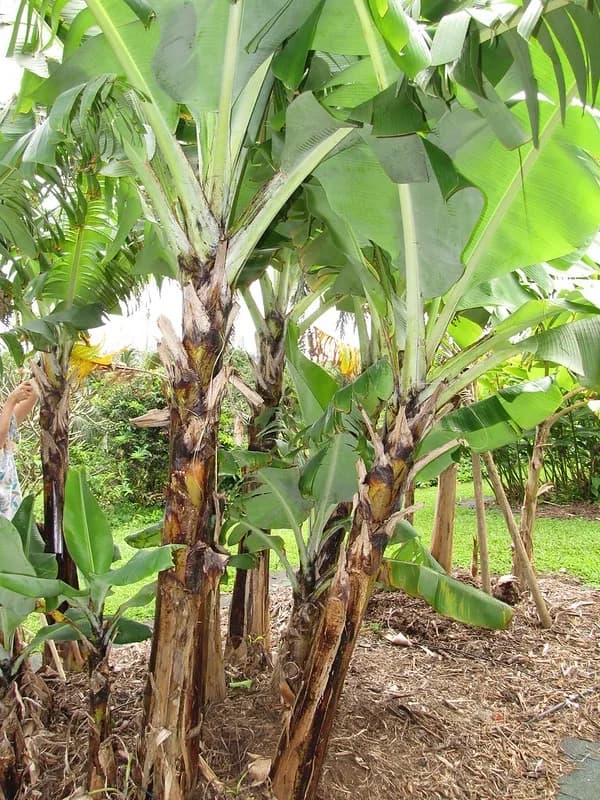
A banana plant makes a bold foliage plant, but check the label first: Musa includes different species and cultivars. This guide is for Musa acuminata. The photograph shows a mature outdoor 'Grand Naine', so give a young potted plant time and space rather than expecting that size immediately.
Light and position
Give it the brightest practical position. Several hours of direct sun or a strong grow light support new leaves; acclimate a plant grown in shade before moving it into intense sun. Keep it warm and away from cold glass. A container-grown banana can move outdoors in warm weather once acclimated, then return inside before cold weather.
Water by checking the pot
A large leaf area and active growth can make a banana thirsty, but a calendar cannot tell you when its pot is dry. Check the mix below the surface. Water thoroughly when it begins to dry, let excess drain and avoid leaving the pot standing in water. Check more often in bright, warm conditions and less often when growth slows.
Pot, feeding and growth
Choose a sturdy draining pot and a rich mix that holds some moisture without becoming waterlogged. Allow space for the mature leaves and roots. Feed during active growth according to the product label, then reduce feeding when light and growth slow. Repot when roots fill the pot rather than on a fixed yearly date.
If a leaf looks wrong
A split leaf is often normal for banana foliage, especially after handling or wind. Brown edges can follow a dry root ball, dry air, salts or physical damage; inspect the whole plant and pot before changing care. Check leaf undersides for spider mites, mealybugs, scale and aphids.
Fruit and pets
Indoor fruit is possible but unusual; light, warmth, space, cultivar and plant age all matter. Musa acuminata is listed by ASPCA as non-toxic to cats and dogs. Keep fertiliser and any pest treatments away from animals.
Related LeafLovers guides
Sources for this guide
3 sources
Spotted something that needs correcting? Send a message.