Fittonia Care: Moisture, Light and Wilting
Keep a nerve plant evenly comfortable without leaving its roots soggy.
Quick questions
Why did my Fittonia collapse?
Check the mix. It may be very dry, but roots damaged in wet mix can also leave the plant wilted.
Will it recover after watering?
A dry Fittonia often perks up, but damaged leaves may not recover. Judge later growth.
Does Fittonia need direct sun?
No. Medium to bright filtered light suits its foliage.
How do I make it bushier?
Give useful filtered light and pinch healthy stem tips to encourage side growth.
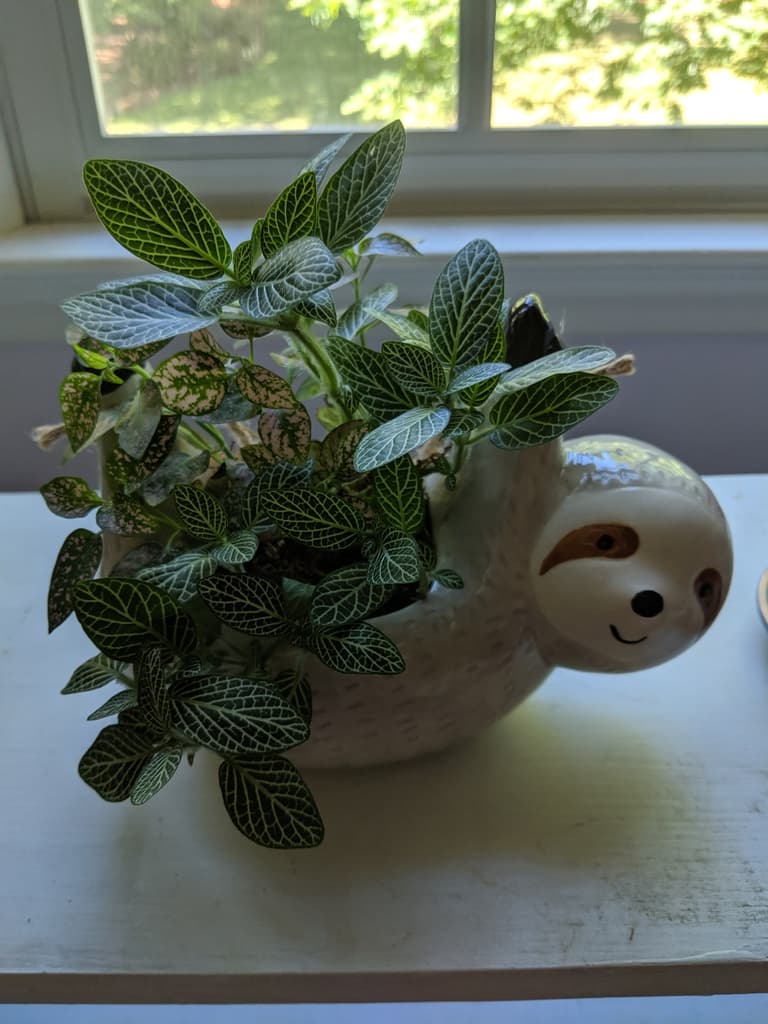
Fittonia albivenis is a small, spreading houseplant recognised by contrasting leaf veins. The photograph includes a Fittonia in a mixed display; confirm the plant you are caring for before using this guide.
Light and position
Use medium to bright filtered light, including a suitable grow light. Strong direct sun can scorch the thin leaves. A position that is too dark may give weak, stretched growth.
Water by checking the pot
Keep the mix lightly and evenly moist, allowing the surface to begin drying before a thorough watering. Drain the pot after watering. Fittonia can wilt dramatically when too dry, but a plant with wet, damaged roots can also wilt; feel the mix first.
Soil, pot and growth
Use a small pot with drainage and a mix that retains moisture without becoming waterlogged. A humidifier can help in a dry room, but still allow some air movement and do not keep leaves constantly wet.
If something looks wrong
If a dry plant wilts, water the root ball and reassess after it has drained. Repeated wilting can damage leaves even if the stems perk up. Brown edges may follow dry air, a dry root ball or excess feeding, so review the pattern and conditions.
Safety and the next check
Fittonia stays low and spreads. Pinch healthy shoot tips to encourage branching, and root suitable stem cuttings if the plant becomes leggy.
Keep a short record of when you checked the mix, watered and moved the plant. Compare new growth with your notes before making another change.
Related LeafLovers guides
Sources for this guide
2 sources
Spotted something that needs correcting? Send a message.