Coffee Plant Care: Glossy Leaves and Realistic Expectations
Grow Coffea arabica for its foliage and learn what fruiting takes.
Quick questions
Will a coffee plant make beans indoors?
It can flower and fruit when mature under favourable conditions, but an indoor crop is not guaranteed.
How much light does it need?
Give bright light, protecting it from harsh midday sun and acclimating any move outdoors.
How often should I water it?
Check the upper mix and water when it begins to dry, allowing drainage.
Why are leaf edges brown?
Check moisture, roots, light and air conditions before assuming a single cause.
Are coffee beans safe for pets?
No. Caffeine in coffee beans and grounds can poison pets. Contact a veterinarian after ingestion.
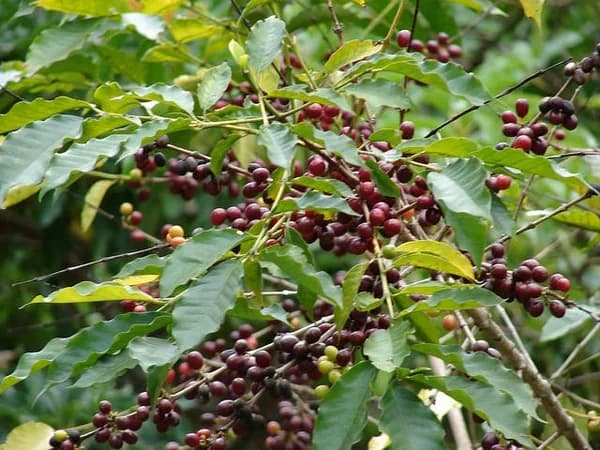
A coffee plant (Coffea arabica) makes a glossy-leaved houseplant. The photograph shows a fruiting outdoor specimen. A young indoor plant may never fruit, so enjoy its foliage first.
Light and position
Give bright light without harsh midday sun. A sheltered, partly shaded outdoor position can work in warm weather after acclimation. Keep the plant warm and away from cold draughts.
Water by checking the pot
Coffee prefers a mix that stays lightly moist but not soggy. Check below the surface and water when the upper mix begins to dry, then let excess drain. Dry leaf edges can have several causes, so inspect moisture, roots and air conditions before changing care.
Room to grow
Use a well-draining, organic-rich potting mix. Repot when roots crowd the pot rather than on a fixed annual schedule. Prune a healthy stem to manage size if needed, and inspect for scale, mealybugs, thrips and mites.
Fruit and pet safety
Flowers and berries need a mature plant and favourable conditions; do not promise a home harvest. Coffee beans contain caffeine, which is dangerous to pets. Keep fruit, beans, grounds and brewed coffee away from cats and dogs, and ask a veterinarian promptly after ingestion. ASPCA’s “Coffee Tree” listing refers to a different species, Polyscias guilfoylei, so do not use it to label Coffea arabica.
Related LeafLovers guides
Sources for this guide
2 sources
Spotted something that needs correcting? Send a message.