Cast Iron Plant Care Guide: Shade, Water and Slow Growth
A shade-tolerant plant still needs light, drainage and an occasional pot check.
Quick questions
Can a cast iron plant grow in a room with no windows?
It tolerates shade, but still needs light. Use a suitable grow light for a windowless room rather than relying on occasional rotation.
When should I water a cast iron plant?
Water after the upper mix has dried somewhat, then let the pot drain. Check more carefully in cooler, darker months rather than using fixed dates.
Why are cast iron plant leaves yellow?
An older leaf can age naturally. Several yellow leaves with persistently wet mix call for a drainage and root check; inspect the whole plant before deciding.
Will cast iron plant leaves recover from sunburn?
Brown, scorched tissue will not turn green again. Move the plant into filtered light and watch new leaves for improvement.
How fast does a cast iron plant grow?
It grows slowly. Check for firm new leaves over time, and repot when rhizomes crowd the pot or the mix has broken down.
Is cast iron plant safe for cats and dogs?
ASPCA lists Aspidistra elatior as non-toxic to cats and dogs. Verify the botanical name and discourage chewing, since plant material can still upset a pet.
Cast iron plant (Aspidistra elatior) grows slowly from underground rhizomes and tolerates shade better than many houseplants. Tough does not mean it grows without light or drainage. Here is how to give it a position it can keep long term.
Give it shade with some light
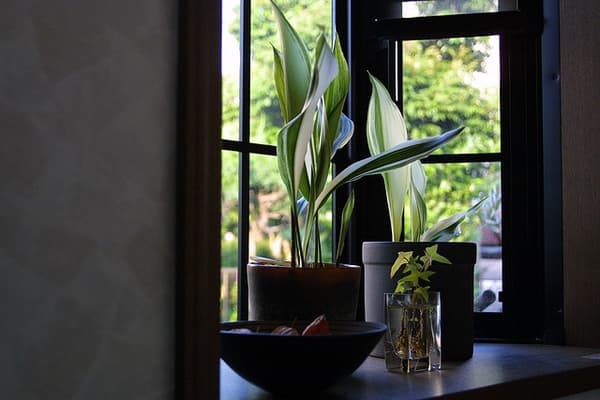
Filtered light or a room with a window suits cast iron plant. It tolerates low indirect light, but a windowless bathroom needs a suitable grow light. Strong direct sun can scorch the leaves. Variegated forms, like the one pictured, may show their markings best with enough indirect light; watch new growth after moving the pot.
Water the mix, not the calendar
Let the upper mix dry somewhat, then water the whole root ball and allow excess water to drain. Do not leave the pot sitting in water. This plant tolerates a dry spell, but repeated severe drying is not a care goal. In cooler months, check before each watering because the mix may stay damp longer. Use a well-draining mix and a pot with holes.
Diagnose a changed leaf
A brown patch on the side facing a hot window can point to sun damage. Yellowing across several leaves while the mix remains wet calls for a drainage and root check. A single old leaf may simply be ageing. Brown tips alone have several possible causes, so check soil moisture, room exposure and recent changes before changing the water source or adding fertilizer.
This is a naturally slow grower. Look for firm new leaves from the base over time; do not repot just because a month passed without visible growth. If rhizomes crowd the pot or the mix has become compacted, repot into a slightly larger draining container. Divide an established plant only when it has enough healthy rhizomes to make viable sections.
Feeding and pet safety
Feed lightly during active growth if the plant needs it; excess fertilizer does not make a shade-grown plant grow quickly. ASPCA lists Aspidistra elatior as non-toxic to cats and dogs. Confirm that exact name on the plant label. A non-toxic listing does not mean leaves are food, and chewing can still upset a pet.
Track position, moisture checks and new leaves in LeafLovers. The new growth tells you more than a promise that this plant can survive anywhere.
Related guides
Sources for this guide
3 sources
Spotted something that needs correcting? Send a message.