Selaginella Kraussiana Care: Moisture, Drainage and Spread
Keep this shallow-rooted terrarium plant moist, drained and out of strong light.
At a glance
Pets & children
Safety is a separate check
These care references do not establish ingestion safety for pets or children. Keep plants and clippings out of mouths.
Light
Filtered, never fierce
Protect the low mat from strong direct light, especially through terrarium glass. Watch for bleaching, scorch and stretched growth.
Water & environment
Moist with drainage
Keep the growing medium from drying out completely, but do not leave roots in a stagnant saturated layer. Check moisture and ventilation together.
Spread
A low mat that keeps travelling
Give this vigorous spreader a clear boundary and trim before it covers slower terrarium neighbours.
Safety notes
- Pets:
- Pet ingestion safety is not established by the care references linked here. Keep plants and clippings away from chewing pets.
Source: Scope of the linked horticultural references; no veterinary safety conclusion.
- People:
- This guide does not establish that the plant is edible or safe for children to chew. Keep it out of mouths.
Source: Scope of the linked care references; no human ingestion assessment.
- Handling (skin/sap):
- Wash hands after gardening; gloves are a practical precaution when working with compost.
Source: Practical handling advice, not a species-specific toxicity claim.
Looking for plants listed as non-toxic to cats and dogs? See our pet-safe houseplants.
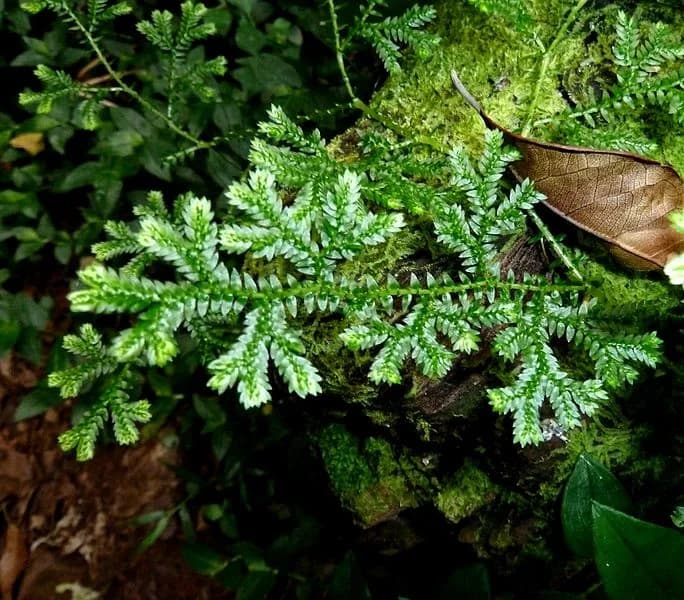
Selaginella kraussiana is the shy-looking terrarium plant with surprisingly determined feet. It stays low and spreads across the growing medium, making a soft green mat that can quietly reach every neighbour. Keep its shallow root zone moist but drained, protect it from strong light and plan where the mat should stop.
It is not a true moss and it is not an aquatic carpet plant. The RHS lists it for terrariums and bottle gardens; NC State explains its shallow roots and need for high humidity. Keep the roots in terrestrial growing medium, not submerged aquarium water.
Read the mat from edge to centre
The outer tips and shaded centre can tell different stories. Look at both before changing moisture or ventilation.
| What you notice | Check first | A useful next step |
|---|---|---|
| Crisp tips | Is the medium drying? Is strong light or hot glass reaching the plant? | Restore even moisture if needed and move it out of harsh exposure. |
| Brown or soft centre | Is the mat thick, persistently saturated or holding dead material? | Remove fully failing material and improve the condition you actually find. |
| Pale stretched growth | Is the terrarium too dark, or is another plant shading it? | Move into useful filtered light without jumping to direct sun. |
| Condensation never clears | Is the medium saturated? Does the enclosure get any air exchange? | Vent as appropriate for the setup and pause watering until the medium, not the glass alone, says it is needed. |
| Mat covering neighbours | Did the boundary disappear beneath new shoots? | Trim the edge and lift stray growth before it roots through another plant. |
Give shallow roots a drained home
Use a moisture-retentive growing medium that also drains, in a terrarium with a way to keep the root zone out of standing water. Decorative layers do not excuse a saturated planting layer.
Press rooted sections into the surface without burying the leafy stems. Keep the medium evenly moist and inspect below the surface before adding water. A wet glass wall is not a moisture meter for the root zone.
Do not prescribe a fixed watering day. An open terrarium can dry faster than a closed bottle garden, and light, ventilation, planting depth and room conditions all change the interval.
Filter light through the enclosure
Choose bright or useful filtered light, protected from strong direct sun. Glass can trap heat as well as admit light, so check the actual enclosure rather than relying only on its distance from a window.
Bleached or crisp areas on the exposed side can follow harsh light, while long pale growth can point towards insufficient light or crowding. Already damaged tissue will not repair itself; judge later growth after a careful move.
Keep artificial lights at a setting and distance appropriate to the whole terrarium. Check the light reaching the mat rather than copying a setting from a different enclosure.
Balance humidity with air and hygiene
Selaginella benefits from a humid terrarium environment, but humidity is not permission for stagnant, decaying conditions. Remove dead material, avoid repeatedly soaking foliage and watch for persistent mould or soft growth.
Ventilation needs depend on whether the enclosure is open or closed. In a bottle garden, brief air exchange may be useful when condensation, decay or saturation persists. In an open setup, moisture may need checking more often.
Keep the enclosure away from heating and cooling draughts that can change conditions quickly. Record a move or ventilation change so you can connect it with later growth.
Trim the traveller at its boundary
Use clean, fine tools to trim healthy spread where it reaches another plant, glass or hardscape you want to keep clear. Remove loose trimmings so they do not root elsewhere.
Thin a dense centre carefully rather than shearing only the top. If you want another patch, move a healthy rooted section into prepared moist, drained medium. Do not treat unrooted loose tips as guaranteed plants.
This species can be vigorous beyond a terrarium. Keep trimmings contained and follow local disposal guidance; do not release plants outdoors.
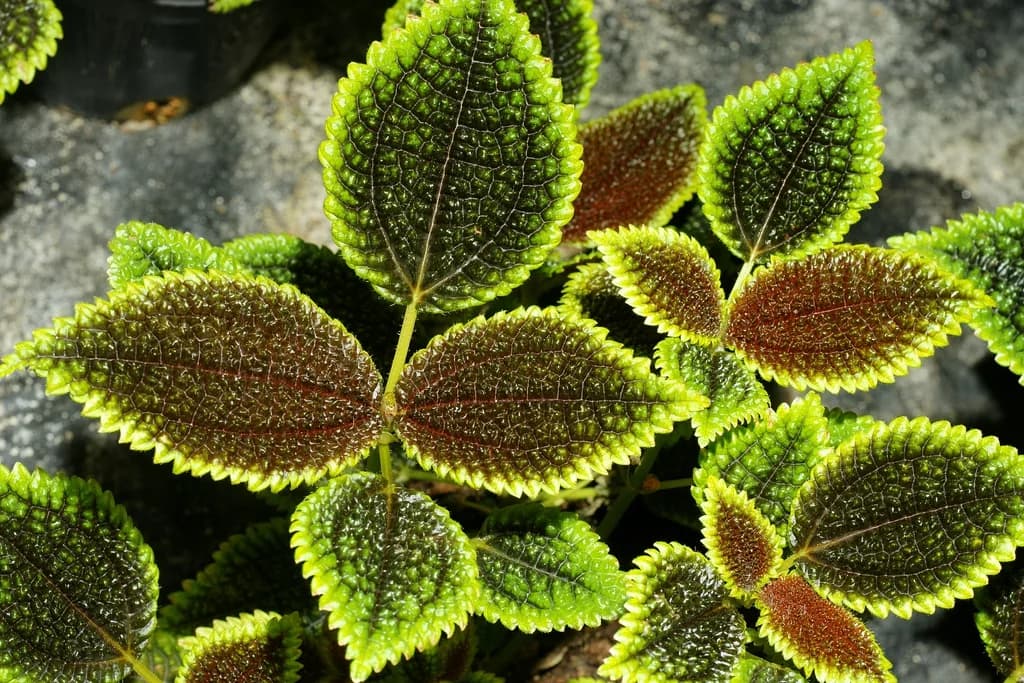
For textured foliage alongside a low mat, compare Pilea involucrata care and leave each plant room to be inspected.
When the clues overlap
Check the medium with a finger or suitable tool, then inspect light, heat, condensation and the centre of the mat. Moisture and ventilation work together, so avoid responding to every brown tip with more water.
Plant Doctor can help organise the enclosure type, a photo and saved care notes into possible checks. It cannot measure your terrarium or guarantee a diagnosis, so review suggestions against the conditions you observe.
About the checks: the symptom table and recording suggestions are practical starting points, not a diagnosis or fixed care schedule. Botanical care references are linked below.
Quick questions
Is Selaginella kraussiana a moss?
No. It is a spore-producing vascular plant, often called a clubmoss or spike moss. Care for the identified species rather than assuming every plant called moss needs the same conditions.
Can it grow in a closed terrarium?
The RHS lists it for terrariums and bottle gardens. A closed container still needs moisture, drainage and observation for persistent saturation, decay or poor air movement.
How often should I water it?
Check the growing medium rather than using a fixed day. Keep it moist without leaving the root zone in stagnant saturation, and expect the interval to change with ventilation and light.
Why are the tips crisp?
Check for a drying root zone, strong light, heat against glass or a sudden humidity change. Inspect the medium before adding water automatically.
Why is the centre turning brown?
Check for persistent saturation, compacted growth, trapped dead material and poor air movement. Thin failing material and correct the condition you find.
Can it grow with its roots underwater?
This is a terrestrial terrarium plant in the care references, not an aquatic plant. Keep roots in moist, drained medium rather than submerging the root zone in aquarium water.
Sources for this guide
3 sources
Spotted something that needs correcting? Send a message.