Raven ZZ Care: Dark Leaves, Healthy Growth
Give the roots time to dry and the new leaves time to darken.
Quick questions
Why is my Raven ZZ growing green leaves?
Fresh foliage normally starts green before darkening. Keep the routine steady; the separate green-growth guide explains which changes deserve a closer look.
How often does Raven ZZ need water?
Water after the mix has dried through, then let it drain fully. A fixed fortnightly or monthly rule can be wrong for your pot.
Does Raven ZZ need sun to turn black?
Do not use strong direct sun as a colour treatment. Bright indirect light supports growth; the dark colour develops as healthy new foliage matures.
Should I repot as soon as I buy it?
Not automatically. First check the roots, drainage and condition of the mix. A healthy plant with room for its roots can stay in its nursery pot.
Why is my Raven ZZ not growing?
It is naturally slow. Check whether it has enough light and healthy roots before adding fertiliser or more water.
Is Raven ZZ safer for pets than green ZZ?
No. Both contain calcium oxalate crystals and should be kept away from chewing pets. Contact a vet if your pet has eaten it or shows symptoms.
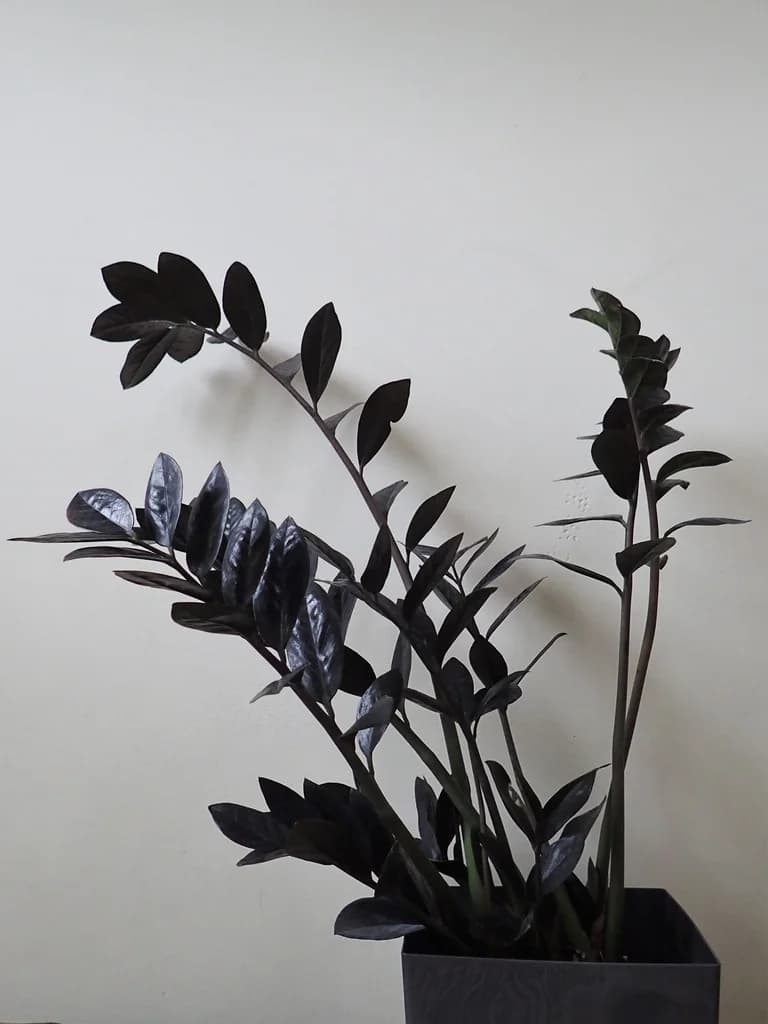
Raven ZZ is grown for its glossy, almost black foliage, but a new shoot can arrive bright green. That contrast is part of its normal development. It does not need a special treatment to make it dark.
Sold as Raven ZZ, Zamioculcas zamiifolia ‘Dowon’ is a slow-growing cultivar of the familiar green ZZ plant. Its water-storing rhizomes mean you will often be checking the pot more frequently than watering it.
Find a steady, bright position
Choose bright indirect light, away from harsh sun. Raven tolerates lower light, but a dark corner is not the best route to stronger growth. In a room without daylight, provide suitable artificial lighting.
Like other ZZ plants, Raven generally manages ordinary indoor humidity without special equipment. Give a newly bought plant time to settle before making repeated moves. Check whether direct sun reaches its leaves later in the day, and keep it away from cold draughts.
Check the whole pot before watering
Allow the mix to dry through between waterings. Do not water simply because the surface looks pale or a reminder has appeared.
Check deeper moisture and the pot’s weight together. When the mix is dry, water evenly, let the excess drain and empty the outer pot. A decorative container can hide standing water even when the nursery pot has drainage holes.
If the pot stays damp much longer than usual, investigate the light, container size and mix before adding more water. Moving to a brighter location may change how quickly it dries, so keep checking rather than copying the old interval.
Let new leaves change naturally
Healthy new foliage starts green and darkens as it matures. That is different from an older dark leaf becoming yellow or damaged.
Keep your usual care routine. Extra fertiliser, extra water or stronger sun is not a colour treatment. For a closer look at what is normal and what needs checking, see why Raven ZZ new growth is green.
Repot and feed when there is a reason
Use a loose mix that drains well and a pot with drainage holes. Check the roots if growth crowds the container or drainage deteriorates. Move up only a little in pot size; do not deliberately wait until expanding rhizomes damage the pot.
Feed sparingly while the plant is growing, following the fertiliser label and allowing for nutrients already in the mix. Feeding more will not compensate for poor light or unhealthy roots.
The green ZZ guide covers the shared potting and general care principles in more detail.
Respond to symptoms, not leaf colour alone
Yellowing with wet mix or a soft shoot base: inspect drainage and root condition. A yellow leaflet alone does not confirm rot, but soft, deteriorating tissue needs investigation.
Faded or brown patches after a move: check whether the plant now receives direct sun or sits against hot glass. Damaged tissue will not return to its original appearance; judge improvement by whether damage stops spreading and future growth looks healthy.
Slow growth without other damage: this can be normal for Raven. Review light and care before changing several things at once.
Keep Raven away from pets and children who might chew it. Like green ZZ, it contains irritating calcium oxalate crystals. Protect your skin when pruning or repotting.
Sources for this guide
7 sources
Spotted something that needs correcting? Send a message.