Japanese Aralia Care: Light and Broad Leaves
Give Fatsia japonica a cool, sheltered place with filtered light.
Quick questions
Can Japanese aralia grow indoors?
Yes. Fatsia japonica can grow as a houseplant if it has suitable filtered light and enough room for its leaves.
Does it need direct sun?
No. Bright filtered light or some shade suits it; harsh direct sun may brown foliage.
How often should I water it?
Check below the surface and water when the upper mix begins to dry. Let the pot drain.
Why are its leaves drooping?
Check the mix and roots before watering; both a dry root ball and damaged roots in wet mix can cause drooping.
What pests should I watch for?
Inspect for aphids, mealybugs, spider mites, scale and thrips, especially under leaves.
Is Fatsia japonica safe for pets?
ASPCA lists Fatsia japonica as non-toxic to cats and dogs; keep any pest treatments away from animals.
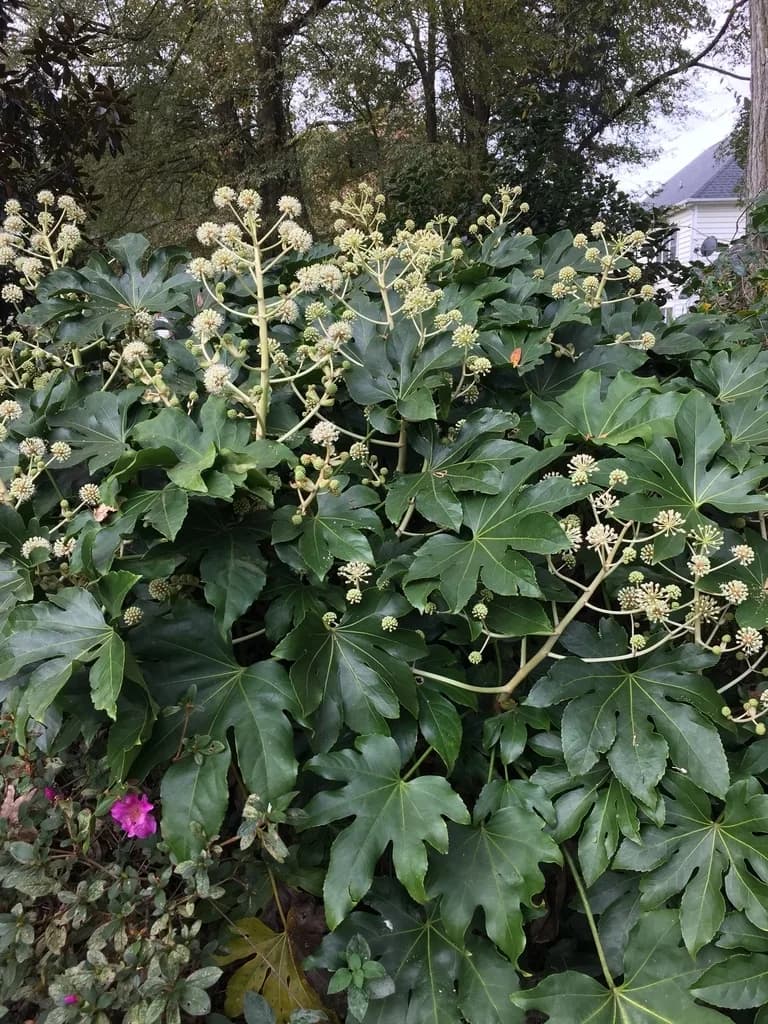
Japanese aralia (Fatsia japonica) has wide, deeply lobed leaves and a spreading habit. The photograph shows a mature shrub outdoors; in a pot, allow room for the leaves to spread and prune as needed.
Light and position
Give a potted fatsia bright filtered light or a sheltered position with some shade. Harsh direct sun can brown the leaves, while very low indoor light can slow growth. A shady patio can work in warm weather; acclimate the plant and protect it from cold weather when bringing it back indoors.
Water by checking the pot
Use a draining pot and a mix that holds some moisture without staying soggy. Check below the surface; water when the upper mix begins to dry and let excess drain. A drooping leaf can follow either a dry root ball or damaged roots, so feel the mix before watering.
Keep the broad leaves healthy
Wipe dusty leaves gently so you can inspect them. Aphids, mealybugs, spider mites, scale and thrips can occur on indoor plants. Isolate a plant with pests and identify them before choosing a treatment. Brown edges can have several causes, including sun, water stress and physical damage.
Growth and pets
Prune stems to manage size, keeping in mind that new growth follows the cut. ASPCA lists Fatsia japonica as non-toxic to cats and dogs. As with any plant, do not encourage pets to eat the foliage.
Related LeafLovers guides
Sources for this guide
2 sources
Spotted something that needs correcting? Send a message.