Satin Pothos Care: Silver Leaves, Light and Vines
Give Scindapsus pictus filtered light and a draining pot.
Quick questions
Is satin pothos a true pothos?
No. Satin pothos is Scindapsus pictus; Epipremnum aureum is the plant often sold as pothos.
How often should I water it?
Water after the upper mix starts to dry and let the pot drain. Light and pot size affect timing.
Why are the leaves curling?
Check the mix and roots first. Curling can follow a dry root ball or damaged roots, among other causes.
Can it grow in a dark corner?
It needs useful filtered light for strong growth and leaf contrast; deep shade is not ideal.
How do I make the vine fuller?
Give bright indirect light and pinch a healthy stem; root node cuttings to add to the pot.
Is it safe for pets?
No. Scindapsus pictus contains irritating calcium oxalate crystals. Keep it out of reach and seek veterinary advice after chewing.
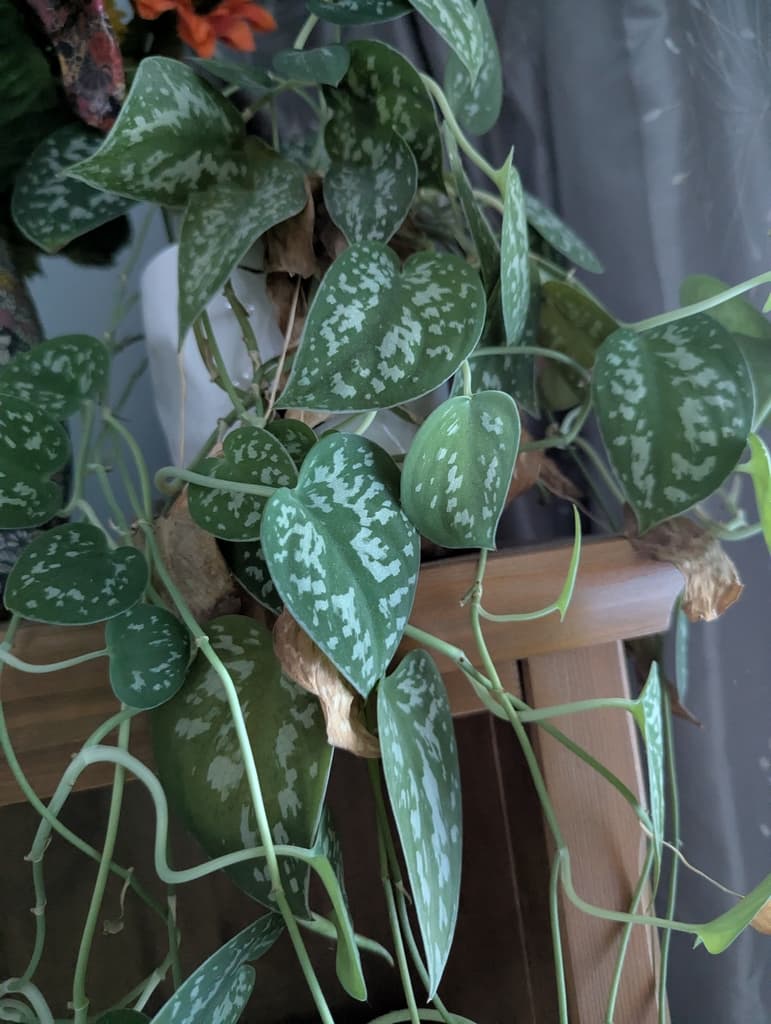
Satin pothos is Scindapsus pictus, not the true pothos Epipremnum aureum. Its heart-shaped leaves carry silver blotches; the photograph shows a trailing houseplant. Cultivars differ in how much silver they display.
Light and position
Choose bright indirect light. Strong direct sun can mark the velvety leaves, while deep shade slows growth and can reduce contrast. Keep the vine in a warm spot away from cold glass.
Water by checking the pot
Let the top of the mix begin to dry before a thorough watering, then drain the pot. A curling leaf can follow a dry root ball, but persistent wetness and damaged roots can produce similar stress. Check below the surface before adding water.
Potting and growth
Use a loose, moisture-retentive mix with good drainage. Let stems trail or attach them to a support. Pinch a healthy long stem to encourage side shoots; root node cuttings in suitable medium if you want to fill out the pot.
Work through common problems
Yellow leaves can be older foliage or a sign that the roots need a closer look. If several leaves yellow while the mix stays wet, inspect drainage and root condition. Watch leaf undersides for pests instead of treating on colour alone.
Safety and your next check
Scindapsus contains irritating calcium oxalate crystals. Keep it away from chewing pets and children. If an animal eats it, contact a veterinarian with the exact plant name.
Related LeafLovers guides
Sources for this guide
2 sources
Spotted something that needs correcting? Send a message.