Jade Plant Care: Sun, Dry Soil and Pruning
Give Crassula ovata bright light and a pot that dries between waterings.
Quick questions
How often should I water jade?
Let the mix dry well, then water fully and drain. Light, season and pot size determine the interval.
Why are the leaves shrivelled?
Check the pot and roots. Dry mix can cause shrivelling, but damaged roots can also stop water uptake.
Can jade grow in low light?
It needs bright light for compact, healthy growth. Move it gradually into a brighter position.
Is jade plant safe for cats and dogs?
No. Crassula ovata is toxic if eaten; keep it out of reach.
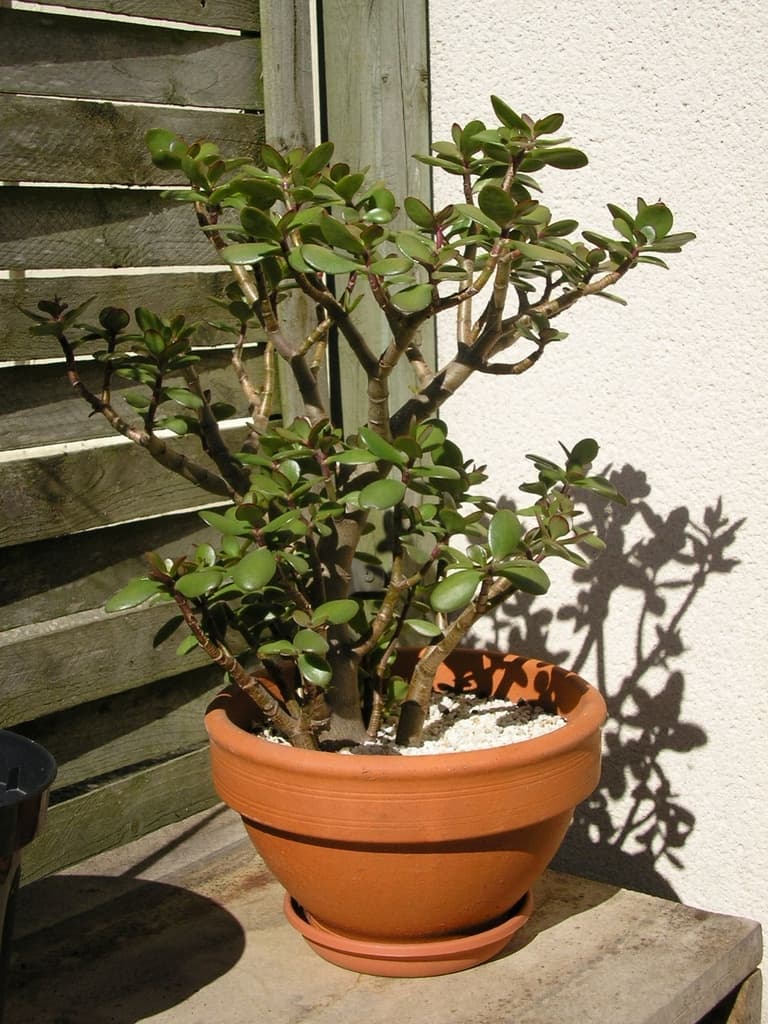
Jade plant (Crassula ovata) is a branching succulent with fleshy, oval leaves. Older plants form woody stems and can resemble miniature trees.
Light and position
Give it a bright indoor position with some gentle direct sun. Acclimate a plant from a dim shelf before placing it in strong light; midday summer sun through glass can scorch unadapted leaves.
Water by checking the pot
Let the mix dry well between waterings, then water thoroughly and drain. Thick leaves store water, so a rigid weekly drink is often too frequent, especially in winter. Check the root zone as well as the surface.
Soil, pot and growth
Use a well-draining succulent mix in a pot with holes. A top-heavy jade needs a stable container, but excess potting mix around small roots can stay wet. Repot when the plant is crowded or the mix has deteriorated.
If something looks wrong
Soft translucent leaves and a wet stem base call for a root inspection. Shrivelled leaves can follow prolonged dryness or damaged roots, so check the pot before watering. Prune healthy stems to shape the plant and let cuttings dry briefly before rooting in suitable mix.
Safety and the next check
Crassula ovata is toxic to pets if eaten. Keep fallen leaves and cuttings out of reach and contact a veterinarian after ingestion.
Keep a short record of when you checked the mix, watered and moved the plant. Compare new growth with your notes before making another change.
Related LeafLovers guides
Sources for this guide
2 sources
Spotted something that needs correcting? Send a message.