Dendrobium Orchid Care: Check the Type Before Winter
A cane orchid with care that changes across the genus.
Quick questions
Does every Dendrobium need a dry winter rest?
No. Seasonal needs vary by species and hybrid; identify the plant before reducing water.
Should I cut off a cane after flowering?
Keep green canes; they store resources and may flower again.
What potting medium works?
Use an airy orchid bark mix in a pot that fits the roots.
Why is my orchid not blooming?
Check the type, light and seasonal rest before changing fertilizer.
Are Dendrobium orchids safe for pets?
ASPCA includes Dendrobium among orchids considered non-toxic, but keep treatments away from pets.
Dendrobium is a huge orchid genus, with upright canes and flowers that vary from one type to another. Ask for the species or hybrid name when you buy one: some keep their leaves, while others shed leaves and need a drier winter rest.
Bright light, airy roots
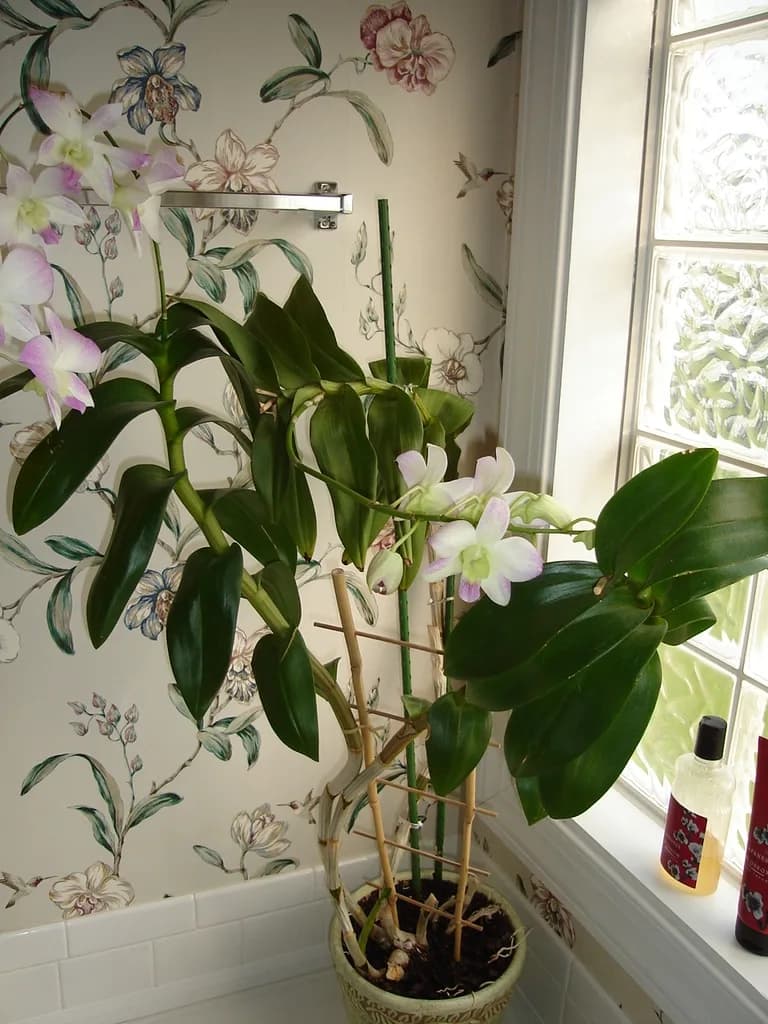
Give bright, filtered light and good air movement. Plant in an orchid bark mix and a small pot that fits the roots. Ordinary dense houseplant soil stays wet around epiphytic roots. The pictured plant is a cultivated Dendrobium, not a promise of the same flowers on every species.
Water for the growth stage
While new shoots and roots are growing, water thoroughly when the bark has begun to dry, then let it drain. A dormant, deciduous type may need much less water after growth finishes. Watering every Dendrobium by the same weekly rule can harm both active and resting plants.
After flowering
Leave green canes in place: they store resources and some types flower from older canes. Remove a cane only when it is fully dead. If the orchid does not rebloom, identify its type and check light and seasonal rest before adding fertilizer. Watch for mealybugs around cane joints.
Pets
ASPCA includes Dendrobium among orchids considered non-toxic to cats and dogs. Keep fertilizers, treatments and any wire supports away from pets.
Related LeafLovers guides
Sources for this guide
2 sources
Spotted something that needs correcting? Send a message.