Ctenanthe Care: Watering, Humidity and Brown Leaf Tips
A practical routine for the Never Never Plant, with fewer guesses about curled leaves and crispy edges.
Quick questions
Is Ctenanthe the same as Calathea?
They are related plants in the Marantaceae family, but Ctenanthe is a separate genus. Shop labels and common names overlap, so keep the botanical name when you can.
Is Ctenanthe a good beginner plant?
It needs more consistent moisture and humid air than drought-tolerant houseplants. It can suit a beginner who can check it regularly and provide the right room conditions.
Why do the leaves move at night?
Many Ctenanthe raise or fold their leaves at night and open them during the day. That daily movement is different from leaves staying tightly curled or limp.
Do brown tips mean the air is too dry?
Not necessarily. Dry roots, mineral or fertiliser buildup and other stresses can also damage edges. Check the pot and recent care before choosing a fix.
Should I water every eight days?
No fixed interval suits every pot. Check the mix and maintain steady moisture without letting the roots stand in water or the whole pot dry out.
Is every Never Never Plant safe for pets?
Do not use that common name as a safety guarantee. Confirm the exact species with a veterinarian or poison-information service. We have not verified a species-specific toxicology source for every Ctenanthe sold under this name; prevent chewing and seek advice if your pet becomes unwell.
Ctenanthe care starts with steady moisture, filtered light and a comfortable room. These patterned plants do not need a different remedy for every brown tip, but they do benefit from regular checks before a problem builds up.
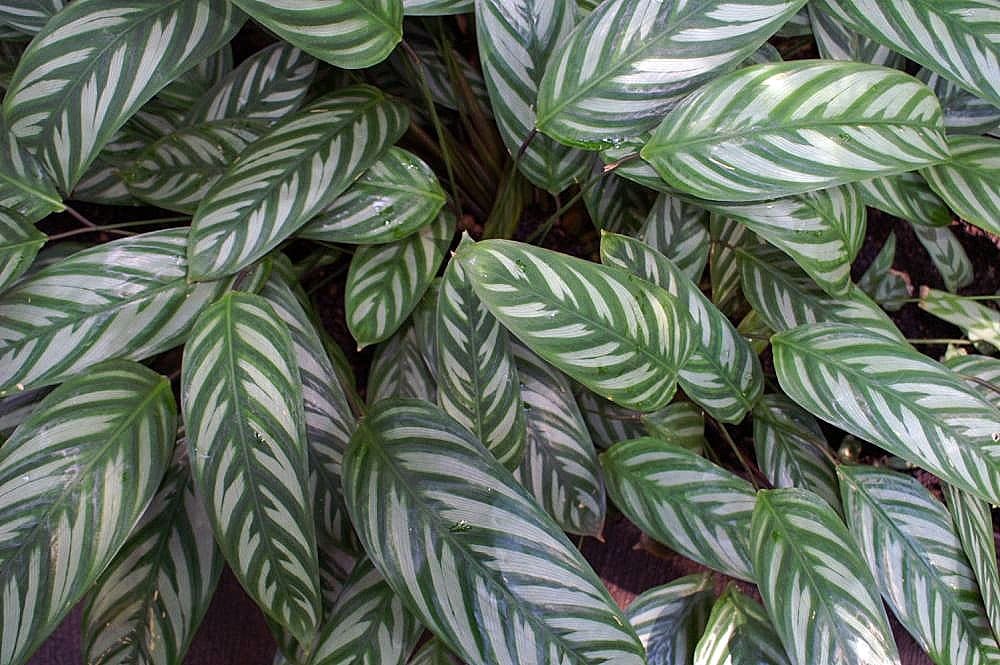
“Never Never Plant” is used for several Ctenanthe species. This guide covers their common indoor needs; the photograph shows Ctenanthe oppenheimiana. Keep the botanical name from your plant label, especially when checking its size or pet safety.
Find a bright, sheltered spot
Choose bright indirect light, away from harsh sun and cold draughts. A bathroom can work if it has enough daylight; humidity alone cannot make a dark room suitable.
Watch the light at leaf level. Curtains, nearby buildings and the season matter more than a window's compass direction. Move a plant into stronger light gradually rather than placing tender leaves straight into a hot sunbeam.
Keep moisture steady
Aim for moist, aerated potting mix, not a saturated pot or a completely dry root ball. Feel the mix before watering. When growth slows, let the surface dry a little before rewetting, while keeping the deeper mix from drying out completely.
Water evenly, let the pot drain, and empty its saucer or cover pot. If the mix remains wet and the plant is declining, check drainage and roots before adding more water. Use our watering comparison if the signs seem contradictory.
For sensitive plants such as C. oppenheimiana, mineral accumulation can contribute to brown tips. Distilled water is an option if hard water appears to be a factor. A household filter does not necessarily remove dissolved minerals; check what yours actually removes.
Help the air, without soaking the leaves
Ctenanthe prefers humid air and stable warmth. Keep it clear of radiators and air-conditioning outlets. A humidifier can help in a dry room; misting does not reliably maintain humidity.
Brown margins are a reason to check moisture, feeding, water quality and the air together. They are not proof that you need to raise humidity to a particular number. Leave room around the foliage for air movement.
Repot and feed when needed
Use a moisture-retentive, free-draining houseplant mix and a pot with drainage holes. Check whether the roots and clump have filled the existing pot before moving up a size. Spring or early summer is a useful time to repot a growing plant.
Feed during active growth using a houseplant fertiliser at its label rate. Check for fertiliser already in fresh compost and avoid adding extra feed to a struggling or newly repotted plant.
Divide an established clump
For clump-forming Ctenanthe, divide a healthy plant in spring. Each section should retain roots and several leaves. Pot the sections separately and keep them warm, humid and evenly moist while they establish. A detached leaf is not a substitute for a rooted division.
Read the leaves carefully
Leaves rising at night and lowering during the day can be normal. Persistent curling, wilting or spreading damage needs a closer look.
Inspect undersides and leaf joints for pests. Fine webbing or cottony clusters merit identification before treatment; choose a product labelled for the identified pest and indoor use. Record what you find so you can judge the next leaves rather than repeatedly changing the routine.
Sources for this guide
9 sources
- NC State Extension: Ctenanthe oppenheimiana
- NC State Extension: Ctenanthe amabilis
- RHS: growing calatheas, including Ctenanthe
- RHS: Ctenanthe setosa
- Maryland Extension: lighting indoor plants
- Maryland Extension: temperature and humidity
- Maryland Extension: potting and repotting
- Maryland Extension: fertilizer
- ASPCA: plant identification and pet-safety guidance
Spotted something that needs correcting? Send a message.