Christmas Cactus Care: Watering, Buds and Blooms
An epiphytic cactus needs a different routine from a desert cactus.
Quick questions
Is Christmas cactus a desert cactus?
No. Schlumbergera × buckleyi is an epiphytic cactus and prefers an airy mix with moisture during active growth.
Why is it not flowering?
Check autumn night length, night light exposure, temperature and general plant health. No single change guarantees blooms.
Why do buds fall off?
Review recent moves, temperature swings and pot moisture. Bud drop has several possible causes.
Should the mix dry completely?
Let the top begin to dry, then water and drain. Do not keep the root ball repeatedly bone dry in active growth.
Is Thanksgiving cactus the same?
No. Schlumbergera truncata is a related species often sold under the Christmas cactus name.
Is it safe for cats and dogs?
NC State Extension lists S. × buckleyi as non-toxic. Verify the plant identity and contact a veterinarian if a pet seems unwell after eating it.
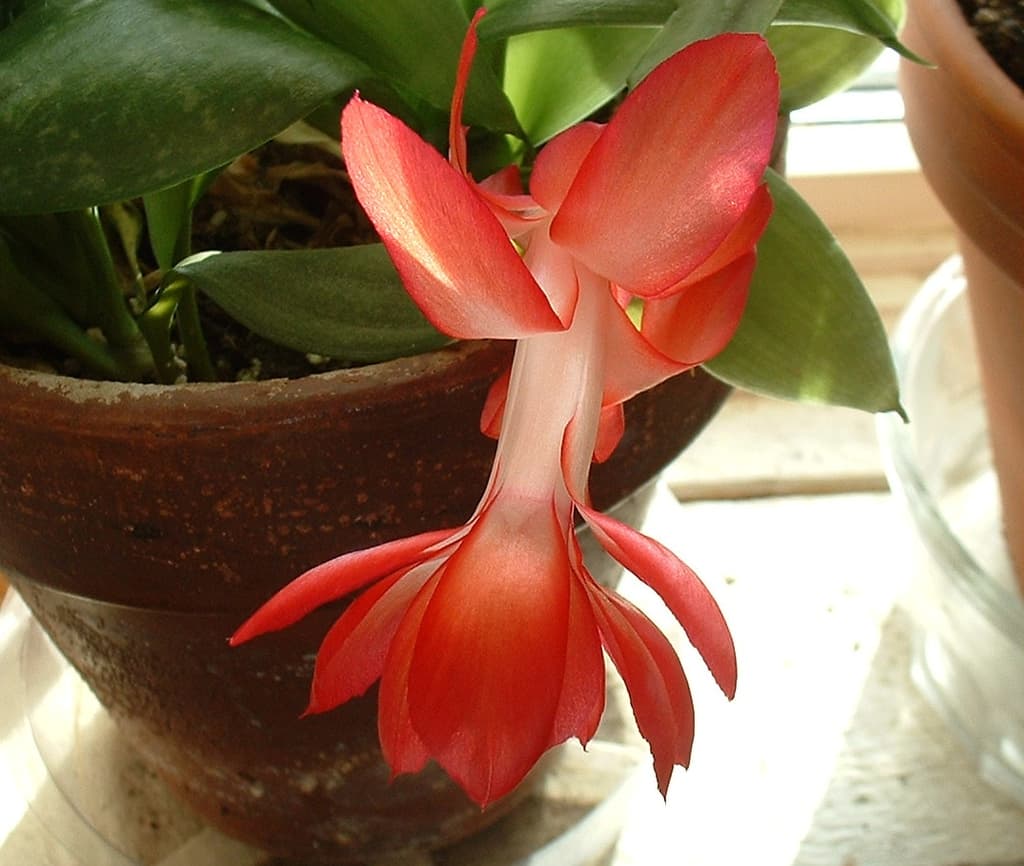
Christmas cactus is a name used for several Schlumbergera plants. This guide focuses on the true Christmas cactus hybrid, Schlumbergera × buckleyi. Check the stem segments and plant label because many holiday cacti sold under the same name are Thanksgiving cactus or related hybrids.
Light and position
Give bright indirect light. Strong midday sun can mark the flat stem segments, which do the work of leaves. A hanging pot or shelf lets mature stems arch naturally.
Water by checking the pot
During active growth, water when the top of the mix begins to dry and drain fully. Do not treat it like a desert cactus that must stay completely dry for weeks. In the cooler season and around bud formation, check the pot more carefully and avoid both a soggy root ball and a severe dry spell.
Potting and growth
Use a smallish pot with drainage and an airy mix suited to an epiphytic cactus. Repot when roots or deteriorated mix justify it. Let a healthy jointed cutting callus briefly, then root it in lightly moist, airy mix; keep it out of direct sun while roots form.
Work through common problems
For buds, the plant responds to shorter days and cooler nights in autumn. Give it long, uninterrupted nights away from room lights and a suitable cool position without frost. A bright lamp late at night may interfere with flowering. Sudden changes in temperature, moisture or position can contribute to bud drop, but one dropped bud is not a diagnosis.
Safety and your next check
NC State Extension lists S. × buckleyi as non-toxic to pets. Confirm the species before relying on that listing and discourage chewing because any plant material can upset a stomach. Watch for firm new segments after a care change.
Related LeafLovers guides
Sources for this guide
2 sources
Spotted something that needs correcting? Send a message.