Cactus Care: Light, Drainage and the Right Name
A practical starting point for desert cacti in pots.
Quick questions
How often should I water a cactus?
Water thoroughly after the mix dries through; the interval changes with light, temperature and pot size.
Can a cactus grow in low light?
Most desert cacti need strong light and may stretch in a dim room.
What soil should I use?
Choose a free-draining cactus mix and a pot with drainage holes.
Why is my cactus soft?
Check for persistently wet mix and rot, especially if the stem darkens.
Are cacti safe for pets?
Species toxicity varies, and spines can injure pets even where the plant is non-toxic.
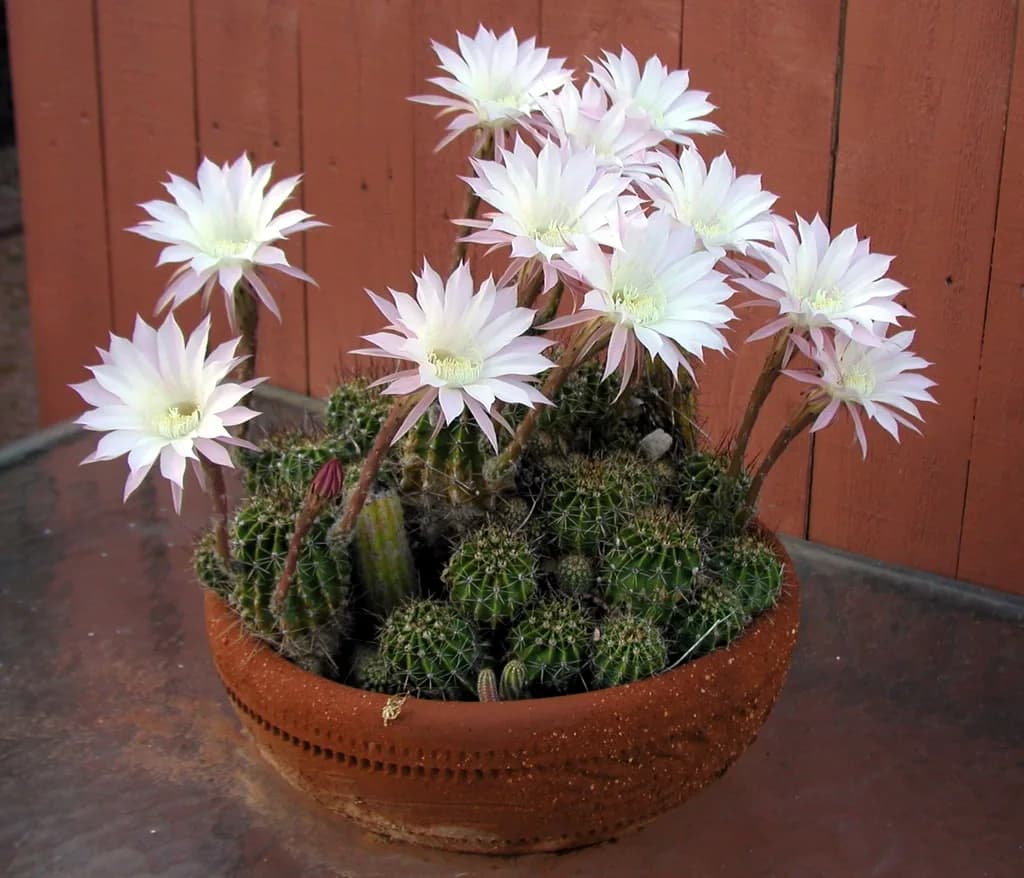
A “cactus” label covers many species. The photograph shows flowering Echinopsis oxygona, one desert cactus among many. Use this as a starting point for desert cacti; forest cacti such as holiday cactus have different light and watering needs.
Give it strong light
A bright, sunny window suits many desert cacti. Move a nursery-grown plant toward stronger sun gradually to avoid scorch. Pale, stretched new growth often points to too little light; a new brown patch after a sudden move may be sun damage.
Let the pot dry
Use a container with drainage holes and a gritty, free-draining cactus mix. When the mix has dried through, water thoroughly and discard the runoff. In lower winter light, allow longer drying between waterings. A small pot in summer sun dries faster than a large pot in a cool room, so skip fixed-day schedules.
Check before you treat
A soft, dark stem with wet soil can signal rot. Isolate a plant with white cottony pests or fixed bumps, then identify mealybugs or scale before treating. Some cacti bloom only after suitable seasonal light and temperatures; indoor flowers are never guaranteed.
Handle spines safely
Use folded paper or suitable gloves when moving a spiny plant, and keep it away from children and pets. Toxicity differs by species, so a generic cactus label is not enough for a pet-safe claim.
Related LeafLovers guides
Sources for this guide
2 sources
Spotted something that needs correcting? Send a message.