Bird of Paradise Care: Light, Water and Splitting Leaves
Care for a white bird of paradise with room to grow.
Quick questions
Is the white bird of paradise the orange-flowered kind?
No. This guide covers Strelitzia nicolai. The familiar orange flowers belong to Strelitzia reginae.
Why do the leaves split?
A mature leaf may split along its veins through age or mechanical stress. Check new growth and conditions before assuming disease.
How often should I water it?
Check the upper mix and deeper root zone, then water thoroughly when the surface has begun to dry. Pot size and light change the interval.
Will it flower indoors?
It can, but indoor flowering is uncommon. Grow it for its foliage rather than promising blooms.
Can it live in low light?
It needs useful bright light for strong new growth. A dim corner is a poor long-term position.
Is it safe for cats and dogs?
No. NC State Extension lists Strelitzia nicolai as toxic to pets. Keep it out of reach and contact a veterinarian after chewing.
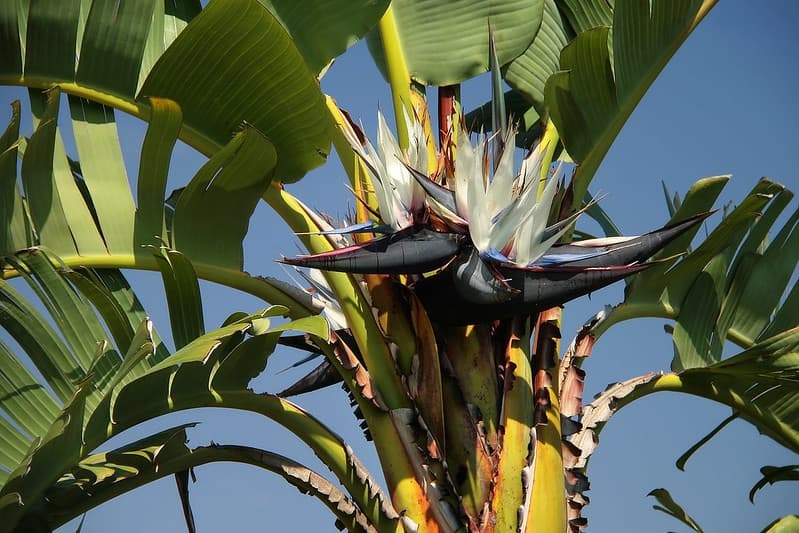
White bird of paradise (Strelitzia nicolai) is the large, banana-leaved species often sold for indoor foliage. The orange-flowered Strelitzia reginae is a different plant. The photo shows a mature outdoor S. nicolai in flower; an indoor plant may never flower.
Light and position
Place it in bright indirect light near a window. A plant used to shade needs gradual exposure before stronger sun. If it leans or new leaves stay small, check the light and give the leaves room instead of crowding them against glass.
Water by checking the pot
Feel the upper mix and lift the pot. Water thoroughly once the top layer has begun to dry, then empty the saucer. A tall decorative planter can hide standing water, while a large pot may stay damp beneath a dry-looking surface.
Potting and growth
Use a stable pot with drainage and a mix that wets evenly but drains freely. Keep the plant warm and away from cold draughts. Repot when roots genuinely crowd the container; division is an option for a mature clump, but avoid pulling apart small roots for appearance.
Work through common problems
Leaf splits along the veins can be normal, especially on older leaves or after rubbing and movement. Brown edges can follow dry air, moisture swings or physical damage. Check the pot and new growth before cutting a whole leaf. Inspect for scale, spider mites and mealybugs if new leaves look marked.
Safety and your next check
NC State Extension lists S. nicolai as toxic to people and pets. Keep it out of reach of chewing animals and ask a veterinarian after ingestion. Let the plant settle after a move; compare new leaves over time rather than expecting a split leaf to mend.
Related LeafLovers guides
Sources for this guide
2 sources
Spotted something that needs correcting? Send a message.