Bird's Nest Fern Care: Moisture, Light and the Crown
Keep the rosette healthy without soaking its centre.
Quick questions
Should I water into the middle of the fern?
Water the mix instead. Avoid leaving water pooled in the central crown.
How often should I water it?
Check below the surface and keep the mix lightly moist, then let excess drain. Do not use a fixed calendar interval.
Why are the edges brown?
Check for repeated dryness and a dry room, then inspect the pot. Brown edges alone do not identify one cause.
Can it take direct sun?
Bright filtered light is safer. Strong direct sun can yellow or damage the fronds.
Should I cut off a brown frond?
You may remove a fully dead frond with clean tools without damaging the crown. First address the conditions affecting new growth.
Is a bathroom a good place?
Only if it has enough light and suitable warmth. Humidity cannot make up for a dark, cold room.
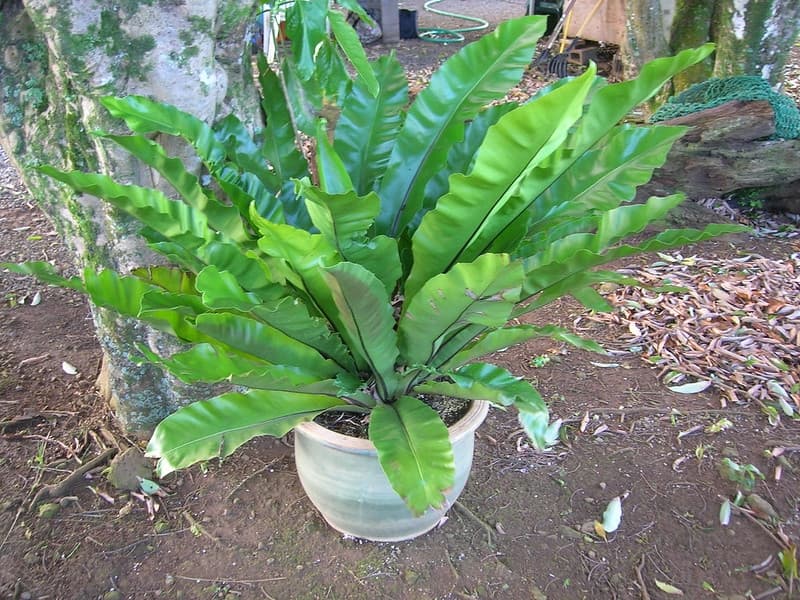
Bird's nest fern (Asplenium nidus) grows long, strap-shaped fronds from a central rosette. It is an epiphyte in tropical forests, so a porous, moisture-retentive pot suits it better than a dry desert-cactus routine.
Light and position
Choose bright filtered light or light shade. Avoid a hot window with strong direct sun, which may yellow or damage fronds. In a very dark room, slow growth is expected; move it toward gentle light before adding fertiliser.
Water by checking the pot
Keep the mix lightly moist, checking below the surface before watering. Water the potting mix and let it drain, rather than pouring water into the central crown where it can sit. Do not let the whole root ball repeatedly dry hard or leave the pot standing in water.
Potting and growth
Use a container with drainage and a loose fern mix that holds moisture while allowing air around the roots. Place it in a warm, sheltered room. A humidifier can help if the air is persistently dry, but misting alone does not provide steady humidity. Handle new fronds gently.
Work through common problems
Dry brown edges can follow an irregularly dry root ball or dry air; a yellow frond can also reflect excess sun or root trouble. Inspect the pot and crown before changing care. If the crown turns soft or dark, stop wetting it and check drainage and air movement.
Safety and your next check
Keep plant pieces away from pets that chew, and verify the exact name against a veterinary plant list before relying on a safety claim. A damaged old frond will not turn green; monitor the next frond from the crown.
Related LeafLovers guides
Sources for this guide
2 sources
Spotted something that needs correcting? Send a message.