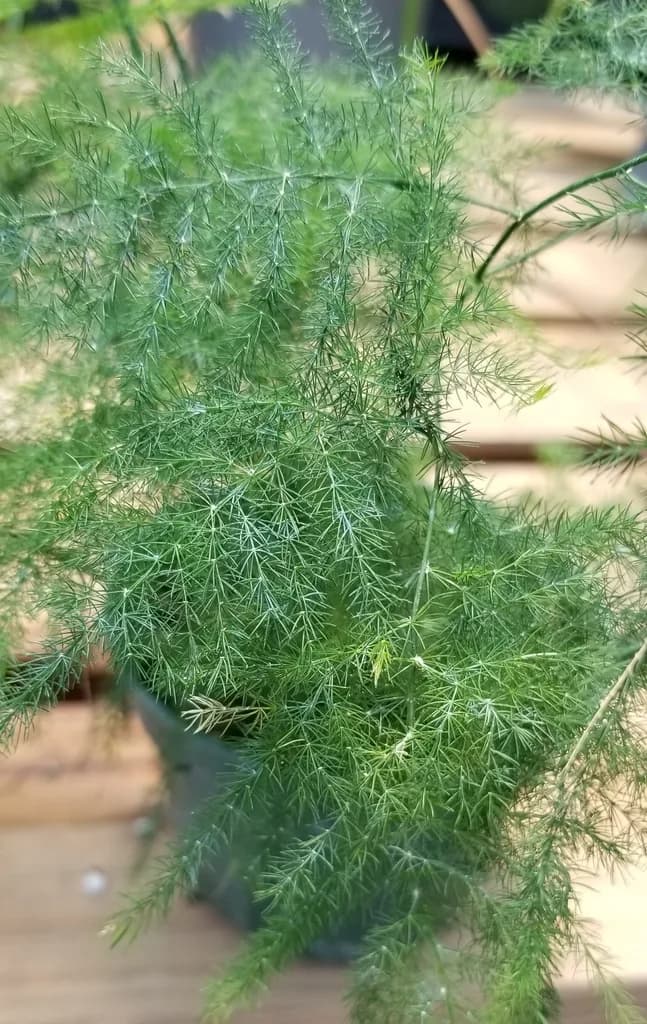
Asparagus Fern Care Guide - Light, Water, Soil & Expert Tips
A feathery, scrambling houseplant that is not a true fern.
Quick questions
Is asparagus fern a true fern?
No. Asparagus setaceus belongs to the asparagus family. Its fine, leaf-like sprays give it the fern-like appearance.
How often should I water Asparagus setaceus?
Check the upper mix and pot weight. Keep it lightly moist during active growth without leaving it soggy, and check less often when growth slows.
Why are the fine sprays turning yellow?
Dryness, low light, prolonged wetness and pests can all play a part. Check the pot, light and stems before changing care.
Will yellow sprays recover?
No. Damaged sprays do not turn green again. Improve the cause and look for healthy new growth from the base.
Is Asparagus setaceus safe for cats and dogs?
Do not let pets chew it or eat its berries. NC State identifies poisonous berries and notes that the sap may irritate skin. Ask a veterinarian after ingestion or symptoms.
How should I prune asparagus fern?
Wear gloves because stems can be spiny. Remove an unwanted stem at its base rather than cutting only the feathery tip.
This asparagus fern guide covers Asparagus setaceus, also called lace fern or plumosa fern. It is an asparagus relative, not a true fern. Other plants sold as asparagus fern can be different species, so use the botanical label when checking care or safety advice.
Light and position
Choose bright indirect light and protect the fine sprays from strong direct sun. A humidifier can help in very dry indoor air. Keep the plant away from cold drafts, and give scrambling stems room or a support.
Water by checking the pot
Keep the mix lightly moist during active growth while allowing excess water to drain. Check the upper mix and the weight of the pot before watering. In winter, growth may slow and the mix may stay wet longer, so check before adding more. Neither a fixed calendar nor yellowing alone tells you when to water.
Soil, roots and pruning
Use an organically rich, well-drained mix in a pot with drainage holes. This species makes tuberous roots and can become crowded. If roots fill the pot, repot into a slightly larger container. To remove a long or damaged stem, cut it back at the base; new growth can emerge from below.
If the fine sprays turn yellow
Check light, pot moisture and drainage first. Dry conditions can cause yellowing and needle drop, but overwatering or poor drainage can do the same. Inspect for mites and mealybugs, especially if there is speckling or webbing. Damaged sprays will not turn green again; judge recovery by new growth.
Pets, berries and handling
The berries are poisonous to people and pets if eaten. Stems have small spines, and sap can irritate skin. Keep this plant away from curious pets and children, and wear gloves when pruning. Ask a veterinarian if a pet eats berries or develops symptoms.
Use LeafLovers to record where the plant sits, when you checked the mix and whether new sprays are healthy. That gives you a better clue than repeating a watering date.
Sources for this guide
2 sources
Spotted something that needs correcting? Send a message.