Spineless Yucca Care: Sun and a Stable Pot
A trunked Yucca gigantea for a bright indoor spot.
Quick questions
Is spineless yucca the same as Yucca elephantipes?
Yes. Yucca gigantea is the current name used by NC State.
How much light does it need?
Give strong light and acclimate it gradually to direct sun.
How often should I water?
Let the mix dry well, then water thoroughly and drain.
Why is the trunk soft?
Check for root and stem rot, especially if the pot remains wet.
Is spineless yucca safe for pets?
No. NC State lists its leaves and roots as toxic to cats and dogs.
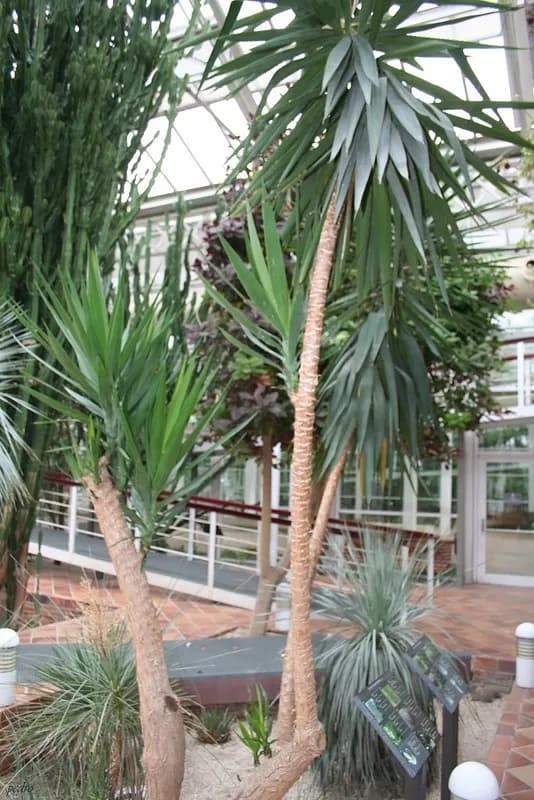
The spineless yucca sold for homes is Yucca gigantea, formerly Y. elephantipes. Its thick trunk and leafy crowns create a strong shape in a bright room. The photograph shows an outdoor mature plant; a potted one grows more slowly and stays smaller.
Put it near real light
Give the brightest practical position, with direct sun after acclimation. Low light can weaken growth and leave the crown thin. Keep the plant away from cold draughts.
Water through a draining pot
Use a stable pot with holes and a coarse mix. Let the mix dry well before watering thoroughly, then empty any runoff. A heavy pot helps a tall trunk stay upright. If the stem softens or leaves yellow while the mix stays wet, inspect roots and drainage before watering again.
Make room
Remove fully dead lower leaves carefully. Watch for mealybugs and scale between leaves. If the crown grows toward one side, rotate the pot and check light rather than cutting healthy leaves for symmetry.
Pets
NC State lists the leaves and roots as toxic to cats and dogs because of saponins. “Spineless” refers to softer leaf tips, not pet safety. Keep it out of reach and contact a veterinarian if eaten.
Related LeafLovers guides
Sources for this guide
1 source
Spotted something that needs correcting? Send a message.