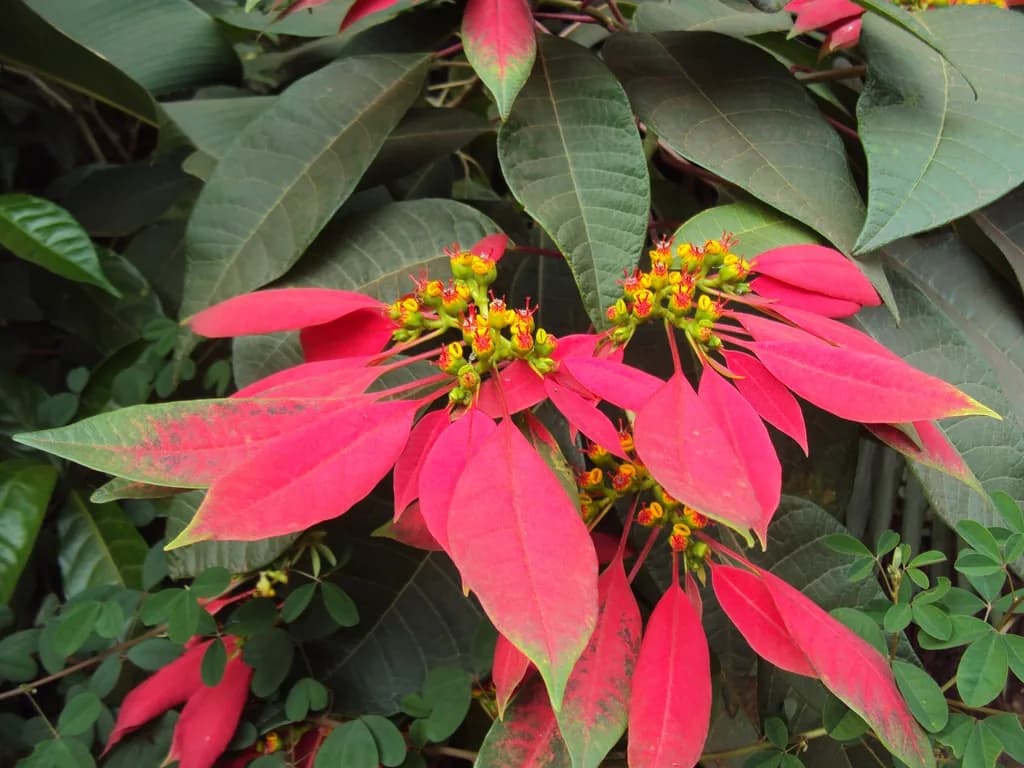
Poinsettia with red bracts
Care Guide

Poinsettia Care Guide - Light, Water, Soil & Expert Tips

Those red "flowers" are actually leaves, and getting them back takes serious commitment.

7 min read LeafLovers Plant Guides

The Poinsettia (Euphorbia pulcherrima) is the ultimate Dramatic houseplant. Those stunning red, pink, or white "flowers" that show up every holiday season? They are actually colored leaves called bracts. And getting them to color up again takes dedication - 14+ hours of complete, uninterrupted darkness every night for weeks. This poinsettia care guide will show you how to keep your poinsettia alive year-round and even coax it back into its spectacular display.

Light

Poinsettias need bright light to stay healthy.

  • Best: Bright indirect light with some direct morning sun
  • Acceptable: Bright ambient light throughout the day
  • Avoid: Low light, which causes leaf drop, and harsh afternoon sun, which can scorch the bracts

During the growing season (spring through early autumn), give your poinsettia as much bright light as possible. The reblooming dark treatment only happens in autumn.

Watering

Careful, moderate watering keeps poinsettias healthy.

  • During display (winter): Water every 8-10 days when the top of the soil feels dry. Keep in its original pot with the foil wrapper removed (or poke holes for drainage)
  • Growing season (spring-autumn): Water when the top centimeter of soil dries
  • The rule: Let the soil dry slightly between waterings, but never let the plant wilt completely from drought

Poinsettias drop leaves when overwatered or when they sit in standing water. Always ensure good drainage.

Humidity

Moderate humidity is sufficient.

  • Ideal range: 40-60%
  • Avoid placing near heating vents or radiators, which dry the air and cause leaf drop
  • A pebble tray helps during the heating season
  • Moderate misting is fine but not critical

Soil & Potting

Keep things simple, especially during the initial display period.

  • During holiday display: Leave in the original pot. Just ensure drainage
  • When repotting (spring): Use well-draining potting mix with perlite
  • Pot: Slightly larger pot with drainage holes
  • Feeding: Monthly with a balanced fertilizer from spring through early autumn

Common Problems

Leaf drop - The most common complaint. Causes include cold drafts, overwatering, underwatering, and temperature shock. Poinsettias hate sudden changes. Keep temperatures between 18-24C (65-75F) and avoid cold or hot drafts.

Bracts fading - Natural as the display period ends. The colored bracts eventually turn green and may fall. This does not mean the plant is dying.

Leggy, stretched growth - Prune in spring to about 15cm (6 inches) tall. This encourages bushy regrowth.

Will not rebloom - The reblooming process requires 14+ hours of complete, uninterrupted darkness every night for 8-10 weeks starting in early October. Even brief exposure to artificial light during this dark period resets the process. This is the most demanding aspect of poinsettia care.

Toxicity

Poinsettias are mildly toxic to cats and dogs. Despite their reputation, they are not highly poisonous. The milky sap can cause mild mouth and stomach irritation. Some people develop skin irritation from the sap. Keep out of reach of pets as a precaution.

Quick Reference

DetailInfo
LightBright indirect, some morning sun
WaterEvery 8-10 days, slight dry between
Humidity40-60%
DifficultyIntermediate
PersonalityDramatic
Toxic to pets?Mildly toxic to cats and dogs

Why Poinsettia Belongs in Your Collection

The poinsettia is pure holiday drama - bold color, striking bracts, and a flair for the theatrical. Most people toss them after the holidays, but with this poinsettia care guide, you can keep yours going year-round and even attempt the rewarding challenge of reblooming. It takes commitment, but watching those bracts turn red again through your own care is incredibly satisfying. A true Dramatic plant for dedicated growers.

Care reference

Need the full care profile for Poinsettia?

Check the encyclopedia for light, watering, soil, pet safety, and pot guidance - then use LeafLovers to fit it to your plant and home.

Open care guide

Free weekly plant care tips

Get personalised tips delivered to your inbox. No app needed, no spam, unsubscribe anytime.

No credit card. No tricks. No strings. Just plants.

Plant Doctor

AI diagnosis connected to your plant's actual care history. Personalized advice, not generic tips.

Get Plant Doctor

Identify a Plant

Snap a photo and instantly know what plant you have - plus how to care for it.

Identify now
Lightweight and fast
Your data stays yours
Plants with personality
Genuinely free to use

FREE TO USE

🌱Unlimited plants
πŸ””Smart reminders
πŸ“‹AI paste-to-add (10 free)
πŸ“šFull care guide library
πŸ“ΈPlant photo journal
πŸ“ŠExport all your data
Try LeafLovers Free

Your plants deserve better than a sticky note

Smart reminders that adapt to your pot size, light, and seasons.

πŸ’§Watering reminders that actually learn
🩺AI plant doctor with photo diagnosis
πŸ›‘οΈPet safety warnings on every plant
πŸ”’Your data stays yours - always exportable
Start Growing Free

No credit card. No tricks. Ready in 30 seconds.

LeafLovers dashboard showing weekly care, plants needing soil checks, and smart watering reminders