Peperomia Care Guide - Light, Water, Soil & Expert Tips
A shy, compact charmer with semi-succulent leaves and a talent for small spaces.
Your Peperomia is a shy, unassuming little gem. Compact, easy to care for, and available in an incredible variety of leaf shapes and textures, Peperomia is the plant that fits anywhere - a desk, a windowsill, a bathroom shelf. Its semi-succulent leaves store moisture, making it more forgiving than it looks. And best of all, it is completely safe for pets and children. This Peperomia care guide covers everything you need.
Light
Peperomia thrives in medium to bright indirect light. It adapts well to various light levels, making it great for offices and rooms without huge windows. Avoid direct sunlight, which can burn the delicate leaves.
Different varieties have slightly different preferences - darker-leaved types tolerate lower light, while variegated or colourful varieties need brighter conditions to maintain their patterns. A north- or east-facing window is usually perfect. If you only have south- or west-facing windows, pulling the plant back about a meter or filtering the light with a sheer curtain will protect it from scorching. In winter, you can move Peperomia closer to the window without worry, since the weaker winter sun is gentler on its leaves.
Signs of too much light: Scorched or faded leaves, especially on variegated types.
Signs of too little light: Leggy growth, small leaves, the plant reaching toward light.
Watering
Water your Peperomia roughly every 12 days in summer and every 16 days in winter. Let the soil dry out between waterings - those semi-succulent leaves store moisture, so Peperomia handles drought much better than excess water.
When in doubt, wait a day or two before watering. Overwatering is the most common mistake with Peperomia. The best approach is to push your finger into the top 2-3 cm of soil; if it feels dry, water thoroughly and let the pot drain completely. Because Peperomia is so rot-prone, bottom watering can be an excellent technique - place the pot in a shallow tray of water for fifteen minutes and let the soil wick up what it needs, then remove it.
Signs of overwatering: Mushy stems, yellowing leaves, root rot. Peperomia's soft stems are particularly prone to rot.
Signs of underwatering: Slightly drooping or wrinkling leaves (rare - they are quite drought-tolerant).
Humidity
Peperomia is comfortable in 40-50% humidity. It does not need any special humidity measures and handles standard home conditions easily. The semi-succulent leaves are naturally adapted to moderate humidity. This makes Peperomia an excellent desk plant for offices, which tend to have consistent, moderate conditions.
Soil & Potting
Peperomia loves being rootbound - small pots keep it happy and healthy. Use a well-draining mix similar to succulent soil: standard potting mix with plenty of perlite mixed in. Some growers add a small amount of orchid bark for extra drainage, which works particularly well for thicker-stemmed varieties.
The shallow root system means Peperomia does not need deep pots. Wide, shallow containers work well and help the soil dry more evenly, reducing the risk of rot.
Repot only when truly necessary - every 2-3 years is usually fine. When you do repot, choose a pot just slightly larger than the current one and refresh the soil mix.
Common Problems
Mushy stems: Root rot from overwatering. This is the biggest risk. Cut away affected stems, let the healthy parts dry, and repot in fresh, dry soil. Water much less going forward.
Dropping leaves: Can be caused by overwatering, cold drafts, or the plant being moved. Check soil moisture first.
Leggy growth: Not enough light. Move to a brighter spot. Pinch back leggy stems to encourage bushy growth.
Ring spots on leaves: This can be a sign of a viral infection spread by water. Remove affected leaves and avoid getting water on the foliage when watering.
Fungus gnats: The small flies that hover around houseplant soil love consistently moist conditions. Since Peperomia should dry out between waterings, letting the top layer of soil dry thoroughly is both good watering practice and an effective way to break the gnat life cycle.
Quick Reference
| Care Need | Details |
|---|---|
| Light | Medium to bright indirect |
| Water (summer) | Every 12 days |
| Water (winter) | Every 16 days |
| Humidity | 40-50% |
| Difficulty | Beginner |
| Personality | Shy |
| Toxic | Safe for pets and children |
Why Peperomia Belongs in Your Collection
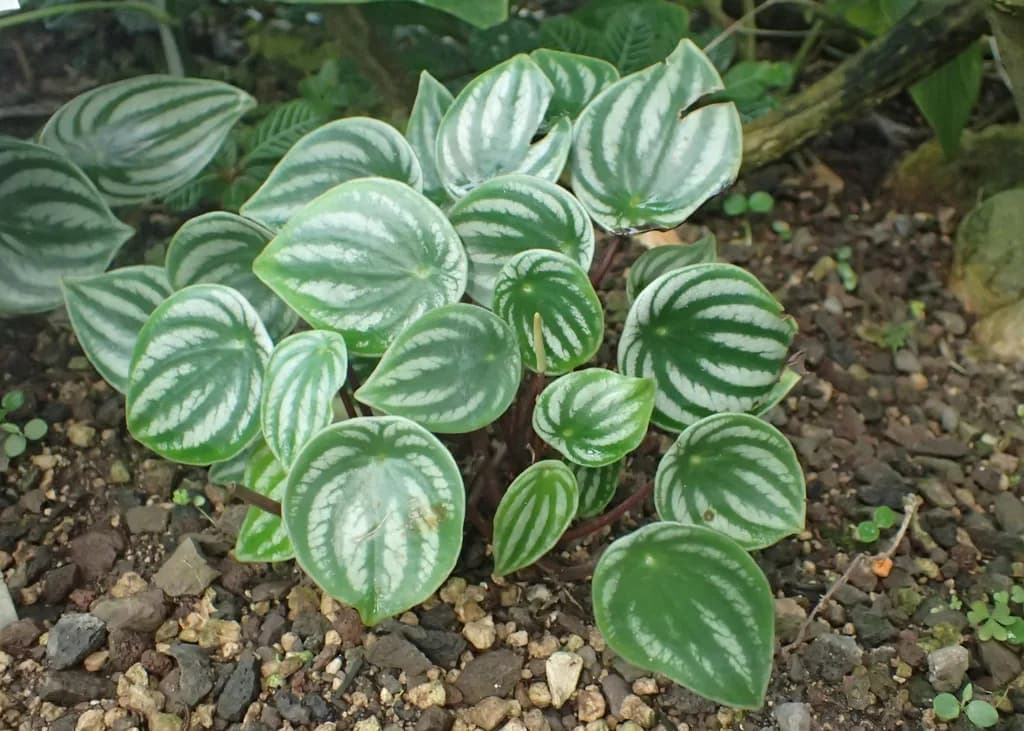
Peperomia is the perfect plant for small spaces - compact, pet-safe, and available in dozens of unique varieties from the rippled Peperomia caperata to the watermelon-striped Peperomia argyreia. Its Shy personality means it sits quietly on your desk or shelf, looking beautiful without demanding attention. With LeafLovers, you can track the minimal care schedule this easy-going plant needs. This Peperomia care guide shows that great plant parenthood does not require great space.
Care reference
Need the full care profile for Peperomia?
Check the encyclopedia for light, watering, soil, pet safety, and pot guidance - then use LeafLovers to fit it to your plant and home.
Free weekly plant care tips
Get personalised tips delivered to your inbox. No app needed, no spam, unsubscribe anytime.
No credit card. No tricks. No strings. Just plants.