Purple Shamrock Care: Light, Rest and New Growth
Oxalis triangularis may close its leaves or rest before returning.
Quick questions
Why do purple shamrock leaves close at night?
That movement is normal for Oxalis triangularis; leaves can also close when disturbed.
Is my purple shamrock dead if its leaves disappear?
Not necessarily. It may be dormant. Check that rhizomes are firm and wait for new growth while watering sparingly.
How often should I water it?
Let the surface begin to dry, then water and drain. Reduce water while the plant is dormant.
Does it need direct sun?
It grows in sun to partial shade; acclimate an indoor plant gradually to stronger sun.
Can I divide it?
Yes. Healthy rhizomes can be divided when growth resumes and the pot is crowded.
Is purple shamrock safe for pets?
No. Oxalis contains soluble oxalates; keep pets away and seek veterinary advice after ingestion.
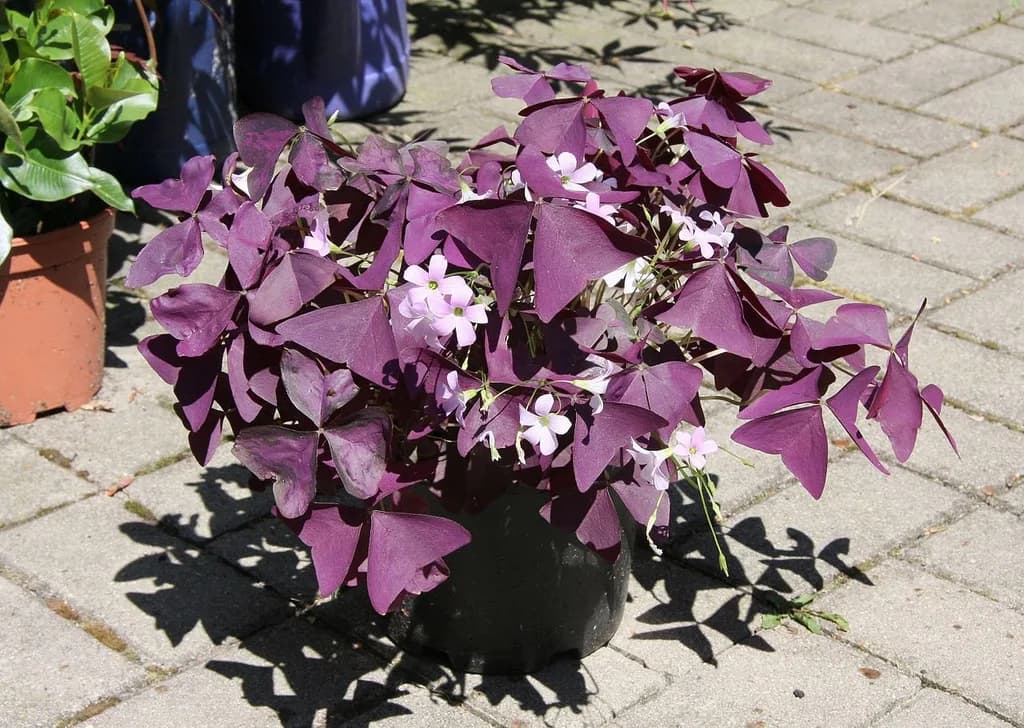
Purple shamrock (Oxalis triangularis) has three-part leaves that often close at night. A potted plant can flower above its purple foliage, as in the photograph. Its leaf movement is normal; do not treat every evening fold as a watering problem.
Light and position
Give the plant a bright position with some gentle sun or filtered light. Acclimate it before stronger direct sun, especially after a spell indoors. Watch new growth for stretching or scorch and adjust the position gradually.
Water by checking the pot
Use a draining container and loamy mix. Let the surface begin to dry before watering, then drain the pot. The rhizomes store reserves, but do not leave actively growing plants dry for long stretches.
When the plant rests
Oxalis may go dormant in autumn or after heat or drought. If foliage dies back and the rhizomes remain firm, reduce water and wait for new shoots before returning to regular watering. Do not discard a resting plant just because its leaves disappear.
Divide and check
When growth resumes and the pot is crowded, divide healthy rhizomes into fresh draining mix. If leaves decline unexpectedly while the mix stays wet, inspect the rhizomes rather than assuming dormancy.
Pets and people
Oxalis contains soluble oxalates. ASPCA advises keeping purple shamrock away from pets; larger ingestions can be more serious. If a pet eats it, contact a veterinarian for advice.
Related LeafLovers guides
Sources for this guide
2 sources
Spotted something that needs correcting? Send a message.