Norfolk Island Pine Care: Light, Water and Lower Branches
Give this indoor tree a bright, cool place beyond the holidays.
Quick questions
Is a Norfolk Island pine a true pine?
No. Araucaria heterophylla is a different conifer-like tree.
Will lower branches grow back?
Usually not from a bare section of trunk. Improve conditions for later growth rather than expecting old branches to return.
How often should I water it?
Use the mix and pot weight, keeping it lightly moist in active growth and draining fully.
Can it live in low light?
It can survive a dim position for a while, but prolonged low light can cause lower-branch loss.
Should I repot it after Christmas?
Only if roots crowd the pot or the mix no longer handles water well. A calendar date alone is not a reason.
Can I put it near a heater?
Avoid hot, drying air and heavy decorations on its flexible branches.
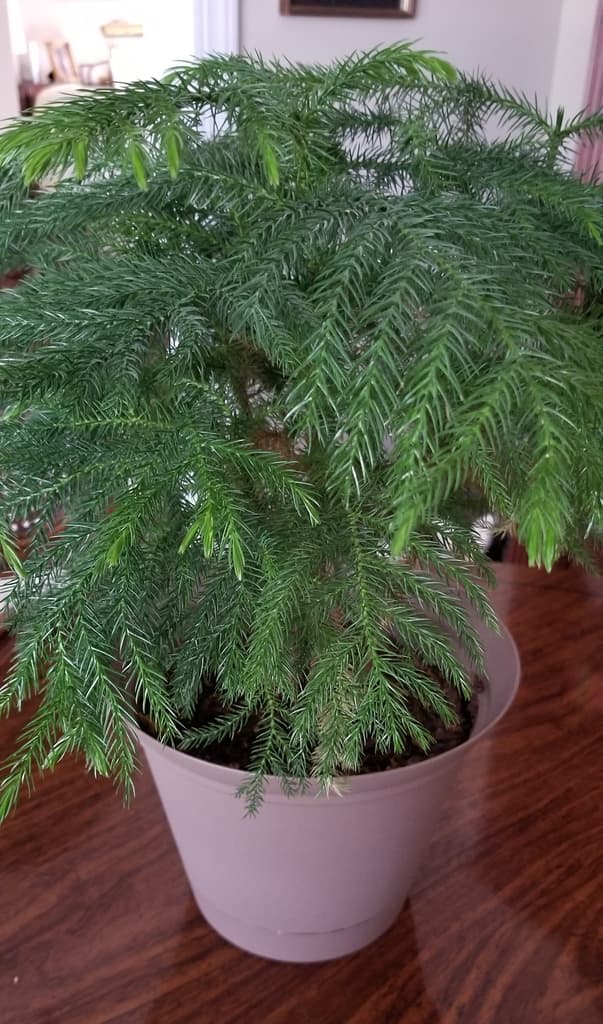
Norfolk Island pine (Araucaria heterophylla) is a conifer-like tree from Norfolk Island, not a true pine. Indoors it keeps tiered branches and can outgrow a small room, so plan for its eventual height before choosing a position.
Light and position
Place it in a bright, relatively cool room. It may appear to tolerate dim light for a time, but lower branches can thin or drop after prolonged low light. Rotate the pot gently for balanced growth without repeatedly moving it between very different conditions.
Water by checking the pot
Keep the mix evenly but lightly moist during active growth, letting the surface begin to dry between thorough waterings. Drain the saucer. In winter, check less often as growth slows, but do not allow the whole root ball to become repeatedly parched.
Potting and growth
Use a stable pot with drainage and a mix that drains well. Repot when roots and watering behaviour justify it. Keep branches away from heaters and hot holiday lights; thin branches can be damaged by heavy decorations.
Work through common problems
Brown or dropped lower branches do not grow back from bare trunk sections. Check light, pot moisture, dry heat and scale insects before deciding what changed. Brown tips may follow dry air or moisture swings, but older damaged needles will not green again.
Safety and your next check
When buying a holiday tree, inspect its roots and base before decorating. A tree coated in glitter or with a blocked pot can be hard to care for. New branch tips are the clearest sign that your adjusted conditions are working.
Related LeafLovers guides
Sources for this guide
2 sources
Spotted something that needs correcting? Send a message.