Monstera Adansonii Care: Watering, Light and Support
A curious climber with holey leaves: learn what its light, roots and new growth are telling you.
At a glance
Pets & children
Irritating if chewed
Calcium oxalate can irritate the mouth. Keep leaves and cuttings out of reach.
Light
Bright, indirect
Shield it from strong direct sun, and let light reach the whole vine.
Water
Lightly moist, not wet
Let the upper mix begin to dry, then water and drain the pot.
Pot & roots
Drainage first
Use a pot with holes. Repot when roots fill it, with a modest size increase.
Quick questions
Can I let Monstera adansonii trail?
Yes. You can let the vine trail or provide a climbing support. Keep the trailing leaves in useful light, and keep the vine out of reach of pets.
Why do some leaves have fewer holes?
Leaf development and growing conditions vary. Check identity, maturity and light rather than treating the number of holes as a diagnosis. Judge later growth instead of expecting an existing leaf to change.
Is it the same as Monstera deliciosa?
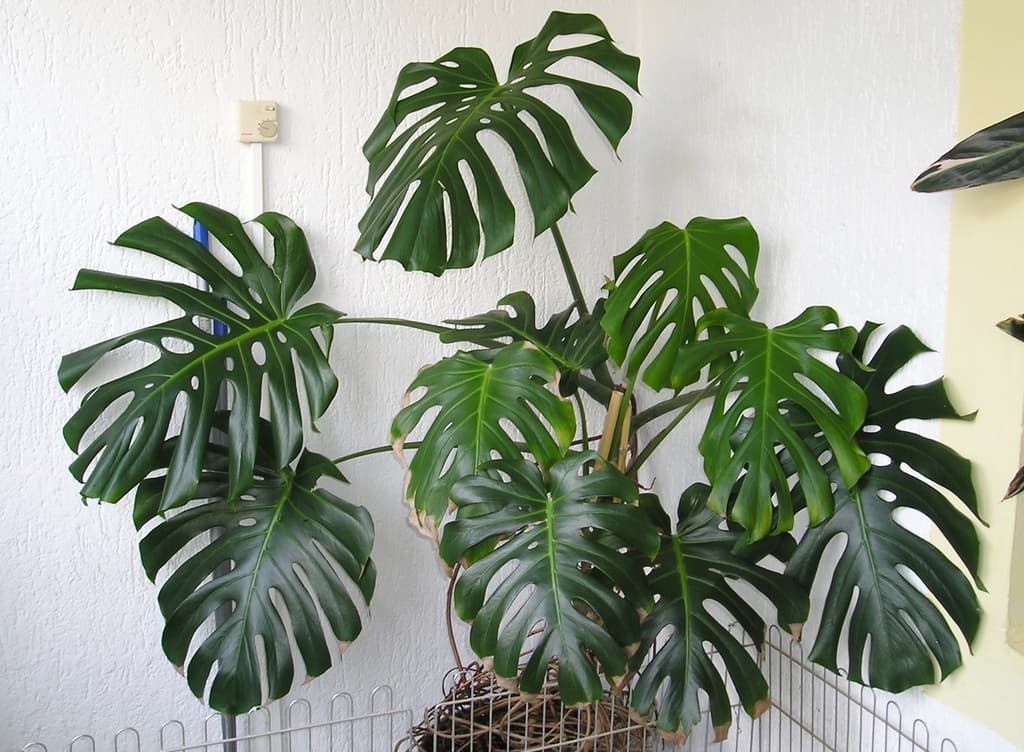
No. They are different species that share the Swiss cheese common name. Adansonii is the smaller-leaved vine covered here.
Is Monstera adansonii safe for pets?
No. It contains calcium oxalate crystals and can irritate the mouth and digestive tract if chewed. Keep it away from pets and children; contact a veterinarian if ingestion is suspected.
Can one leaf grow into a new vine?
Use a section of the main stem with a node and growth bud. A leaf and stalk without that stem tissue cannot grow a new vine.
Does it need a special watering schedule?
It needs a check suited to its pot and room, not fixed eight-day or twelve-day intervals. Check moisture before adding water, especially after moving or repotting it.
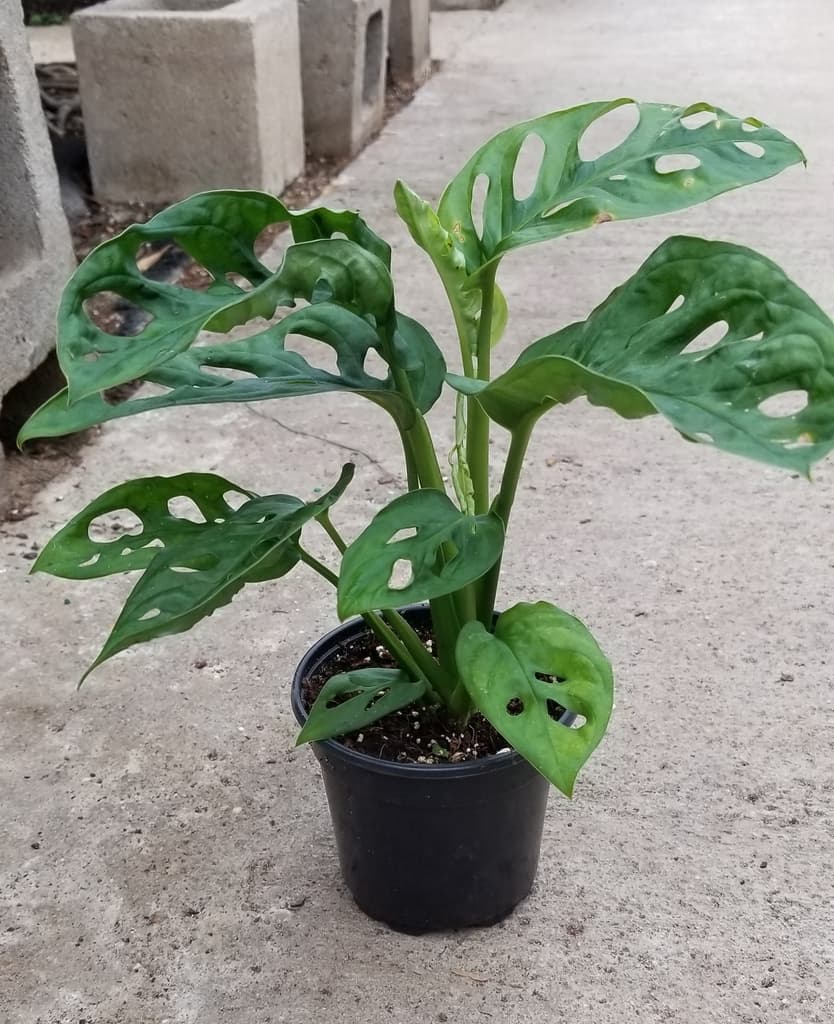
Monstera adansonii is the adventurous one: a vine that would happily climb a support or wander off a shelf. Its holey leaves are part of the design, not a cry for help. Give this Swiss Cheese Vine bright indirect light, a draining pot and a moisture check before each drink.
It is a different species from the larger-leaved Monstera deliciosa. If you came here because something has changed, start with the clues below. One leaf rarely tells the whole story.
Read the clues before changing the routine
| What you notice | Check first | A useful next step |
|---|---|---|
| Yellowing leaves | Is the mix still wet below the surface? Is water sitting in the outer pot? | Empty trapped water and let the upper mix begin to dry before watering again. See the yellow-leaf guide if yellowing spreads. |
| Small new leaves or long gaps between them | Does bright, indirect light reach the whole vine? | Move it gradually to a brighter filtered spot; judge the next leaves, since old ones will not resize. |
| Drooping | Is the root zone dry, or wet and heavy? | Check the mix and pot weight before adding water. A wet plant can droop when roots are struggling. |
| Brown tips | Is it close to a heater or cold draught? How have you watered and fed it? | Check those conditions before blaming humidity alone; a tip cannot identify one cause. |
Give every leaf a seat by the window
This climber likes bright, indirect light. Harsh direct sun can scorch leaves. If the pot sits near a window while half the vine trails into a dim corner, the adventurous end may get too little light. Turn or reposition the plant so new growth has a fair chance.
A trellis or pole offers a route upwards; loose, soft ties can guide the stem. Trailing works too, provided the vine receives enough light and stays away from curious pets.
Water the pot you have, not the calendar
The plant would like a drink, but it has no interest in your Tuesday schedule. Let the upper layer of mix become a little dry, then feel below it. When the pot needs water, soak the mix and allow runoff to escape. Empty a decorative outer pot or saucer afterwards.
A porous houseplant mix and a pot with drainage holes help roots get both water and air. If the mix stays wet for too long, check for a blocked drain, an oversized pot or dense mix. Repot only when needed, into a modestly larger container. If a dry mix has shrunk away from the pot's edge, it may take more than one pass to re-wet it evenly.
Keep the growth tidy
Trim an overlong stem with clean tools. For a new vine, take a stem cutting with a node and growth bud; a leaf and its stalk alone cannot start a vine. Root it in a moist, airy medium in warm indirect light, or use water and change it regularly. Watch for roots and fresh growth instead of expecting a fixed deadline.
Feed with a labelled houseplant fertiliser during active growth, following the product directions. Pause or reduce feeding when growth slows. Keep the plant away from cold draughts and hot, dry air; a humidifier may help in a dry room, but brown tips alone do not prove it needs one.
When the clues overlap
Yellowing, drooping and stalled growth can have more than one cause. Record the last watering, light or pot change, look at the mix and inspect leaves for pests before trying several fixes at once. Our adansonii yellow-leaf guide walks through that problem in more detail.
For a muddier case, Plant Doctor in Premium can use the care history you have saved and a photo if you choose to suggest possible causes and the next checks. Its suggestions are a starting point to review, not a guaranteed diagnosis.
Pet note: M. adansonii contains irritating calcium oxalate crystals. Keep the vine, cuttings and fallen leaves away from pets and children. Contact a veterinarian if a pet chews it.
Sources for this guide
7 sources
Spotted something that needs correcting? Send a message.